Tradescantia, Genus, spathacea, Species,
- Genus & species
Moses-in-the-cradle
Overview
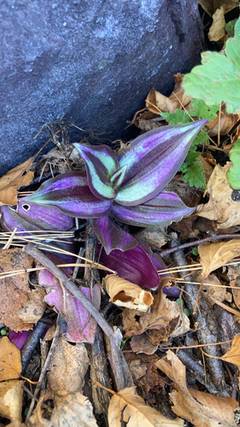
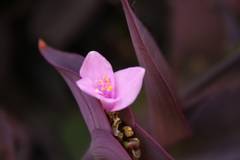
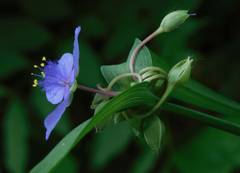
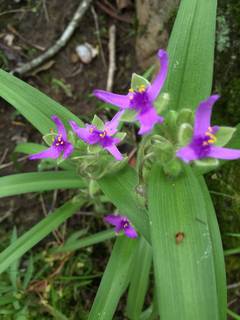
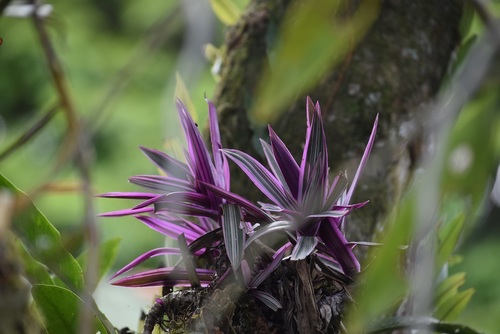
Tradescantia spathacea is an herbaceous evergreen perennial reaching 6-12 inches (15-30 cm) tall and 6-12 inches (15-30 cm) wide, forming dense rosettes from short stems. Foliage strap-shaped to lanceolate, 6-12 inches (15-30 cm) long and 1.5-3 inches (4-7.5 cm) wide, dark green on the upper surface with deep purple undersides; foliage emerges from the central rosette in tight whorls. Flowering occurs throughout the year in subtropical conditions; small white 3-petaled flowers cluster in pairs of boat-shaped purple bracts (spathes) at the base of leaves, giving the plant its common name. Bracts persist for weeks, with flowers opening sequentially over 1-3 weeks. Plants spread by short stolons; mature colonies expand 3-6 inches (7.5-15 cm) per year. Sap contains calcium oxalate crystals; skin contact may cause irritation in sensitive individuals, and ingestion causes oral burning and gastrointestinal upset. Naturalized invasively in Florida (FLEPPC Category II), Hawaii, southern Texas, and many tropical island ecosystems.
Native Range
T. spathacea is native to Mexico, Belize, and Guatemala, and through human introduction is naturalized across the Caribbean, southern Florida, southern Texas, and Hawaii. The species occurs in tropical lowland forests, limestone outcrops, and disturbed areas at 0-3,000 feet (0-900 m) elevation. Listed as invasive in Florida (FLEPPC Category II) and prohibited from sale in some Hawaiian counties.Suggested Uses
Massed in tropical bedding at 6-9 inch (15-23 cm) spacing in zones 10-11 (grown as bedding annuals or houseplants in colder zones). Container culture is workable in pots of 4-8 inch (10-20 cm) diameter; container plants stay at 6-10 inches (15-25 cm) tall. Grown as an indoor plant in low- to medium-light interior locations; the compact rosette form remains at 6-10 inches (15-25 cm) on desks and window sills.How to Identify
Appearance
Size & Dimensions
Height6" - 1'
Width/Spread6" - 1'
Bloom Information
Year-round flowering in zones 10-11 with continuous low-level production; in zones 9 and indoors, peak flowering occurs spring through fall. Individual flowers last 1 day; bracts persist 4-8 weeks with sequential flower opening. Indoor plants flower throughout the year if minimum temperatures stay above 55°F (13°C) and light averages 4-6 hours daily.
Detailed Descriptions
Flower Description
White (3 petals) in purple bractFoliage Description
Dark green above, deep purple beneathGrowing Conditions
Sun Requirements
Requires 2-6 hours of direct sunlight daily
• Full Sun: 6+ hours of direct sunlight
• Partial Shade: 3-6 hours of direct sunlight
• Full Shade: Less than 3 hours of direct sunlight
Care & Maintenance
Care Guide
Water when the top 1 inch (2.5 cm) of soil is dry; the species tolerates 2-3 weeks without water in established plantings but loses lower leaves under prolonged drought. Apply a balanced houseplant fertilizer at half-strength monthly from March through September; reduce feeding in winter. Spider mites and mealybugs may infest stressed plants in low humidity; insecticidal soap reduces populations within 7-10 days. Root rot develops in poorly-drained soil or overwatered containers. Sap causes contact dermatitis in some individuals; gloves are typical when dividing or pruning large quantities. Lifespan 5-10 years for individual rosettes, with continuous self-renewal from stolons. Tolerates indoor light at 100-300 foot-candles (1,000-3,000 lux), suitable for typical home conditions.Pruning
Remove yellowing or damaged leaves at the base of the rosette as they appear; new leaves emerge from the center continuously. Cut spent flower stems at the base after bracts brown to direct energy into rhizome growth and reduce self-seeding. In zones 9-10 outdoor plantings, cut leaves to 2 inches (5 cm) above ground level after first frost; rosettes regrow from rhizomes in spring.Container Growing
Suitable for container growing
Minimum container size: 1 gallons