Toxicoscordion, Genus, venenosum, Species,
- Genus & species
meadow deathcamas
Overview
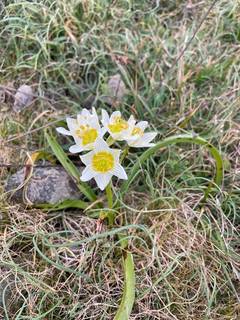
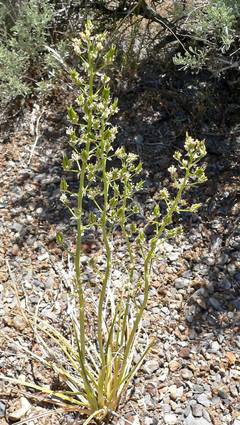
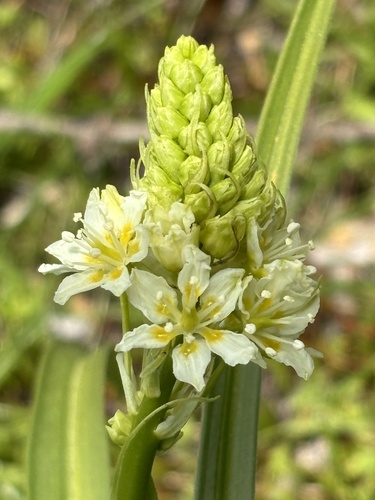
Toxicoscordion venenosum is a bulb-forming perennial in the bunchflower family growing 8-24 inches (20-60 cm) tall from a deep, onion-like bulb. The grass-like basal leaves are 4-12 inches (10-30 cm) long, narrow, V-shaped in cross section, and folded along the midrib, emerging early in spring. A single unbranched stem rises above the leaves bearing a dense raceme of cream to greenish-white star-shaped flowers, each 0.3-0.5 inch (8-12 mm) across with six tepals marked by a greenish-yellow gland at the base. The flowers open from the bottom of the cluster upward in late spring. All parts of the plant, especially the bulb and seeds, contain zygacine and related alkaloids that are highly toxic to people, livestock, and some pollinators; the bulb has been mistaken for edible camas and wild onion, causing serious poisonings. T. venenosum grows in meadows, grasslands, sagebrush flats, and open slopes across western North America, often in ground that is moist in spring and dry by summer. The plant goes dormant and disappears by midsummer, leaving no top growth. The bulb carries no onion smell, which sets it apart from true wild onions.
Native Range
Toxicoscordion venenosum is native to western North America, from British Columbia south through the western United States to California and east to the northern Rockies. It grows in meadows, grasslands, sagebrush flats, and open slopes that are moist in spring.Suggested Uses
Toxicoscordion venenosum is grown mainly in native plant, restoration, and grassland plantings rather than ornamental beds, because of its toxicity. It adds early spring flowers to meadow and prairie settings. Its presence is generally discouraged in pastures and areas grazed by livestock due to the poisoning risk.How to Identify
Appearance
Size & Dimensions
Height8" - 2'
Width/Spread4" - 8"
Bloom Information
Cream to greenish-white flowers open in spring, roughly April to June, from the base of the cluster upward. They are visited by native bees and other insects despite the plant toxicity. Dry seed capsules follow in early summer before the plant goes dormant.
Detailed Descriptions
Flower Description
cream to greenish-whiteFoliage Description
greenGrowing Conditions
Sun Requirements
Requires 6-12 hours of direct sunlight daily
• Full Sun: 6+ hours of direct sunlight
• Partial Shade: 3-6 hours of direct sunlight
• Full Shade: Less than 3 hours of direct sunlight