Toxicoscordion, Genus, paniculatum, Species,
- Genus & species
foothill deathcamas
Overview
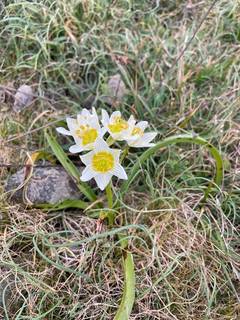
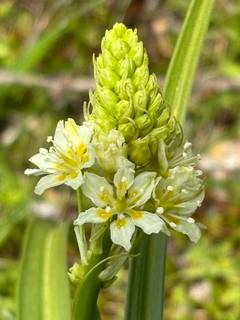
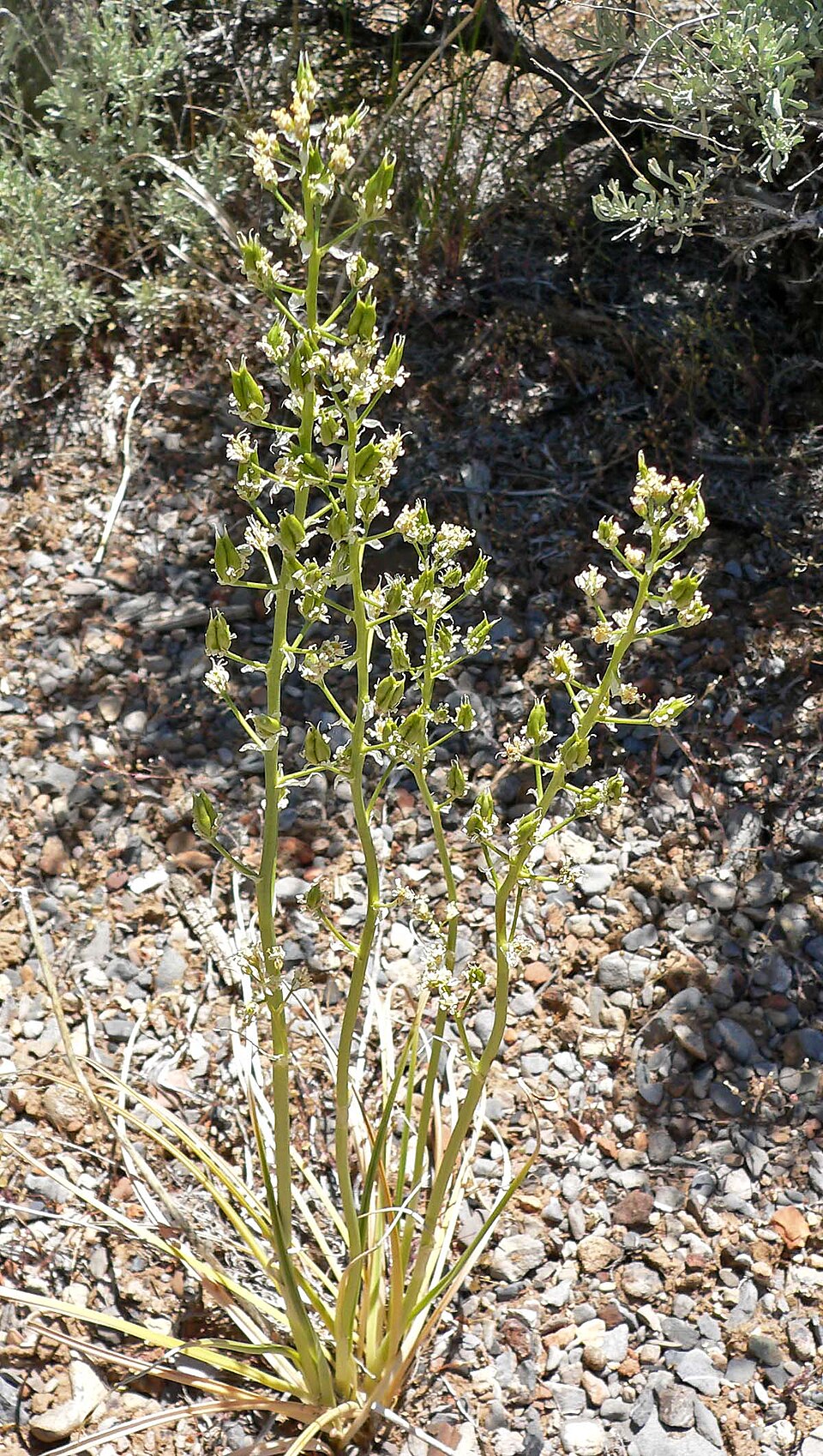
Toxicoscordion paniculatum is a bulb-forming perennial reaching 8-24 inches (20-60 cm) tall, growing from a deep, onion-like bulb covered in dark outer scales. The basal leaves are grass-like and V-shaped in cross-section, 6-12 inches (15-30 cm) long and up to 0.5 inch (1.3 cm) wide, with rough margins, and they wither as the plant flowers. A branched panicle 4-10 inches (10-25 cm) long carries many small cream to pale yellow flowers, each 0.25-0.4 inch (6-10 mm) across with six tepals marked by a green gland at the base. Bloom comes in mid to late spring, after which dry three-lobed seed capsules form. T. paniculatum grows on dry foothills, sagebrush slopes, and open woodland across the intermountain western United States. All parts, especially the bulb, contain zygacine and related steroidal alkaloids that are highly toxic to humans, livestock, and pets if eaten. The bulb resembles those of edible wild onions but lacks an onion odor. Foliage emerges in early spring and dies back to the bulb by early summer.
Native Range
Toxicoscordion paniculatum is native to the intermountain western United States, including the Great Basin and adjacent ranges from Washington and Oregon east to Montana and south to New Mexico. It grows on dry foothills, sagebrush flats, and open coniferous woodland.Suggested Uses
Toxicoscordion paniculatum is grown in native plant gardens, rock gardens, and dryland restoration plantings, spaced 6-10 inches (15-25 cm) apart. Its spring panicles add early-season height among low groundcovers, though its toxicity limits use in areas grazed by children or livestock.How to Identify
Appearance
Size & Dimensions
Height8" - 2'
Width/Spread4" - 8"
Bloom Information
Flowering occurs in mid to late spring, generally April to June depending on elevation. The branched panicle opens its cream to pale yellow flowers over two to three weeks. Dry three-lobed capsules follow as the foliage withers.
Detailed Descriptions
Flower Description
Cream to pale yellowFoliage Description
GreenGrowing Conditions
Sun Requirements
Requires 6-12 hours of direct sunlight daily
• Full Sun: 6+ hours of direct sunlight
• Partial Shade: 3-6 hours of direct sunlight
• Full Shade: Less than 3 hours of direct sunlight
Care & Maintenance
Care Guide
Toxicoscordion paniculatum grows in full sun in dry, well-drained sandy, rocky, or gravelly soil with a pH from 6.0 to 7.5. It is adapted to seasonally dry sites, drawing on winter and spring moisture and going dormant through the dry summer. Bulbs are set 3-4 inches (8-10 cm) deep and resprout each spring from the dormant bulb. The plant needs little water once established and declines in soils that stay wet. All parts contain steroidal alkaloids that are highly toxic if eaten by people, livestock, or pets. Growth is poor in shade and in heavy, poorly drained ground.Pruning
Spent flower stalks can be cut after the capsules dry if self-seeding is not wanted. Foliage is left to die back on its own, which recharges the bulb for the following season. No other pruning is needed.Pruning Schedule
Prune: June–July
summer
Container Growing
Suitable for container growing
Minimum container size: 1 gallons