Overview
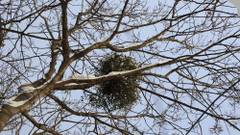
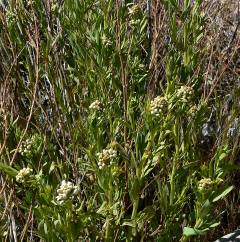
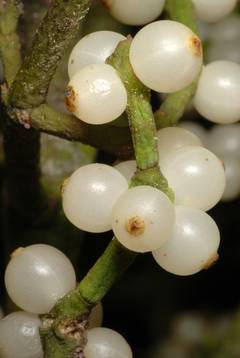
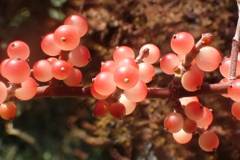
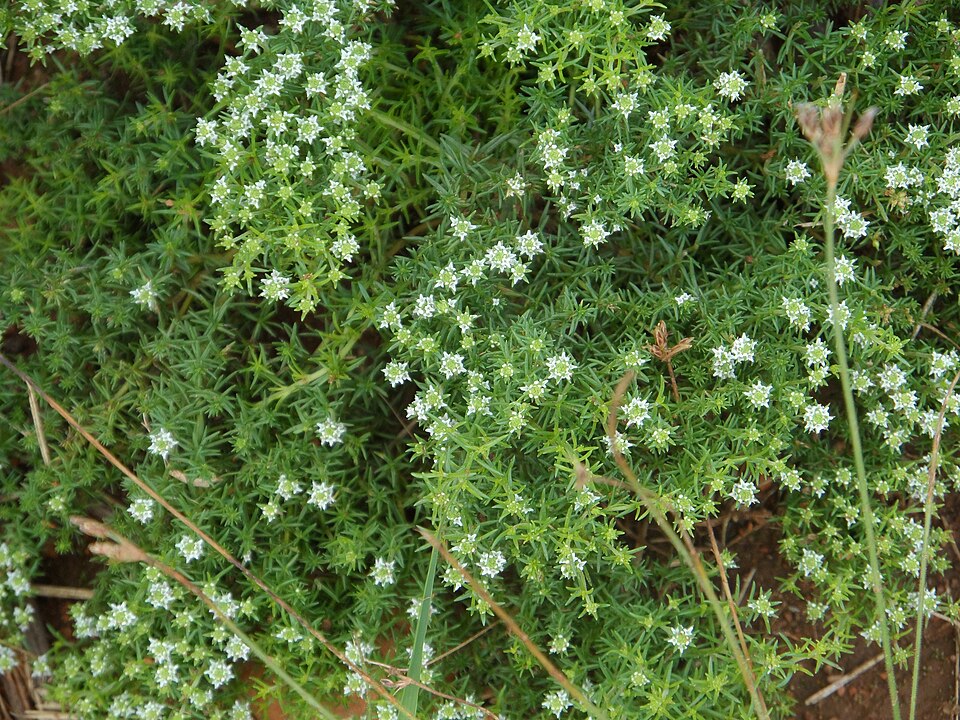
Thesium is a genus of about 300 species of hemiparasitic herbs and subshrubs in the sandalwood family, widespread across the Old World, especially Africa and Eurasia, with a few species in North and South America. Plants are hemiparasites: they photosynthesize with their own green shoots but also tap the roots of neighbouring plants through specialized attachments called haustoria, drawing water and nutrients. Most form slender, wiry, often sprawling stems 4-24 in (10-60 cm) tall, clothed in small, narrow, linear leaves that can be scale-like. The flowers are small and inconspicuous, 0.1-0.3 in (2-7 mm) across, greenish-white to pale yellow, with the petal-like parts coloured inside, borne singly or in loose spikes or clusters. Each flower develops into a small nut-like or berry-like fruit, often ribbed, that is dispersed by birds or ants. The genus grows mostly in grassland, heath, scrub, and rocky slopes. Because the plants rely on host roots, they are difficult to cultivate and are seldom grown in gardens, and some species are weeds of pasture. Flowering occurs mainly in spring and summer.
Native Range
Native across the Old World, with the greatest diversity in southern and tropical Africa and additional species through Europe, the Mediterranean, and temperate to tropical Asia; a small number occur in the Americas. Plants grow in grassland, heath, and rocky slopes.Suggested Uses
Seldom grown ornamentally, the genus is encountered mainly in native grassland, restoration plantings, and botanical collections. A few species appear as components of natural meadow and heath vegetation rather than as garden plants.How to Identify
Appearance
Size & Dimensions
Height4" - 2'
Width/Spread6" - 1'6"
Bloom Information
Detailed Descriptions
Flower Description
Greenish-white to pale yellowFoliage Description
Green, narrowGrowing Conditions
Sun Requirements
Requires 6-12 hours of direct sunlight daily
• Full Sun: 6+ hours of direct sunlight
• Partial Shade: 3-6 hours of direct sunlight
• Full Shade: Less than 3 hours of direct sunlight
Water & Climate
Water Needs
Drought Tolerance
Drought tolerant when established
Care & Maintenance
Care Guide
Grow in full sun in poor, well-drained, sandy or rocky soil, alongside the grasses and other host plants whose roots the genus taps for part of its nutrition. Because plants are hemiparasitic, they establish poorly without suitable hosts and are seldom cultivated. Most species tolerate drought, heat, and lean ground once attached to a host. Hardiness varies widely with the species and its native climate, from frost-hardy temperate types to frost-tender tropical and African ones. Overly rich or moist soil does not suit the genus. Propagation is difficult and usually relies on sowing seed among established host plants.Pruning
Routine pruning is not required. Spent stems can be cut back after fruiting on perennial species. Dead growth is removed in late autumn or early spring.Pruning Schedule
Prune: October
fall