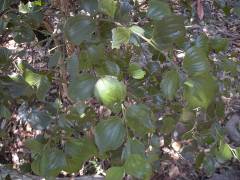
Exocarpos, Genus, cupressiformis, Species,
- Genus & species
cherry ballart
Overview
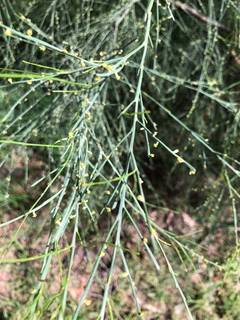
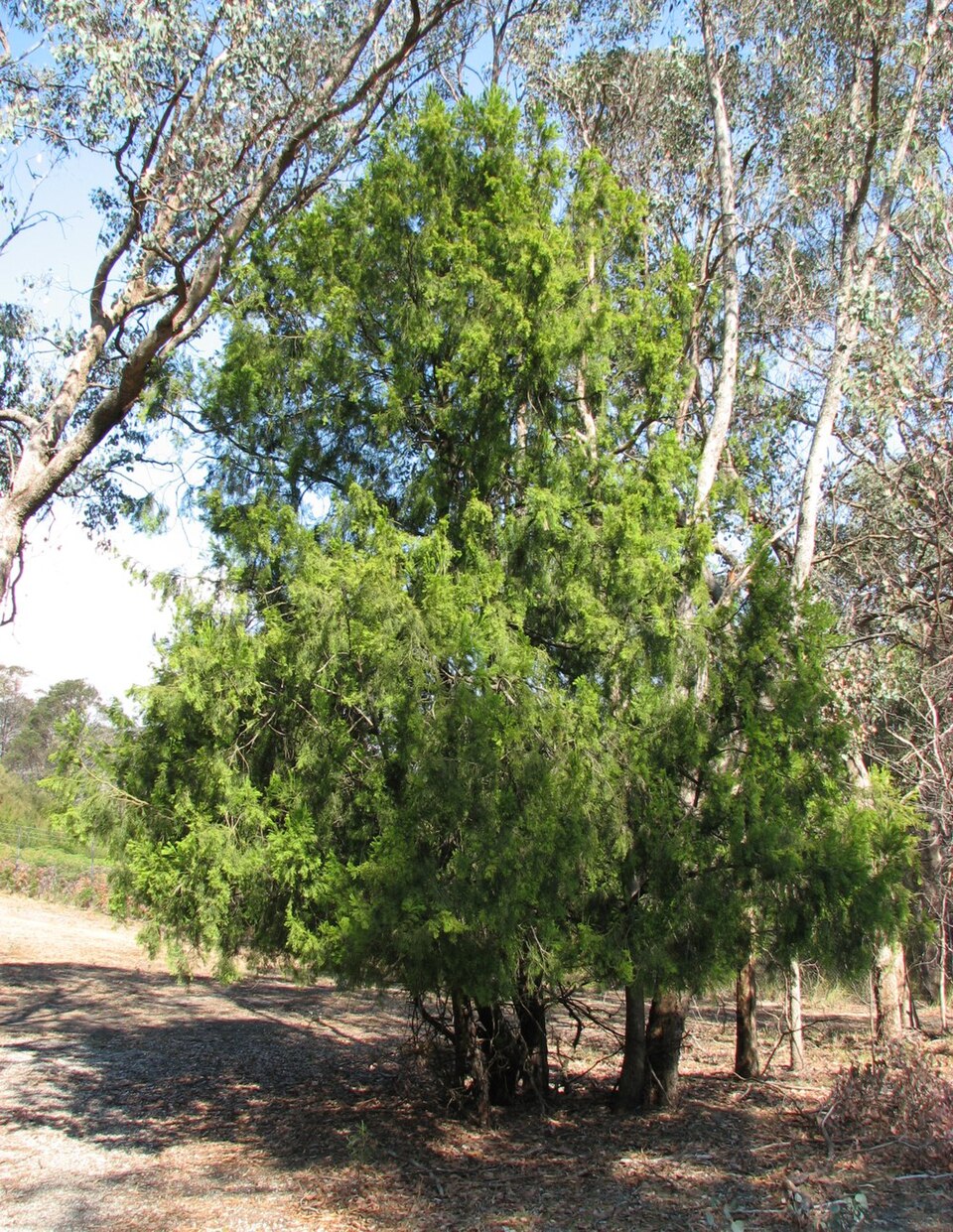
Exocarpos cupressiformis is a hemiparasitic shrub or small tree reaching 10-26 feet (3-8 m) tall, native to southeastern Australia. The plant attaches to the roots of host trees and shrubs to draw water and nutrients, while its own green branchlets carry out photosynthesis. True leaves are reduced to minute scales about 0.04 inch (1 mm) long, so the drooping, cypress-like branchlets give the canopy a feathery, weeping form. Bark is dark grey and furrowed on older trunks. Tiny greenish flowers, under 0.1 inch (2 mm) across, form in short spikes along the branchlets. The fruit is a green to brown nut about 0.3 inch (7-8 mm) long seated on a swollen, fleshy, red to orange stalk roughly 0.2-0.3 inch (5-8 mm) long; this stalk is sweet and edible, giving the plant its common name. Because the species depends on host roots, it is difficult to propagate and rarely established in cultivation. It grows slowly, in dry sclerophyll forest and woodland on well-drained soils.
Native Range
Native to southeastern Australia, occurring in Queensland, New South Wales, Victoria, Tasmania, and South Australia in dry sclerophyll forest and woodland.Suggested Uses
Used in native and habitat plantings in southeastern Australia where a host-supported small tree suits dry woodland gardens. The edible fruit stalks are harvested as a bush food. Its parasitic habit limits use in formal or container settings.How to Identify
Appearance
Size & Dimensions
Height10' - 26'
Width/Spread6' - 13'
Bloom Information
Small greenish flowers appear along the branchlets mainly from spring through summer, though scattered flowering can occur in other months. Individual flowers are under 0.1 inch (2 mm) wide and are followed by the fleshy red fruit stalks over several weeks.
Detailed Descriptions
Foliage Description
greenGrowing Conditions
Sun Requirements
Requires 4-8 hours of direct sunlight daily
• Full Sun: 6+ hours of direct sunlight
• Partial Shade: 3-6 hours of direct sunlight
• Full Shade: Less than 3 hours of direct sunlight