Thalictrum, Genus, occidentale, Species,
- Genus & species
western meadow-rue
Western North America: Alaska to California, east to Rockies
Overview
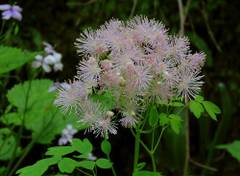
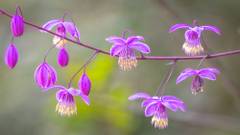
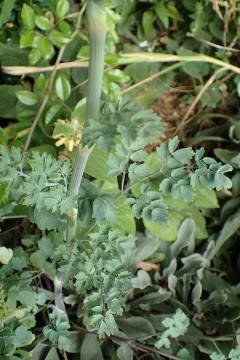
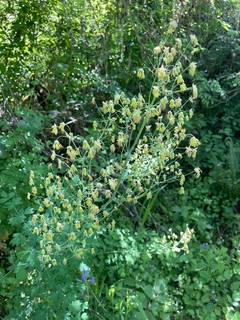
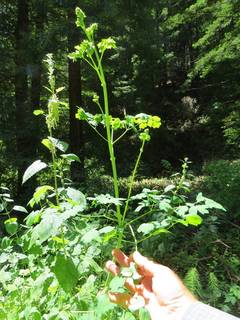
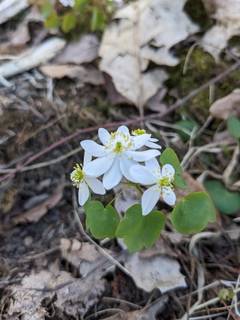
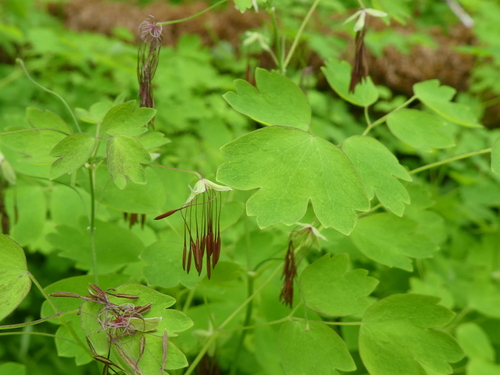
Thalictrum occidentale is a herbaceous perennial reaching 1-3 feet (30-90 cm) tall and 12-18 inches (30-45 cm) wide, forming open clumps from a short woody rhizome. Leaves are alternate, twice or thrice ternately compound, with leaflets 0.4-1 inch (10-25 mm) long, three-lobed at the tip, and pale green to blue-green; foliage texture is feathery, resembling columbine (Aquilegia). Plants are dioecious; flowers lack petals and consist of pale green to purple-tinged sepals that drop early. Male flowers bear pendant clusters of cream to purple stamens 0.2-0.3 inches (5-8 mm) long that hang in panicles 4-8 inches (10-20 cm) above the foliage from May through July. Female flowers produce achene clusters that ripen tan-brown in late summer. Bloom period at the population level extends 4-6 weeks. Plants spread slowly by short rhizomes and self-seed in moist sites; mature clumps remain under 18 inches (45 cm) wide. Foliage yellows and dies back in September; aboveground tissue does not persist into winter. Plants tolerate full sun in cool maritime climates but require partial shade and consistent moisture in zones 7-9.
Native Range
Native to western North America from southwestern Alaska south through British Columbia, Washington, Oregon, and northern California, east to Idaho, Montana, and Wyoming. Grows in moist woodland, forest openings, riparian flats, and seasonally wet meadows at 2,000-9,000 feet (600-2,700 m) elevation.Suggested Uses
Used in shaded woodland gardens, native plant collections, riparian plantings, and naturalistic borders in zones 4-8. Spaced 12-18 inches (30-45 cm) apart in groupings of 5-9 plants for visible flowering effect, given the small individual flowers. Combines with Smilacina racemosa, Tellima grandiflora, and Trillium ovatum in moist forest plantings west of the Cascades. Not suited to small formal beds, hot dry interior climates without irrigation, or alkaline-soil regions.How to Identify
Appearance
Size & Dimensions
Height1' - 3'
Width/Spread1' - 1'6"
Colors
Bloom Information
May through July across the range; begins late April at lower elevations in coastal Oregon and extends into early August at high elevations in the Cascades and Rockies. Individual male flowers last 4-7 days as the stamens hang from open buds; female flowers persist through fruit ripening over 4-6 weeks. Total bloom period at the colony level lasts 4-6 weeks. Wind pollination occurs across distances of 100+ feet (30+ m) between male and female plants.
Detailed Descriptions
Flower Description
Cream to purple stamens (male); inconspicuous green sepalsFoliage Description
Pale green to blue-greenGrowing Conditions
Sun Requirements
Requires 2-6 hours of direct sunlight daily
• Full Sun: 6+ hours of direct sunlight
• Partial Shade: 3-6 hours of direct sunlight
• Full Shade: Less than 3 hours of direct sunlight
Care & Maintenance
Care Guide
Establish in moist well-drained loam rich in organic matter at pH 5.5-7.0; plants decline in compacted clay, alkaline sites, or extended summer drought. Maintain consistent moisture during the first 2 growing seasons; mature plants tolerate brief dry spells but go early dormant in extended drought, dropping leaves by August in dry years. Partial shade is required in zones 7-9 below 1,500 feet (450 m); full sun in those zones causes leaf scorch and reduced bloom. Few pests trouble the species. Slugs feed on emerging spring shoots in coastal gardens but cause only cosmetic damage. Both male and female plants are needed for seed production; sex is set at germination and is not visible until first bloom in year 2-3. Plants are not suited to division; transplants from established clumps suffer 30-50 percent loss in the first growing season.Pruning
Cut yellowing stems at the base in September or October after the foliage has died back. Earlier cutting interrupts nutrient translocation back to the rhizome and reduces the following season's vigor. Removal of seed-bearing stems on female plants in late summer limits self-seeding in formal beds, but T. occidentale self-seeds modestly compared to other meadow-rue species.Pruning Schedule
Prune: September–October
fall
Container Growing
Suitable for container growing
Minimum container size: 2 gallons