Thalictrum, Genus, fendleri, Species,
- Genus & species
Torrey's meadow-rue
Overview
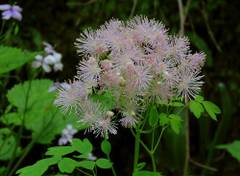
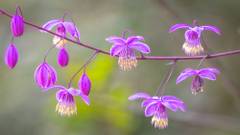
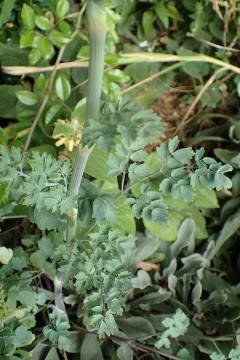
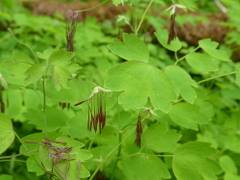
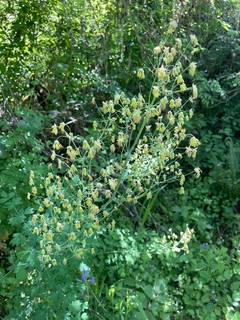
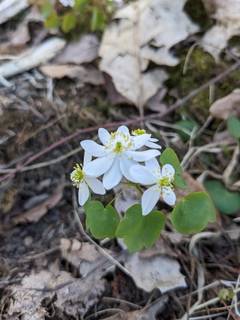
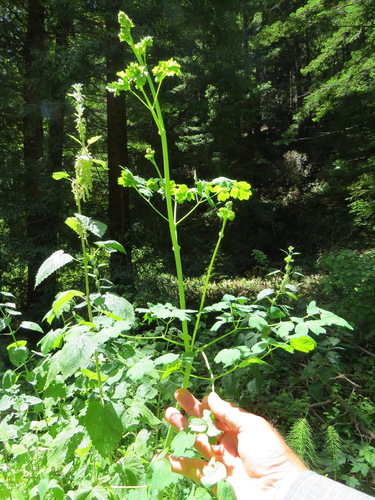
Thalictrum fendleri is a herbaceous perennial reaching 1-4 feet (30-120 cm) tall and 1-2 feet (30-60 cm) wide, forming an upright clump from a short, branching rhizome. Leaves are highly compound, with the overall blade 6-12 inches (15-30 cm) long divided two to three times into small rounded leaflets 0.5-1 inch (12-25 mm) across. The leaflets are blue-green above, paler below, and shallowly three-lobed at the tip. Plants are dioecious, with separate male and female plants. Male flowers form drooping clusters of yellowish-green to purplish stamens 0.25 inch (6 mm) wide, while female flowers are inconspicuous green pistillate clusters; both lack true petals and bloom from May through July. Achenes ripen July through September, with several flat, ribbed seeds per cluster. Foliage dies back to the rhizome after the first hard frost in zones 4-8. Spreads slowly by short rhizomes, expanding 2-3 inches (5-7.5 cm) per year. Lifespan 8-15 years for individual crowns. Plants in deeper shade tend to grow taller and more lax than those in open sun. All parts contain protoanemonin and other ranunculaceous toxins; ingestion can cause oral and gastrointestinal irritation in pets and humans.
Native Range
Native to mountain forests, aspen groves, streamside terraces, and moist meadow margins of western North America from eastern Oregon and Idaho south through Nevada, Utah, Colorado, Arizona, New Mexico, and west Texas, with disjunct populations in northern Mexico. Found at elevations of 4,000-10,500 feet (1,200-3,200 m).Suggested Uses
Used in shaded native plant gardens, woodland border plantings, and aspen-grove restorations in the interior West. Spaced 18-24 inches (45-60 cm) apart in groupings of 3-7 plants. The dissected blue-green foliage contrasts with broad-leaved companions in shaded plantings.How to Identify
Appearance
Size & Dimensions
Height1' - 4'
Width/Spread1' - 2'
Bloom Information
Flowers from May through July across the range, with peak bloom in June at most sites. High-elevation populations (above 8,000 feet / 2,400 m) bloom from late June through mid-July. Plants are wind-pollinated; bloom timing is set by accumulated heat units rather than day length, so cool springs delay flowering by 2-3 weeks.
Detailed Descriptions
Flower Description
yellowish-green to purplish (male); inconspicuous green (female)Foliage Description
blue-greenGrowing Conditions
Sun Requirements
Requires 3-6 hours of direct sunlight daily
• Full Sun: 6+ hours of direct sunlight
• Partial Shade: 3-6 hours of direct sunlight
• Full Shade: Less than 3 hours of direct sunlight
Care & Maintenance
Care Guide
Plant container-grown stock or sow seed in fall in moist, humus-rich soils with light to moderate shade. Water weekly during the first growing season; established plants tolerate seasonal drought of 3-4 weeks once mature. Tolerates a soil pH range from 5.5 to 7.5; soils amended with leaf-mulch or compost retain moisture and support stronger growth. Powdery mildew may affect lower foliage in humid summers; affected leaves can be removed at the base. Crowns benefit from division every 5-7 years in early spring as new shoots emerge. Plants may take 2-3 years to reach mature size from container stock.Pruning
No structural pruning is required. Cut spent flower stalks to the basal foliage in midsummer to limit self-seeding by male plants and to maintain a tidy shape. Remove dead foliage in late fall after the first hard frost.Pruning Schedule
Prune: July & November
summerfall