Image 1 of 4
1 / 4
Plant Reference
Thalictrum, Genus, 'Black Stockings', Cultivar,
- Genus
- Cultivar
black stockings meadow rue
Garden hybrid; parentage traces to Asian Thalictrum species
Overview
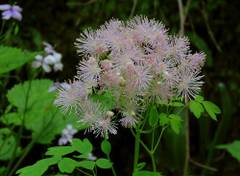
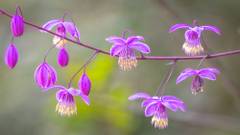
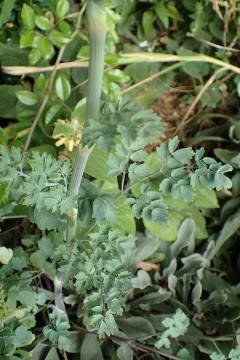
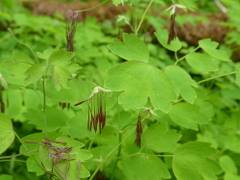
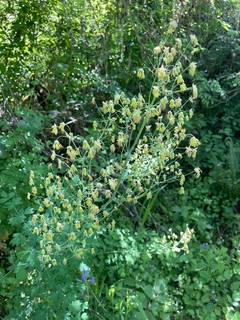
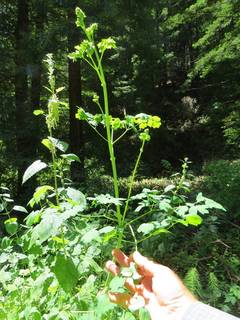
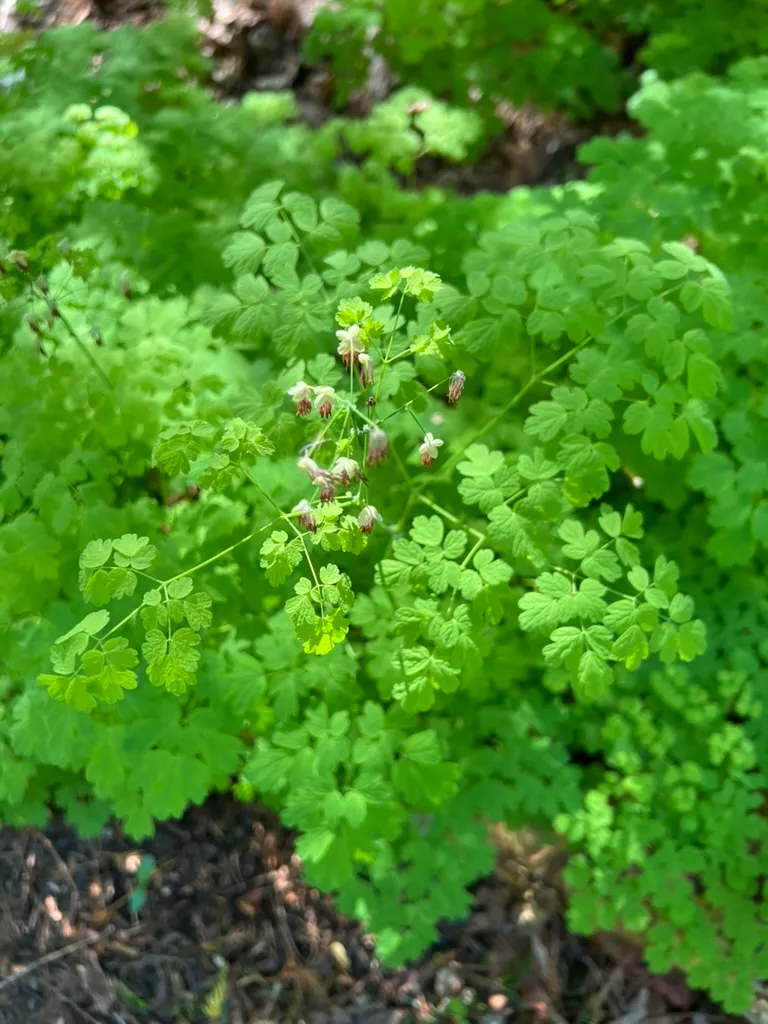
Thalictrum 'Black Stockings' is a clump-forming herbaceous perennial in the buttercup family (Ranunculaceae), reaching 48–72 inches (120–180 cm) tall and 24–36 inches (60–90 cm) wide. Stems are dark purple-black and hold that color from emergence through flowering, which is the source of the cultivar name. Foliage is compound and finely divided into small rounded blue-green leaflets carried on thin petioles, resembling maidenhair fern (Adiantum). Flowers open in branched panicles from early July into August. Individual flowers have no petals; the lavender-pink color comes from dense masses of pendant stamens 0.25–0.5 inch (6–12 mm) long. Bloom lasts 3–4 weeks. The plant is a garden hybrid of Asian Thalictrum species, with T. rochebrunianum and T. delavayi cited in its parentage. The height-to-width ratio is roughly 2:1, so flowering stems carry above surrounding plants while occupying a narrow footprint at ground level. Stems lean or bend in exposed sites once the panicles reach full weight, and staking is common practice in windy gardens. Growth is moderate, with mature size reached in 2–3 years. All parts contain isoquinoline alkaloids and are toxic to humans and animals if eaten. Leaf margins scorch in full afternoon sun in hot-summer climates and where soil dries in midsummer. Hardy in zones 4–9.
Native Range
Thalictrum 'Black Stockings' is a hybrid of garden origin and has no wild range. Its parentage traces to Asian Thalictrum species, with T. rochebrunianum of Japan and T. delavayi of western China cited in nursery records.Suggested Uses
Grown in the middle and rear of perennial borders in zones 4–9, spaced 24–36 inches (60–90 cm) apart. The narrow ground-level footprint and open panicle structure allow placement in front of taller shrubs without screening them. Also grown at woodland edges and beside water features where soil moisture stays consistent.How to Identify
Appearance
Size & Dimensions
Height4' - 6'
Width/Spread2' - 3'
Bloom Information
Flowering runs from early July into August and lasts 3–4 weeks. Lavender-pink flowers open in branched panicles 12–18 inches (30–45 cm) across at the stem tips. Each flower lacks petals; the color comes from pendant stamens 0.25–0.5 inch (6–12 mm) long, borne in dense masses. Panicles are held above the foliage mound on the dark stems.
Detailed Descriptions
Flower Description
Lavender-pink; petalless, the color carried by dense masses of pendant stamens in branched paniclesFoliage Description
Blue-green; compound, finely divided into small rounded leafletsGrowing Conditions
Sun Requirements
Requires 4-8 hours of direct sunlight daily
• Full Sun: 6+ hours of direct sunlight
• Partial Shade: 3-6 hours of direct sunlight
• Full Shade: Less than 3 hours of direct sunlight
Care & Maintenance
Care Guide
Part sun to full sun with 4–8 hours of direct light matches the cultivar's requirements, and afternoon shade in hot-summer climates reduces marginal leaf scorch. Soil needs consistent moisture through the growing season while draining freely, at pH 5.5–7.0. Growth slows and foliage scorches where soil dries in midsummer. Stems 48–72 inches (120–180 cm) tall lean in exposed sites; staking or interplanting with neighboring plants of similar height holds them upright. Clumps expand slowly and can remain undivided for five years or more. Hardy in zones 4–9, with top growth dying to the ground after frost.Pruning
Spent panicles are removed after flowering where seed heads are not wanted. All stems are cut to ground level in late autumn after frost, or in early spring before new shoots emerge. No structural pruning is required.Pruning Schedule
Prune: March & November
fallearly spring