Tanacetum, Genus, parthenium, Species,
- Genus & species
feverfew
Balkan Peninsula and southeastern Europe
Overview
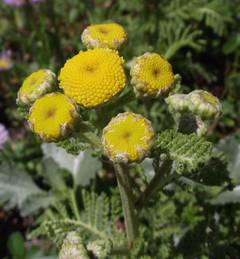
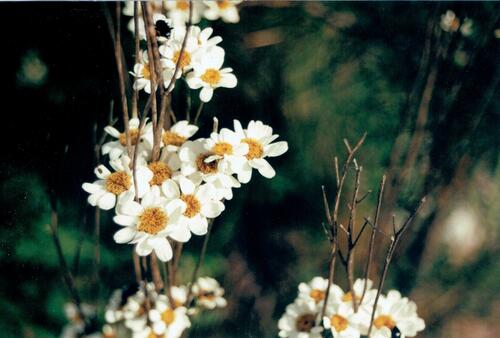
Feverfew is a bushy, short-lived perennial in the aster family, often grown as an annual or biennial, reaching 12-24 inches (30-60 cm) tall and 12-18 inches (30-45 cm) wide. The yellow-green leaves are divided into rounded, lobed segments and give off a strong, bitter scent when bruised. From early summer into autumn the branched stems carry loose clusters of small daisy flowers, each about 0.5-0.75 inch (12-20 mm) across with white ray florets around a flat yellow center. Tanacetum parthenium blooms over many weeks and self-sows heavily, so a single plant gives rise to a colony that returns from seed even after the parent dies. It grows quickly in most well-drained soils and tolerates heat and drought once established, but it is short-lived and individual plants often fade after two or three years. The pungent foliage is little troubled by deer or rabbits. Contact with the leaves can irritate the skin in sensitive people, and chewing the leaves can cause mouth sores, so it is grown with that in mind.
Native Range
Native to the Balkan Peninsula and parts of southeastern Europe and the Caucasus. Tanacetum parthenium has spread through cultivation and naturalized across Europe, North America, and other temperate regions, growing on roadsides, walls, and waste ground.Suggested Uses
Grown in cottage gardens, herb beds, and informal borders for its long run of small white daisies, and used as filler in mixed and cutting plantings. The aromatic foliage suits herb and pollinator gardens. It naturalizes in wild and meadow areas where self-seeding is welcome.How to Identify
Appearance
Size & Dimensions
Height1' - 2'
Width/Spread1' - 1'6"
Colors
Foliage Colors
Bloom Information
Blooms from early summer to early autumn, often June through September. The many small flower heads open over a long stretch, and removing the first flush can bring further bloom. Heavy seed set follows flowering, feeding the next generation of seedlings.
Detailed Descriptions
Flower Description
white with yellow centerFoliage Description
yellow-greenGrowing Conditions
Sun Requirements
Requires 4-8 hours of direct sunlight daily
• Full Sun: 6+ hours of direct sunlight
• Partial Shade: 3-6 hours of direct sunlight
• Full Shade: Less than 3 hours of direct sunlight
Care & Maintenance
Care Guide
Grows in full sun to part shade in average, well-drained soil with a pH from 6.0 to 7.5. It establishes quickly from seed or division and tolerates poor, dry ground once rooted, though it is short-lived in heavy or wet soil. Steady moisture supports fuller growth, while drought brings on earlier flowering and seed set. No feeding is needed, and lean soil keeps plants compact rather than floppy. Because it self-sows so freely, seedlings appear widely and may need thinning to keep the planting in bounds. Dividing or resowing every couple of years maintains vigor as older plants decline.Pruning
Spent flower clusters are sheared off after the main flush to prolong bloom and reduce self-seeding. Plants can be cut back hard in midsummer to refresh tired, leggy growth. Old stems are removed at the base in autumn or early spring.Container Growing
Suitable for container growing