Tanacetum, Genus, vulgare, Species,
- Genus & species
common tansy
Overview
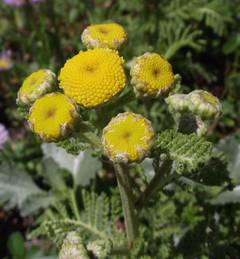
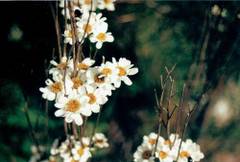
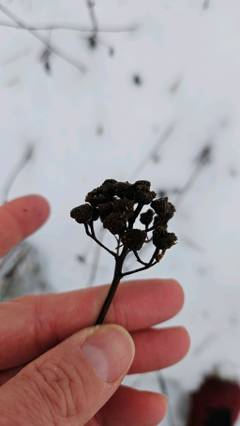
Tanacetum vulgare is a rhizomatous, strongly aromatic perennial in the daisy family (Asteraceae) reaching 24–48 inches (60–120 cm) tall with a 24–48 inch (60–120 cm) spread, forming dense, spreading clumps via creeping rhizomes. Stems are erect, stiff, branching in the upper half, grooved. Leaves are alternate, deeply pinnately compound (fern-like), 4–8 inches (10–20 cm) long, with numerous toothed leaflets, dark green, strongly aromatic when crushed — the camphor-like scent is immediately diagnostic. Flower heads are button-like, 0.3–0.5 inch (8–12 mm) in diameter, composed entirely of disc florets (no ray florets), bright yellow, arranged in dense, flat-topped corymbs of 20–200 heads. Fruit is a ribbed achene with a short crown. A single plant produces 10,000–50,000 seeds. The rhizome system spreads laterally, forming dense stands on roadsides and waste ground. Contains thujone and camphor; all parts are toxic. Historically planted as a medicinal and insect-repellent herb. Listed as a Class C noxious weed in Washington State.
Native Range
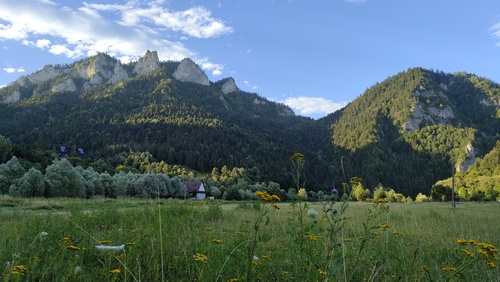
Native to Europe and western Asia, occurring on roadsides, waste ground, pasture edges, and riparian areas from sea level to approximately 7,000 feet (2,100 m). Widely naturalized across temperate North America. Common along roadsides and railroad rights-of-way in the Pacific Northwest.Suggested Uses
Used in Asteraceae identification for the rayless button-head comparison: Tanacetum (aromatic, fern-leaved, button heads) versus Matricaria discoidea (pineapple-scented, small cone heads) versus Senecio vulgaris (cylindrical rayless, black-tipped phyllaries). The strong aromatic scent is a sensory identification exercise alongside Matricaria discoidea. The thujone toxicity is taught in toxicology. Historically used as an insect repellent and embalming herb. Studied in ethnobotany and traditional medicine.How to Identify
Appearance
Size & Dimensions
Height2' - 4'
Width/Spread2' - 4'
Bloom Information
Flowers from July through September. Dense flat-topped corymbs bloom over 4–6 weeks. Pollinated by bees, flies, and beetles. Seeds mature 3–4 weeks after flowering. In the Pacific Northwest, the bright yellow button heads are conspicuous on roadsides in August.
Detailed Descriptions
Foliage Description
Dark green, deeply pinnately compound (fern-like) with toothed leaflets; strongly aromatic when crushedGrowing Conditions
Sun Requirements
Requires 4-10 hours of direct sunlight daily
• Full Sun: 6+ hours of direct sunlight
• Partial Shade: 3-6 hours of direct sunlight
• Full Shade: Less than 3 hours of direct sunlight
Care & Maintenance
Care Guide
Listed as a Class C noxious weed in Washington State. Digging the rhizome system to a depth of 6–8 inches (15–20 cm) is necessary; surface cutting stimulates regrowth from the extensive rhizome network. Repeated cutting every 2–3 weeks during the growing season over 2–3 years depletes rhizome reserves. Cutting before flowering prevents seed set. In small garden infestations, persistent digging over 2–3 seasons eradicates the colony. The strong aromatic compounds make the foliage unpalatable to livestock, allowing the species to increase in grazed pastures.Pruning
No pruning applicable in a weed context. Stems are cut at ground level and rhizomes are dug. Cutting before flowering prevents seed set. Flower heads should be bagged if seeds have begun to mature.Pruning Schedule
Prune: March–April
early spring