Tanacetum, Genus, spp., Multiple species,
- Genus
- Multiple species
tansies
Temperate Northern Hemisphere, chiefly Europe and central Asia
Overview
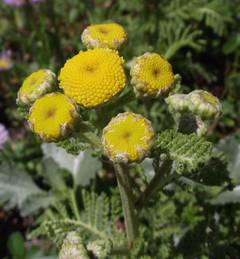
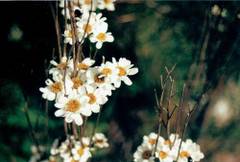
Tanacetum is a genus of about 160 species of aromatic perennials and subshrubs in the daisy family (Asteraceae), native mostly to the temperate Northern Hemisphere, especially Europe and central Asia. Plants form clumps of erect stems 20-120 cm (8-47 in) tall, with finely divided, often fern-like, strongly scented foliage. The flower heads are daisy- or button-like: some species, such as T. vulgare, common tansy, carry flat clusters of round, rayless yellow buttons, while others, such as T. coccineum, the painted daisy, and T. parthenium, feverfew, have white, pink, or red ray florets around a yellow disc. Flowering is mainly in summer. Tanacetum cinerariifolium is the source of the natural insecticide pyrethrum. The genus grows in full sun and free-draining soil and tolerates drought and poor ground once established. Several species spread strongly by rhizomes or self-seeding and can become weedy, and common tansy contains thujone, a compound toxic in quantity to people and livestock.
Native Range
Native across the temperate Northern Hemisphere, with the greatest diversity in Europe, the Mediterranean, and central Asia. T. vulgare has spread widely as a naturalised plant in North America and elsewhere.Suggested Uses
Grown in herb gardens, cottage and pollinator borders, and cutting gardens, with the painted daisies used as long-stemmed cut flowers and feverfew as an edging and self-seeding filler. T. cinerariifolium is grown commercially for the insecticide pyrethrum.How to Identify
Appearance
Size & Dimensions
Height8" - 3'11"
Width/Spread1' - 2'
Bloom Information
Most species flower through summer, roughly June to September, with feverfew often blooming from late spring into autumn. The flowers are visited by a wide range of bees, flies, and small butterflies. Seed heads follow and can self-sow freely.
Detailed Descriptions
Flower Description
yellow, white, pink, or redFoliage Description
green to grey-greenGrowing Conditions
Sun Requirements
Requires 6-10 hours of direct sunlight daily
• Full Sun: 6+ hours of direct sunlight
• Partial Shade: 3-6 hours of direct sunlight
• Full Shade: Less than 3 hours of direct sunlight
Care & Maintenance
Care Guide
Tanacetum grows in full sun in ordinary, free-draining soil and tolerates heat, drought, and poor ground once established. The clumping species spread by rhizomes and can need dividing or containing every few years, while feverfew and others self-sow heavily. Cutting back after the first flush of bloom can bring a second flush and limits unwanted seeding. Little feeding is needed, and rich soil produces lax growth. Propagation is by division, from seed, or from basal cuttings. The aromatic foliage leaves most species largely untouched by deer and rabbits, though some, such as common tansy, are toxic if eaten in quantity.Pruning
Faded flower stems are cut back after bloom to tidy the clump and reduce self-seeding, and the whole plant is cut to the ground in late autumn or late winter. Shearing feverfew after its first flush encourages further flowering. Division every two to three years keeps the rhizomatous species strong.Container Growing
Suitable for container growing
Minimum container size: 3 gallons