Overview
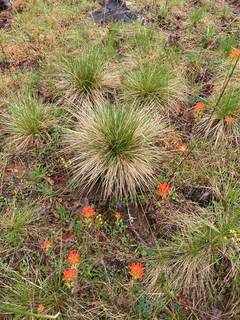
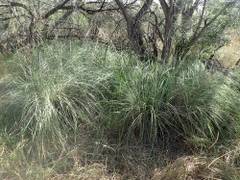
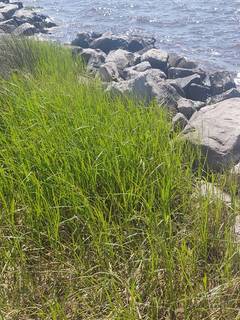
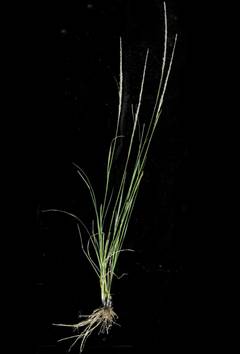
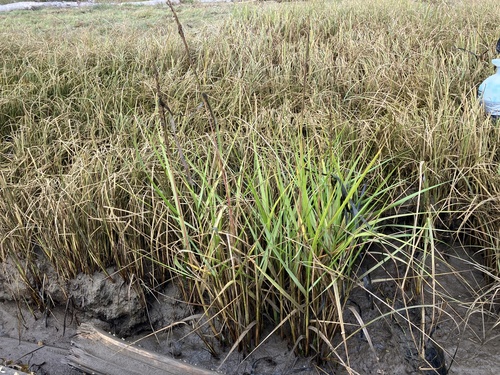
Sporobolus anglicus is a stout perennial salt-marsh grass that spreads by thick, far-creeping rhizomes to form dense swards. Stiff, erect flowering stems reach 12-51 inches (30-130 cm). The grey-green leaves are flat, tapering to a long point, and up to 0.6 inch (15 mm) wide, with inrolled tips. The inflorescence is made up of 2-12 stiff, spike-like racemes pressed against the stem, yellowish at first and turning straw-coloured. It colonises bare intertidal mud, trapping sediment and raising the marsh surface over time. The plant arose about 1890 in southern England as a fertile doubled-chromosome derivative of the cross between native Sporobolus maritimus and the introduced North American Sporobolus alterniflorus. Its vigorous rhizomatous spread leads it to be treated as invasive in many estuaries, where it can replace open mudflat used by feeding birds and invertebrates.
Native Range
Sporobolus anglicus originated around 1890 on the south coast of England, where the introduced Sporobolus alterniflorus crossed with the native Sporobolus maritimus and the sterile hybrid doubled its chromosomes to form this fertile species. It now grows on coasts throughout Britain and has spread or been planted in estuaries in western Europe, China, Australia, and elsewhere.Suggested Uses
Historically planted for coastal land reclamation, sediment stabilisation, and sea defence on soft estuarine mud. It is now more often the subject of control or removal programmes to restore open mudflat habitat. Its main role today lies in salt-marsh ecology rather than ornamental planting.How to Identify
Appearance
Size & Dimensions
Height1' - 4'3"
Width/Spread1' - 3'
Bloom Information
The yellowish, spike-like flower heads appear from July to September. Pollen is shed to the wind, and ripe spikelets shatter to release single-seeded fruits through autumn.
Detailed Descriptions
Foliage Description
Grey-greenGrowing Conditions
Sun Requirements
Requires 6-12 hours of direct sunlight daily
• Full Sun: 6+ hours of direct sunlight
• Partial Shade: 3-6 hours of direct sunlight
• Full Shade: Less than 3 hours of direct sunlight