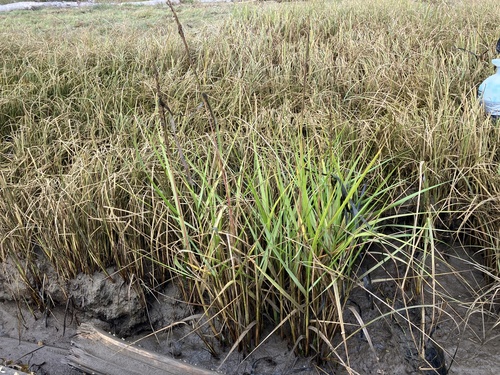
Sporobolus, Genus, spp., Multiple species,
- Genus
- Multiple species
dropseeds, cordgrasses, and sandreeds
Worldwide; prairies and coastal marshes
Overview
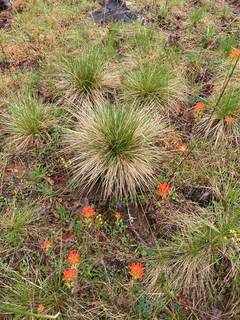
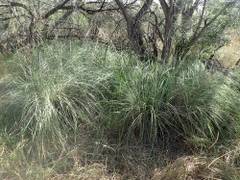
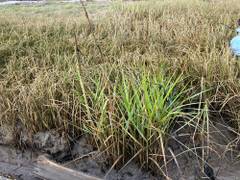
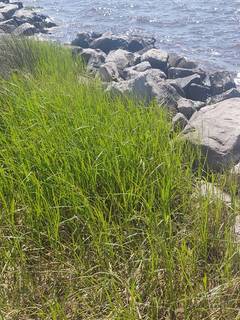
Sporobolus is a genus of warm-season grasses in the grass family, found on every inhabited continent. The roughly 160 species range from thread-leaved bunchgrasses to coarse, rhizome-spreading cordgrasses, now including the salt-marsh grasses formerly placed in Spartina. Plants vary from 1 to 8 feet (0.3-2.4 m) tall. Bunchgrass types such as S. heterolepis form dense, rounded tufts of thread-like arching leaves 12-20 inches (30-50 cm) long, while cordgrass types spread by stout rhizomes into broad colonies. Flowers are borne in open to spike-like panicles held above or among the foliage from mid- to late summer, ranging from silvery to pink-tinged or brown. The seeds drop free of their coats when ripe, the trait behind the name dropseed. Foliage of the bunchgrasses turns gold to orange in autumn and fades to light tan in winter, while cordgrasses yellow and collapse. Most species are deep-rooted and drought-tolerant once established, and several cordgrasses tolerate salt and standing water. S. heterolepis gives off a coriander-like scent when in flower. Across the genus, habitats span prairie, coastal marsh, dune, and disturbed open ground.
Native Range
The genus Sporobolus occurs worldwide, with species native to North and South America, Africa, Asia, and Australia. S. heterolepis is native to the tallgrass prairies of central North America, sand dropseed to dry plains and disturbed ground across the continent, and the cordgrasses to coastal salt marshes and tidal flats of the Americas and Europe. Habitats span dry prairie, sand dune, roadside, and brackish wetland from sea level to montane elevations.Suggested Uses
Bunchgrass species are grown in prairie and meadow plantings, borders, and mass plantings, spaced 18-30 inches (45-75 cm) apart, and along paths for their arching form and autumn color. Cordgrass species are used for erosion control and shoreline stabilization in wet or saline sites. Both yield seed eaten by birds and form cover for small wildlife.How to Identify
Appearance
Size & Dimensions
Height1' - 8'
Width/Spread1' - 3'
Bloom Information
Flowers from mid- to late summer into autumn, generally July through September, varying with species and climate. Bunchgrass panicles open above the foliage and persist into winter as they shed seed. Cordgrasses bloom in late summer in tidal marshes. Flowering is heaviest in full sun and open conditions.
Detailed Descriptions
Flower Description
silvery to pink-tinged or brownFoliage Description
green, turning gold to orange in autumnGrowing Conditions
Sun Requirements
Requires 6-12 hours of direct sunlight daily
• Full Sun: 6+ hours of direct sunlight
• Partial Shade: 3-6 hours of direct sunlight
• Full Shade: Less than 3 hours of direct sunlight
Care & Maintenance
Care Guide
Grows in full sun in a wide range of soils, from sand to clay, with bunchgrass species favoring well-drained ground and cordgrasses tolerating wet, saline sites. Plants are slow to establish from seed, taking two to three years to reach full size, but are long-lived and drought-tolerant once rooted. Little feeding is needed, and rich soil produces floppy growth in the bunchgrasses. The clumps need no division for many years. Cordgrass species spread aggressively by rhizome in wet ground and can crowd out other plants. Old foliage is cut back once a year before new spring growth.Pruning
Cut bunchgrass clumps back to a few inches above the crown in late winter or early spring before new growth begins. Remove old flower stems at the same time, or leave them through winter for structure. Cordgrass colonies are mowed or cut in late winter and may need rhizome containment in garden settings.Container Growing
Suitable for container growing
Minimum container size: 3 gallons