Sporobolus, Genus, wrightii, Species,
- Genus & species
giant sacaton
Southwestern United States and Mexico — Texas, New Mexico, Arizona, and northern Mexico, in desert grasslands and alkaline flats
Overview
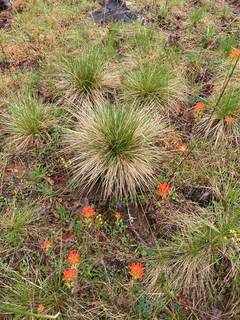
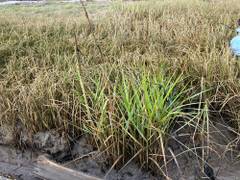
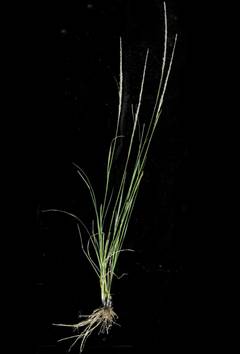
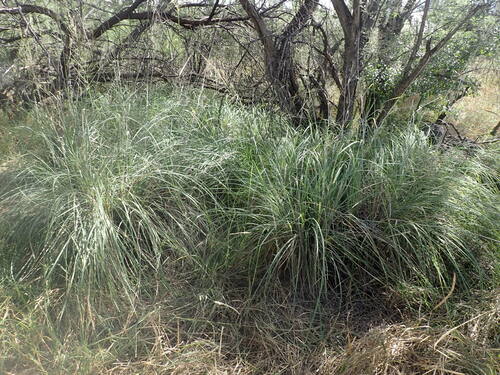
Sporobolus wrightii is giant sacaton — the largest native dropseed and a major large-bunch grass of the southwestern US, growing 48–72 inches (120–180 cm) tall and 48–60 inches (120–150 cm) wide. Named after Charles Wright, the Texas botanical collector. Gray-green narrow arching foliage forms a massive fountain — a southwestern native option for large-scale presence in landscape plantings. Large open airy golden panicles in late summer. Native to desert grasslands and alkaline flats of the southwestern US and Mexico — the species tolerates extreme heat, drought, alkaline soil, and poor ground. The 'sacaton' name is from the Spanish, meaning 'coarse grass'. Semi-evergreen in mild climates. The species historically covered vast areas of southwestern river valleys before overgrazing and water diversion eliminated much of its habitat. Hardy to zone 6.
Native Range
Sporobolus wrightii is native to the southwestern United States and Mexico — Texas, New Mexico, Arizona.Suggested Uses
Used as a large-scale southwestern native specimen, screen, and Miscanthus alternative for arid climates. The largest native dropseed. Desert grassland restoration. Alkaline and drought specialist.How to Identify
Appearance
Size & Dimensions
Height4' - 6'
Width/Spread4' - 5'
Colors
Bloom Information
Detailed Descriptions
Flower Description
Tan to golden, in large open airy paniclesFoliage Description
Gray-green, narrow, archingGrowing Conditions
Sun Requirements
Requires 6-12 hours of direct sunlight daily
• Full Sun: 6+ hours of direct sunlight
• Partial Shade: 3-6 hours of direct sunlight
• Full Shade: Less than 3 hours of direct sunlight
Care & Maintenance
Care Guide
Plant in full sun. Any well-drained soil including alkaline. Extremely drought-tolerant. Cut to 12 inches in late winter. Hardy to zone 6.Pruning
Stems can be left standing through winter. Cut to 12 inches in late February–March.Pruning Schedule
Prune: February–March
early spring