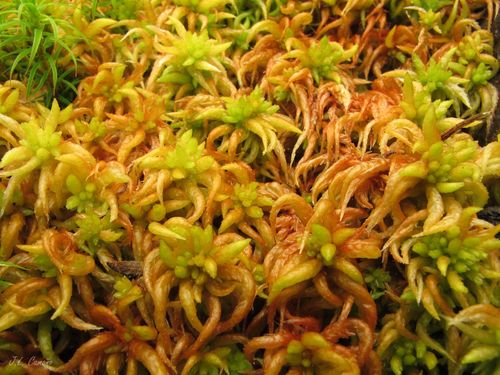
Sphagnum, Genus, spp., Multiple species,
- Genus
- Multiple species
sphagnum mosses
Boreal and temperate Northern Hemisphere; cool Southern Hemisphere regions
Overview
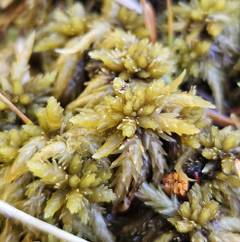
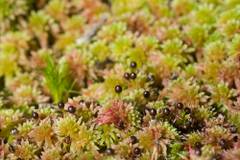
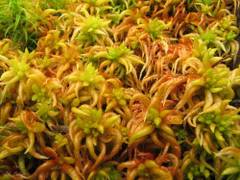
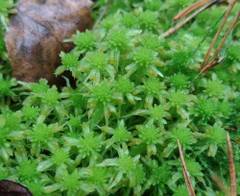
Sphagnum is a genus of roughly 300 species of peat mosses in the family Sphagnaceae, the dominant plants of bogs and acidic wetlands across the temperate and boreal Northern Hemisphere and cooler parts of the Southern Hemisphere. Each shoot bears a compact head, or capitulum, of crowded young branches above a stem hung with spreading and pendent branch fascicles. Living shoots stand 1 to 12 inches (2.5 to 30 cm) tall and grow in dense cushions and hummocks. The pale leaves are one cell thick and built of two cell types: narrow living green cells and large empty hyaline cells ringed with pores, a structure that lets the plant hold 16 to 26 times its dry weight in water. Colors range from green and yellow-green through gold, orange, copper, and deep red depending on species and light exposure. Sphagnum grows from the tip while the base dies and compresses, accumulating over centuries into peat. By releasing hydrogen ions, the genus acidifies its surroundings to a pH near 3.5 to 4.5 and slows decay, conditions that build and maintain peatland. Spores form in round capsules raised on short stalks that eject spores with an audible pop in dry summer weather. Dense carpets spread where moisture and acidity persist.
Native Range
Sphagnum is most abundant in the peatlands of the boreal and temperate Northern Hemisphere, including northern North America, Europe, and Asia, and also occurs in cool, wet regions of the Southern Hemisphere such as Patagonia, New Zealand, and Tasmania. It dominates ombrotrophic bogs, fens, wet heath, and the margins of acidic ponds.Suggested Uses
Sphagnum lines hanging baskets and wire planters, tops the soil of carnivorous-plant and orchid pots, and is the source of harvested peat used as a soil conditioner. In bog gardens and rain gardens it is grown as a living groundcover over saturated acidic substrate. Dried fibers are also used in wreath-making and as a propagation medium for air-layering.How to Identify
Appearance
Size & Dimensions
Height1" - 1'
Width/Spread6" - 3'
Bloom Information
Sphagnum reproduces by spores rather than flowers. Globe-shaped spore capsules form on short stalks in summer, ripening from green to dark brown. As they dry, internal pressure builds until the lid blows off and ejects spores in a visible puff. Most spread, however, occurs vegetatively as shoots branch and fragment.
Detailed Descriptions
Foliage Description
pale green, yellow, gold, orange, or red depending on species and lightGrowing Conditions
Sun Requirements
Requires 2-8 hours of direct sunlight daily
• Full Sun: 6+ hours of direct sunlight
• Partial Shade: 3-6 hours of direct sunlight
• Full Shade: Less than 3 hours of direct sunlight
Care & Maintenance
Care Guide
Sphagnum requires constantly wet, acidic conditions with a pH of 3.5 to 5.0 and water low in minerals, such as rainwater or distilled water; hard or alkaline water causes rapid decline. It grows in full sun to partial shade, developing red and orange tones in brighter light and staying green in shade. The genus draws nutrients from rain and dust rather than soil and needs no fertilizer. In cultivation it is grown in trays of live moss kept saturated, or as a lining for hanging baskets and a medium for carnivorous plants and orchids. Hardiness runs across USDA zones 3 to 9. Drying out for more than a short period kills living shoots.Pruning
Sphagnum is not pruned. Live cultures are maintained by keeping them saturated with mineral-free water and by removing invading vascular seedlings and algae. Harvesting is done by cutting the upper living layer and leaving the lower portion to regenerate.Container Growing
Suitable for container growing
Minimum container size: 1 gallons