Overview
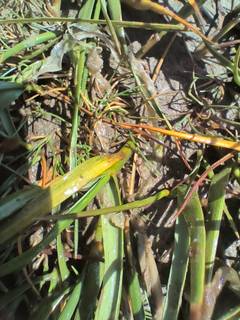
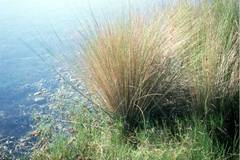
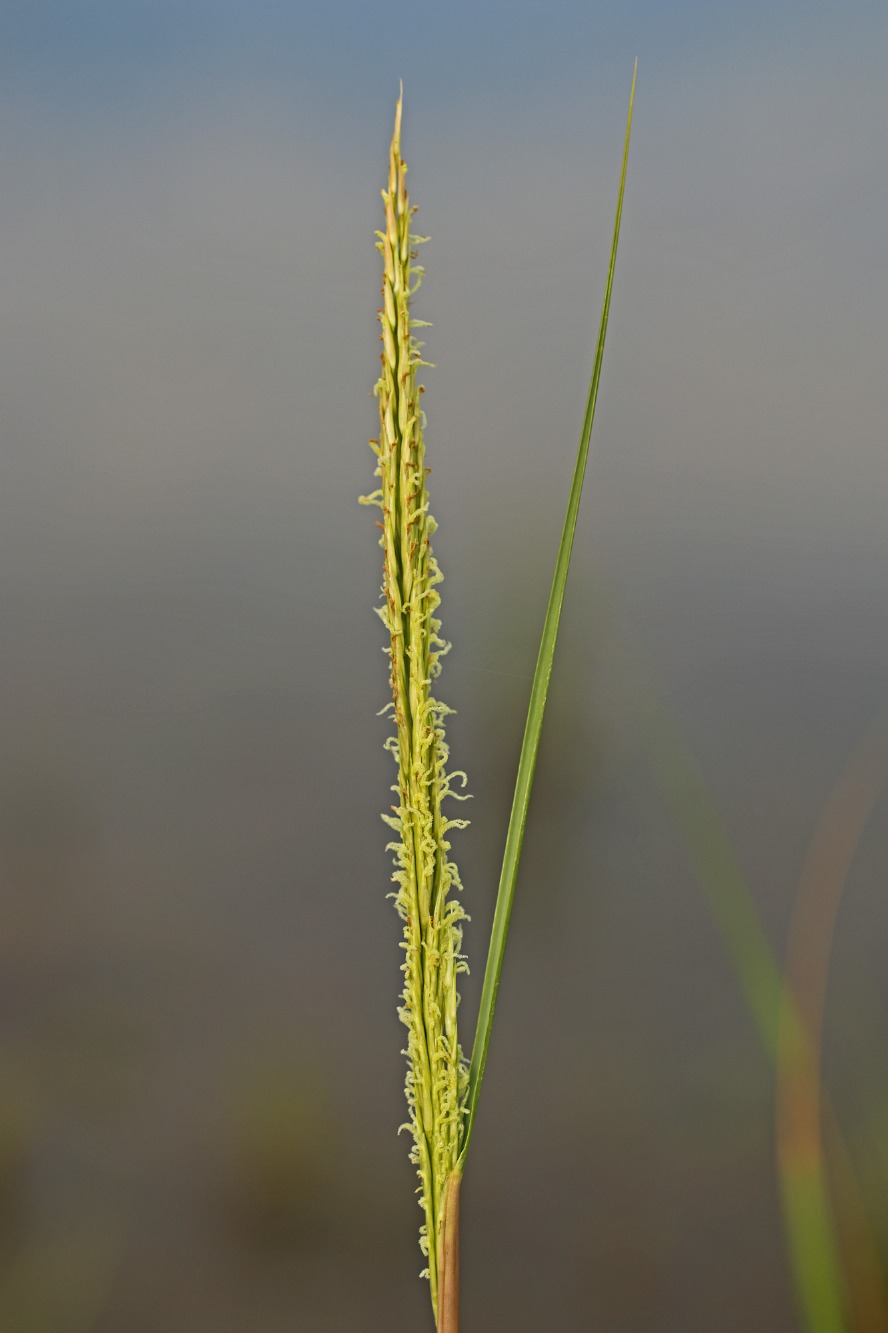
Spartina alterniflora is a robust rhizomatous perennial grass in the family Poaceae reaching 24-96 inches (60-240 cm) tall and 24-60 inches (60-150 cm) wide, forming dense monoculture stands in tidal mudflats and estuarine margins. Culms are erect, stout, smooth, and spongy at the base. Leaves are flat to inrolled at the margins, gray-green, 0.2-0.6 inch (5-15 mm) wide, and smooth on both surfaces. The ligule is a fringe of hairs approximately 0.04 inch (1 mm) long, a vegetative character useful for identification. Inflorescence is a spike-like panicle 4-12 inches (10-30 cm) long carrying 5-15 appressed branches (spikes), each bearing spikelets on one side. Spikelets are one-flowered, flattened, 0.4-0.6 inch (10-15 mm) long. Rhizomes are thick and creeping and form dense mats in intertidal sediment. The species is native to the Atlantic and Gulf coasts of North America, where it is the dominant salt marsh grass and a critical ecosystem engineer. On the Pacific coast, it is a highly damaging invasive species and is listed as a Class A noxious weed in Washington State. The species converts open tidal mudflats to dense grass meadows, eliminates critical shorebird foraging habitat, and alters sediment dynamics. The Willapa Bay, Washington infestation covered more than 16,000 acres at its peak and ranked with the largest Pacific-coast estuarine invasions.
Native Range
Spartina alterniflora is native to the Atlantic and Gulf coasts of North America from Newfoundland to Texas, where it forms the foundation of salt marsh ecosystems. Introduced to the Pacific coast, likely via ballast or oyster shipments. Invasive in Washington, Oregon, and California estuaries. Listed as Class A (eradication priority) in Washington State. The Willapa Bay, Washington infestation was among the largest estuarine cordgrass invasions on the Pacific coast.Suggested Uses
Used in estuarine invasive-species management as the primary Pacific-coast tidal invasive grass case study. The native-on-Atlantic, invasive-on-Pacific biogeography is taught in invasion ecology. Studied in salt marsh ecosystem engineering, sediment accretion dynamics, and shorebird habitat loss. The Spartina alterniflora × S. foliosa hybridization in California is studied in invasion genetics. The Willapa Bay eradication program is a case study in large-scale estuarine invasive management.How to Identify
Appearance
Size & Dimensions
Height2' - 8'
Width/Spread2' - 5'
Bloom Information
Spike-like panicles 4-12 inches (10-30 cm) long carrying 5-15 appressed branches, borne August through October over 2-3 weeks. Wind-pollinated. Seeds have low viability in many Pacific coast populations; vegetative spread via rhizomes and stem fragments is the primary expansion mechanism. Hybridizes with S. foliosa (native Pacific cordgrass) in California.
Detailed Descriptions
Flower Description
Green to purplish; spike-like panicles 4-12 inches (10-30 cm) carrying 5-15 appressed branches; August-OctoberFoliage Description
Gray-green to dark green; flat to inrolled; smooth on both surfaces; ligule a fringe of hairs approximately 0.04 inch (1 mm) long; deciduousGrowing Conditions
Sun Requirements
Requires 6-12 hours of direct sunlight daily
• Full Sun: 6+ hours of direct sunlight
• Partial Shade: 3-6 hours of direct sunlight
• Full Shade: Less than 3 hours of direct sunlight