Sisyrinchium, Genus, idahoense, Species,
- Genus & species
Idaho blue-eyed grass
Western North America: British Columbia to New Mexico
Overview
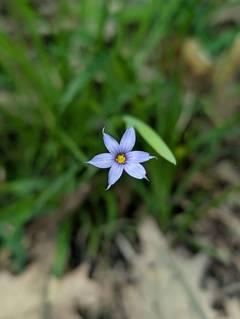
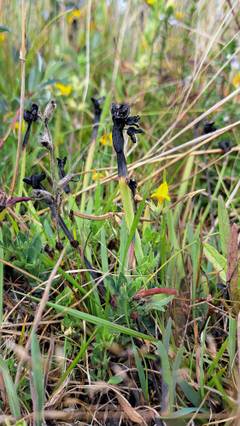
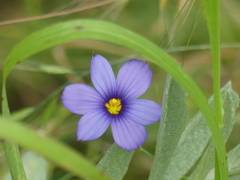
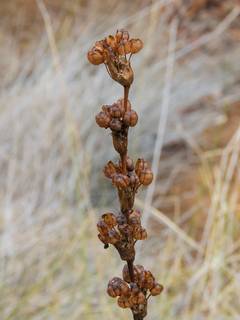
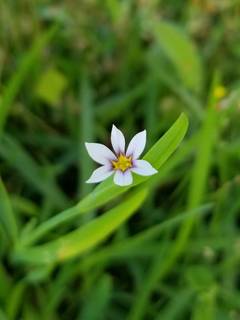
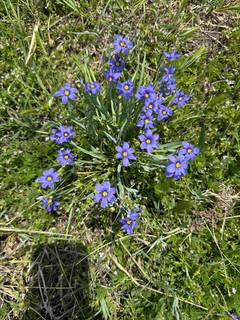
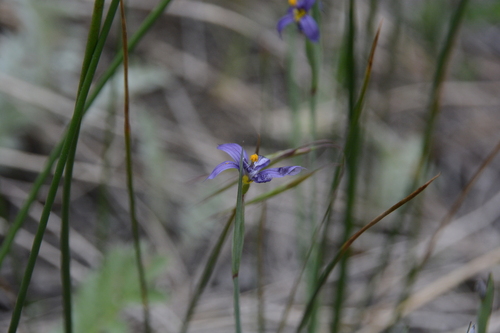
Sisyrinchium idahoense is a herbaceous perennial reaching 6-16 inches (15-40 cm) tall and 4-8 inches (10-20 cm) wide, forming small tufted clumps from a short rhizome. Leaves are linear, grass-like, 0.1-0.2 inches (2-5 mm) wide, blue-green, and 4-12 inches (10-30 cm) long, persisting through winter as flattened tan blades that fall away in spring. Flowering stems are flat-winged like the leaves and bear umbel-like clusters of 2-6 deep blue-violet to purple flowers, each 0.5-0.8 inches (12-20 mm) across with six pointed tepals and a yellow throat, from May through July. Each flower opens for a single day and closes by late afternoon; the cluster produces a sequence of flowers over 3-5 days. Capsules ripen black and 0.2-0.3 inches (5-8 mm) across, releasing dry seeds in late summer. Plants self-seed modestly in moist sites and may also expand by short rhizomes; clumps remain small and rarely exceed 8 inches (20 cm) wide. Despite the common name 'grass', the species is in the iris family. Lower foliage yellows and dies back during summer drought, leaving only flowering stems standing on dry sites.
Native Range
Native to western North America from southern British Columbia and Alberta south through the western United States to northern California, New Mexico, and the Sierra Nevada. Grows in moist meadows, streamside flats, sagebrush-grassland transitions, and montane wet swales at 2,000-10,000 feet (600-3,000 m) elevation.Suggested Uses
Used in moist meadow plantings, native plant collections, rain gardens, and cottage borders at 8-12 inches (20-30 cm) spacing in zones 4-9. Combines with native grasses, Camassia species, and Iris missouriensis in seasonal-wet meadow plantings west of the Rockies. Self-seeds modestly in moist undisturbed sites, producing 5-15 volunteer seedlings per parent annually.How to Identify
Appearance
Size & Dimensions
Height6" - 1'4"
Width/Spread4" - 8"
Colors
Bloom Information
May through July across the range; begins late April at low elevations in coastal Oregon and extends into early August in the high Sierra Nevada and northern Rockies. Individual flowers last only one day; the umbel produces a sequence of 2-6 flowers over 3-5 days. Total bloom period at the plant level extends 3-5 weeks. Cool wet springs extend bloom; hot dry conditions shorten it to 2 weeks.
Detailed Descriptions
Flower Description
Deep blue-violet to purple with yellow throatFoliage Description
Blue-greenGrowing Conditions
Sun Requirements
Requires 4-10 hours of direct sunlight daily
• Full Sun: 6+ hours of direct sunlight
• Partial Shade: 3-6 hours of direct sunlight
• Full Shade: Less than 3 hours of direct sunlight
Care & Maintenance
Care Guide
Establish in moist well-drained loam at pH 5.5-7.5; the species declines in compacted heavy clay or in dry rocky sites without supplemental water. Full sun produces the most flowers; partial afternoon shade in zones 7-9 below 1,500 feet (450 m) extends the bloom season by 1-2 weeks. Water during the first growing season and during summer dry spells in subsequent years; plants tolerate brief drought but go summer-dormant in extended dryness, producing little or no flowering on stressed plants. Few pests trouble the species. Slugs occasionally feed on emerging spring shoots in coastal gardens; damage is cosmetic. Divide every 4-5 years in early spring as the clump becomes congested; older clumps flower less and produce sparse foliage.Pruning
Cut spent flowering stems back to basal foliage after seed set in late summer to limit self-seeding in formal beds. Cutting back winter-damaged tan blades in early spring tidies the form before new growth emerges. Plants do not require deadheading during bloom; flowers fall cleanly and capsules are not visually intrusive.Pruning Schedule
Prune: August–September
summerfall
Container Growing
Suitable for container growing
Minimum container size: 1 gallons