Silphium, Genus, laciniatum, Species,
- Genus & species
compass plant
Central North America (tallgrass prairie)
Overview
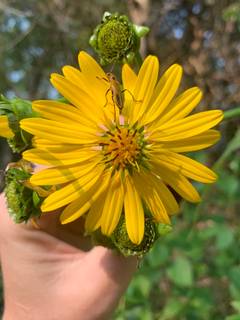
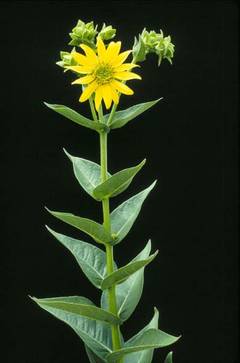
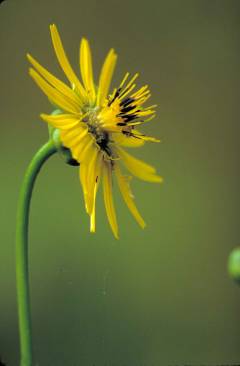
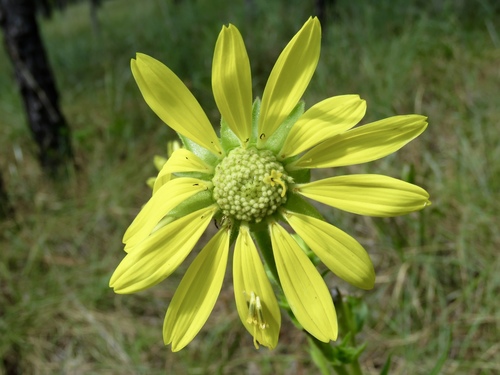
Silphium laciniatum, compass plant, is a long-lived prairie perennial in the aster family, sending up coarse flowering stems 5-10 feet (1.5-3 m) tall from a deep, woody taproot. The large basal leaves are 12-18 inches (30-45 cm) long, deeply cut into narrow lobes, and rough with stiff hairs; on the open prairie they tend to align their faces north and south, the trait behind the common name. Resinous yellow flower heads, 3-5 inches (8-13 cm) across, resemble small sunflowers and open along the upper stem from mid to late summer. The plant is slow to establish, often taking three or more years to bloom as it builds a taproot that can reach 10-15 feet (3-4.5 m) deep, which makes mature plants hard to move once sited. That same root lets it survive drought, fire, and the cold of the open prairie. The cut stems exude a sticky resin that was once chewed as a gum by Plains peoples. Silphium laciniatum suits the back of large borders and meadows but is too tall and deep-rooted for small or frequently dug beds, and its bristly foliage and height can overwhelm smaller plantings.
Native Range
Silphium laciniatum is native to the tallgrass prairies of central North America, from the Great Lakes and Ohio Valley west to the Great Plains and south to Texas. It grows in open prairie, savanna, and roadside remnants on deep soils.Suggested Uses
Silphium laciniatum is used in prairie restorations, large native borders, and meadow plantings where its height has room. Its flowers feed bees and butterflies, and the seeds draw goldfinches and other birds.How to Identify
Appearance
Size & Dimensions
Height5' - 10'
Width/Spread2' - 3'
Bloom Information
Flowering runs from July to September, with heads opening from the top of the stem downward over several weeks. Each head lasts a few days, and a mature plant carries many heads in sequence. Seed ripens from late summer into fall.
Detailed Descriptions
Foliage Description
dark greenGrowing Conditions
Sun Requirements
Requires 6-10 hours of direct sunlight daily
• Full Sun: 6+ hours of direct sunlight
• Partial Shade: 3-6 hours of direct sunlight
• Full Shade: Less than 3 hours of direct sunlight
Care & Maintenance
Care Guide
Grow Silphium laciniatum in full sun in deep, well-drained loam, clay, or sandy soil at a pH of about 6.0 to 7.5. It is drought tolerant once its taproot is established and needs no supplemental water in most prairie climates. Plants are slow from seed, often taking three to four years to flower, and the long taproot makes transplanting older plants difficult. Sow seed in fall so it receives winter chilling, or set out young plants before the taproot lengthens. Mature clumps need no staking despite their height and persist for decades with little care.Pruning
Cut the dead stems to the ground in late fall or late winter. Spent flower heads can be left standing to feed birds and to give winter structure. No routine pruning is otherwise needed.Pruning Schedule
Prune: February & November
fallwinter