Silphium, Genus, integrifolium, Species,
- Genus & species
prairie rosinweed
Overview
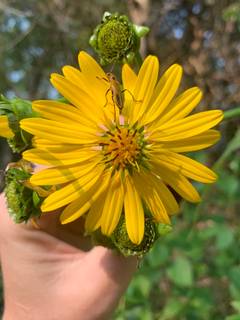
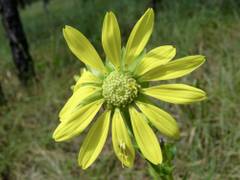
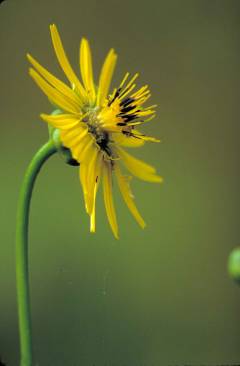
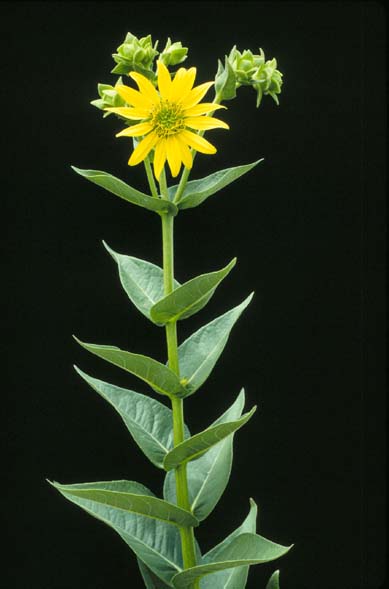
Silphium integrifolium is a tall, upright perennial in the aster family, native to prairies, glades, and roadsides of the central United States. Stiff, mostly unbranched stems rise 24-60 inches (60-150 cm) from a thick, deep rootstock. The opposite leaves are stalkless and clasp the stem, lance-shaped to oval, 3-6 inches (8-15 cm) long, with a rough, sandpapery surface on both sides. From July to September, the stems are topped by yellow flower heads 2-3 inches (5-8 cm) wide, each with 20-30 ray florets around a darker yellow disk, resembling small sunflowers. Broken stems exude a sticky, resinous sap that gives the plant its common name. The species grows in full sun on dry to medium soils, including clay, loam, and rocky ground, and withstands heat and drought once the deep roots form. It can spread by rhizomes into colonies and seeds freely, which suits wild plantings more than tidy borders. Plants take two to three years to bloom from seed and transplant poorly once established. Foliage dies back after frost.
Native Range
Native to the central United States, from Michigan and the Dakotas south to Texas and Mississippi. It grows in tallgrass prairies, glades, savannas, and along roadsides and railroads.Suggested Uses
Grown in prairie and meadow plantings, native gardens, and large pollinator borders. Spaced 24-36 inches (60-90 cm) apart, plants form tall upright clumps. Used at the back of borders and in naturalized areas where height and seed for birds are wanted.How to Identify
Appearance
Size & Dimensions
Height2' - 5'
Width/Spread1'6" - 3'
Bloom Information
Flowers open from July to September, lasting about eight weeks. Heads open over several weeks from the upper branches. Seeds ripen into autumn and draw finches and other seed-eating birds.
Detailed Descriptions
Flower Description
Yellow sunflower-like headsFoliage Description
Green, rough, sandpapery, opposite, stalklessGrowing Conditions
Sun Requirements
Requires 6-10 hours of direct sunlight daily
• Full Sun: 6+ hours of direct sunlight
• Partial Shade: 3-6 hours of direct sunlight
• Full Shade: Less than 3 hours of direct sunlight
Care & Maintenance
Care Guide
Grows in full sun on dry to medium, well-drained soil, including clay, loam, and rocky ground. Water through the first season; established plants are deeply rooted and drought-tolerant. No fertilizer is needed, and rich soil produces taller stems that can lean. Rhizomes and self-seeding spread the plant into colonies, so divide or remove seed heads to limit spread where space is tight. The deep taproot makes mature plants hard to move. Cut stems to the ground after frost, or leave them standing for winter birds.Pruning
Cut stems to the ground in late autumn, or leave the seed heads standing for birds through winter. Remove spent heads earlier to limit self-seeding. No other pruning is required.Pruning Schedule
Prune: November
fall
Container Growing
Suitable for container growing
Minimum container size: 5 gallons