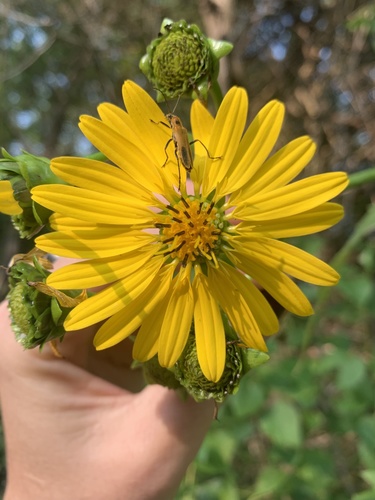
Silphium, Genus, spp., Multiple species,
- Genus
- Multiple species
rosinweeds
Overview
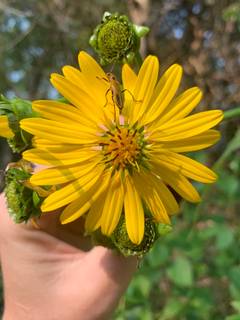
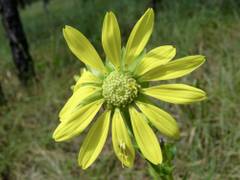
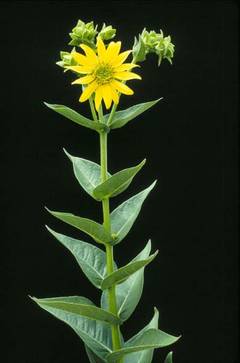
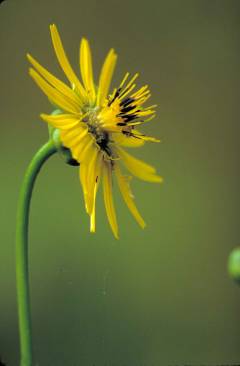
Silphium is a genus of about 12 to 20 species of tall, coarse perennials in the daisy family Asteraceae, native to the prairies, savannas, and open woods of central and eastern North America. Plants form clumps of stout, often rough-hairy stems 3 to 10 ft (0.9 to 3 m) tall that exude a sticky resin when cut, the source of the name rosinweed. The large leaves vary by species: S. perfoliatum, the cup plant, joins its opposite leaves around the stem to form cups that catch rainwater; S. laciniatum, the compass plant, holds its deeply cut leaves on a north-south plane; and S. terebinthinaceum, prairie dock, lifts huge basal leaves above bare stalks. Yellow, daisy-like flower heads 2 to 4 in (5 to 10 cm) across open through summer atop the branched stems. Deep taproots reach several feet down, making mature plants drought tolerant and long-lived but hard to transplant. Limitations include the large size, a tendency to self-seed and spread, and slow establishment in the first year or two from seed.
Native Range
Silphium is native to North America, centered on the tallgrass prairies and oak savannas of the Midwest and the eastern United States, reaching into southern Canada and the Gulf states. Plants grow in prairies, meadows, roadside remnants, and open woodland on deep soils. Several species are now planted in restorations well beyond their original range.Suggested Uses
Silphium is planted in prairie and meadow restorations, rain gardens, and the back of large borders, and the cup plant is used at pond and stream edges. The tall stems and seed heads support pollinators and seed-eating birds in wildlife gardens. Plants are massed as a screen or backdrop in naturalistic schemes.How to Identify
Appearance
Size & Dimensions
Height3' - 10'
Width/Spread1'6" - 4'
Bloom Information
Silphium blooms from midsummer into early autumn, with most species flowering from July through September over six to ten weeks. The branched stems open many yellow heads in succession. Bees and butterflies work the flowers, and goldfinches and other birds feed on the ripening seeds.
Detailed Descriptions
Foliage Description
green to grey-greenGrowing Conditions
Sun Requirements
Requires 6-12 hours of direct sunlight daily
• Full Sun: 6+ hours of direct sunlight
• Partial Shade: 3-6 hours of direct sunlight
• Full Shade: Less than 3 hours of direct sunlight