Sempervivum, Genus, tectorum, Species,
- Genus & species
hens and chicks
Mountains of central and southern Europe (Alps, Pyrenees, Apennines, Carpathians); rocky slopes, screes, and cliff ledges at moderate to high elevations
Overview
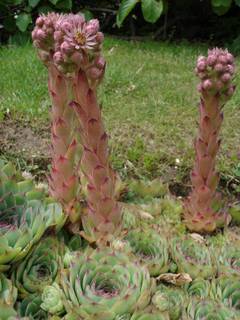
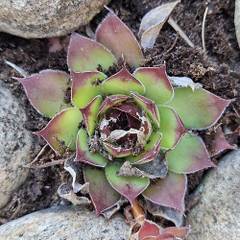
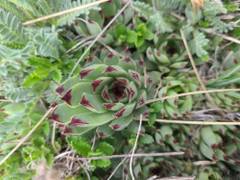
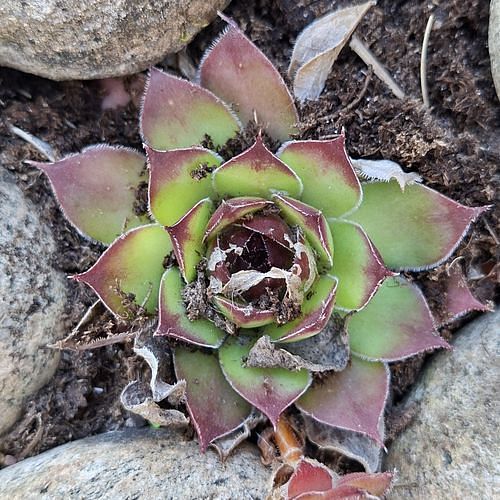
Sempervivum tectorum is an evergreen rosette-forming succulent perennial native to the mountains of central and southern Europe. Each mother rosette is 2-5 inches (5-12.5 cm) in diameter, composed of flattened pointed fleshy leaves 0.5-1.5 inches (1.2-3.8 cm), gray-green to bluish-green with reddish to purple-tipped margins; color intensity varies with sun exposure and season. Rosettes spread by producing offset rosettes on short stolons that root adjacent to the parent; a single plant can colonize an area 12-18 inches (30-45 cm) across over several years. Each rosette is monocarpic — it produces a single erect flower stalk 6-12 inches (15-30 cm) tall bearing a flat-topped cyme of pink to rose-red 6-12 petaled star-shaped flowers 0.5-0.75 inch (1.2-2 cm) in June-August, then dies; surrounding offsets continue the colony. Sharp drainage is the critical cultural requirement — wet soils cause rapid crown rot. The species is extremely cold-hardy (zone 3) and tolerates neglect, poor soil, and intense summer drought. The specific epithet tectorum means of roofs — the plant was historically grown on thatched and tiled rooftops in Europe, where it was believed to protect against lightning.
Native Range
S. tectorum is native to the mountains of central and southern Europe — the Alps, Pyrenees, Apennines, and Carpathians — on rocky well-drained slopes, screes, cliff ledges, and old stone walls at moderate to high elevations. The species has naturalized in some rocky disturbed sites in the Pacific Northwest.Suggested Uses
Grown in rock gardens, dry stone walls, green roofs, hypertufa troughs, container arrangements, and sharply drained borders, spaced 4-6 inches (10-15 cm) apart; offsets fill in over time. The tight rosette form, year-round succulent structure, and rosette color variation give low-maintenance interest in difficult dry sites. Cold hardiness (zone 3) and drought tolerance exceed those of most cultivated succulents suitable for Pacific Northwest gardens. Non-toxic. Deer-resistant.How to Identify
Appearance
Size & Dimensions
Height3" - 1'
Width/Spread1' - 1'6"
Colors
Bloom Information
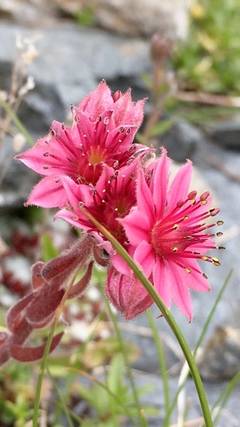
Erect succulent flower stalks 6-12 inches (15-30 cm) bear flat-topped cymes of pink to rose-red 6-12 petaled star-shaped flowers 0.5-0.75 inch (1.2-2 cm) in June-August. Each rosette blooms once then dies; surrounding offsets continue vegetative growth. Bloom per individual rosette lasts 2-4 weeks.
Detailed Descriptions
Flower Description
pink to rose-red, 6-12 petaled, star-shaped, 0.5-0.75 inch (1.2-2 cm) across, in flat-topped cymes on erect succulent stalks 6-12 inches (15-30 cm); June-August; monocarpic — the flowering rosette dies after bloom and surrounding offsets continueFoliage Description
gray-green to bluish-green with reddish-purple tips; fleshy rosette leaves 0.5-1.5 inches (1.2-3.8 cm); color intensity varies with sun exposure and seasonGrowing Conditions
Sun Requirements
Requires 4-12 hours of direct sunlight daily
• Full Sun: 6+ hours of direct sunlight
• Partial Shade: 3-6 hours of direct sunlight
• Full Shade: Less than 3 hours of direct sunlight
Care & Maintenance
Care Guide
Site in full sun (4-12 hours direct sun) in sharply drained lean gritty soil with a pH of 6.0-8.0. Sharp drainage is the critical requirement — waterlogged soil causes rapid crown rot and death. Extremely poor, rocky, sandy, and alkaline soils are tolerated; the leaner the soil, the better. Virtually no supplemental water is required once established; overwatering is the primary cause of failure. No fertilization is needed. Slugs and snails may damage rosettes in moist conditions. In the Pacific Northwest, drainage is maximized through raised beds, gravel mulch, or gritty amended soil. Non-toxic. Deer-resistant. Hardy in zones 3-8.Pruning
No pruning is required. Spent flower stalks are removed after the blooming rosette dies by cutting to the base. The resulting gap fills in from surrounding offset rosettes. Old dried rosette hulls can be removed for neatness.Pruning Schedule
Prune: July–August
summer
Container Growing
Suitable for container growing
Minimum container size: 1 gallons