Sempervivum, Genus, arachnoideum, Species,
- Genus & species
cobweb houseleek
Alpine and subalpine rocky habitats in central and southern European mountains: the Alps, Pyrenees, Apennines, and Carpathians, on rocky outcrops and scree at elevations of 2,000-10,000 feet (600-3,000 m).
Overview
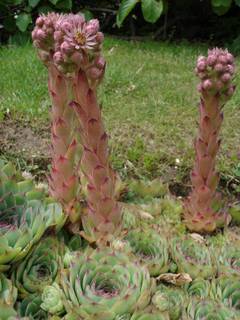
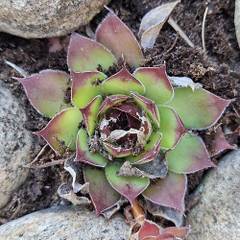
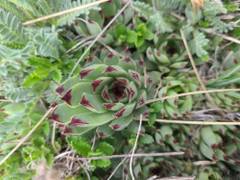
Sempervivum arachnoideum is a mat-forming succulent perennial in the stonecrop family (Crassulaceae) reaching 1-6 inches (2.5-15 cm) tall and 6-12 inches (15-30 cm) wide as a colony. Individual rosettes are dense and tight, 0.5-1.5 inches (1.5-4 cm) in diameter, composed of 50-80 fleshy lance-shaped leaves 0.3-0.5 inch (8-12 mm) long, green to grey-green and often flushed reddish-purple in cold weather or under high light from anthocyanin pigment accumulation. The species identification feature is the dense covering of white cobweb-like filaments stretching between the leaf tips and crossing the rosette center, produced by glandular trichomes at the leaf tips and most heavily expressed on new tightly-closed rosettes. Older open rosettes show sparser webbing. Plants spread by horizontal stolons that produce offset rosettes (the chicks of the hen-and-chicks common name) around the mother rosette, building dense mats over 1-2 growing seasons. Each rosette is monocarpic: after 3-5 years of vegetative growth, an individual rosette elongates into a 4-6 inch (10-15 cm) flower stalk bearing 5-15 star-shaped pink to rose-red flowers 0.6 inch (15 mm) across, then dies after seed set. The surrounding offsets continue the colony, so a planting persists indefinitely through the staggered flowering and replacement of individual rosettes. The species tolerates temperatures to -30°F (-34°C) when established in sharply drained sites; root rot in waterlogged soil is the primary cause of cultivation failure in cool wet climates like the Pacific Northwest, where raised beds and gritty soil mixes counteract the winter wet conditions that kill the species in clay or compacted ground.
Native Range
Sempervivum arachnoideum is native to the mountains of central and southern Europe, including the Alps, Pyrenees, Apennines, and Carpathians, where it grows on rocky outcrops, cliff faces, and scree at elevations of 2,000-10,000 feet (600-3,000 m). The geographic range extends from France and Spain east through Austria, Slovenia, and the western Balkans. The high-elevation rocky habitat has shaped the species drought tolerance, cold hardiness, and intolerance of waterlogged soil.Suggested Uses
Used in rock gardens, crevice gardens, green roofs (minimum 2 inches / 5 cm substrate depth), and stone walls where the sharp drainage and low fertility match the species native habitat. The species works well as a container specimen in shallow pans and troughs (minimum 2 inches / 5 cm deep) with drainage holes. Tolerance of extreme cold, wind, and poor soil makes the species suited to exposed sites where most perennials fail. Combinations with Sedum, Jovibarba, and other alpine succulents produce textural contrast in mineral-based plantings, with the cobweb filaments giving Sempervivum arachnoideum a visual signature distinct from the smoother Sedum rosettes.How to Identify
Appearance
Size & Dimensions
Height1" - 6"
Width/Spread6" - 1'
Bloom Information
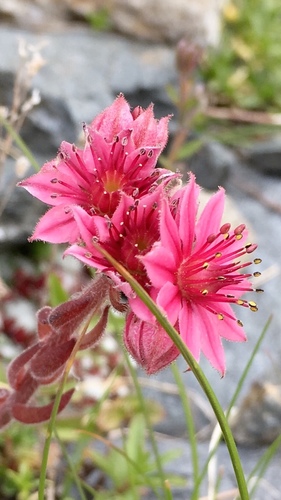
Mature rosettes elongate into 4-6 inch (10-15 cm) flowering stalks in late spring, opening flat-topped cymes of 5-15 star-shaped pink to rose-red flowers 0.6 inch (15 mm) across in June through July, with bloom lasting 2-3 weeks. Each flower has 8-12 narrow pink to rose-red petals, and the species is pollinated by bees and other insects. The flowering rosette is monocarpic and dies after seed set, while the surrounding non-flowering offset rosettes continue vegetative growth and carry the colony forward to the next year.
Detailed Descriptions
Flower Description
Pink to rose-red; star-shaped flowers 0.6 inch (15 mm) across with 8-12 narrow petals carried in a flat-topped cyme on the elongated flowering rosetteFoliage Description
Green to grey-green; reddish-purple flush in cold weather or under high light from anthocyanin accumulation; rosettes covered with white cobweb-like trichome filaments stretching between leaf tipsGrowing Conditions
Sun Requirements
Requires 6-12 hours of direct sunlight daily
• Full Sun: 6+ hours of direct sunlight
• Partial Shade: 3-6 hours of direct sunlight
• Full Shade: Less than 3 hours of direct sunlight
Care & Maintenance
Care Guide
Plant in full sun in sharply drained gritty soil with a pH of 6.0-7.5, mixed at approximately 50% mineral grit (pumice, perlite, or coarse sand) and 50% standard potting soil. Spacing is 3-4 inches (8-10 cm) apart, with offsets filling the gaps within 1-2 growing seasons. Watering is sparing: soil should dry completely between waterings, and overwatering through summer is the primary risk in container culture. The Pacific Northwest climate poses winter wet as the main cultivation challenge, and raised beds, rock gardens, or containers with drainage holes work well to keep the root zone from saturating during the wet winter months. No fertilization is needed in mineral-rich soil; in poor substrates, a single application of dilute balanced fertilizer in early spring is enough to support a full year of growth. Dead flowering rosettes are removed when dry to maintain visual coherence in the colony.Pruning
No pruning is needed. Dead monocarpic rosettes are detached and removed after flowering completes and the rosette has dried. Offsets are separated from congested mats every 2-3 years for propagation by pulling or cutting the offset with a short section of stolon and replanting on the soil surface, where the offset roots within 1-2 weeks during the active growing season.Pruning Schedule
Prune: August
summer
Container Growing
Suitable for container growing
Minimum container size: 1 gallons