Sempervivum, Genus, species, Species, &, Subspecies, cvs, Subspecies,
- Genus & species
- Subspecies
houseleek
Mountainous Europe (Alps, Pyrenees, Carpathians, Balkans), Caucasus, and western Asia
Overview
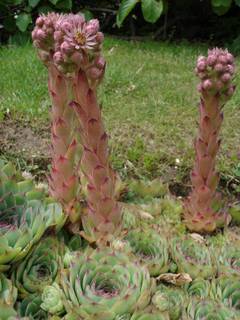
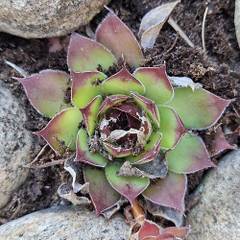
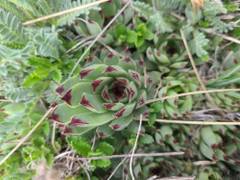
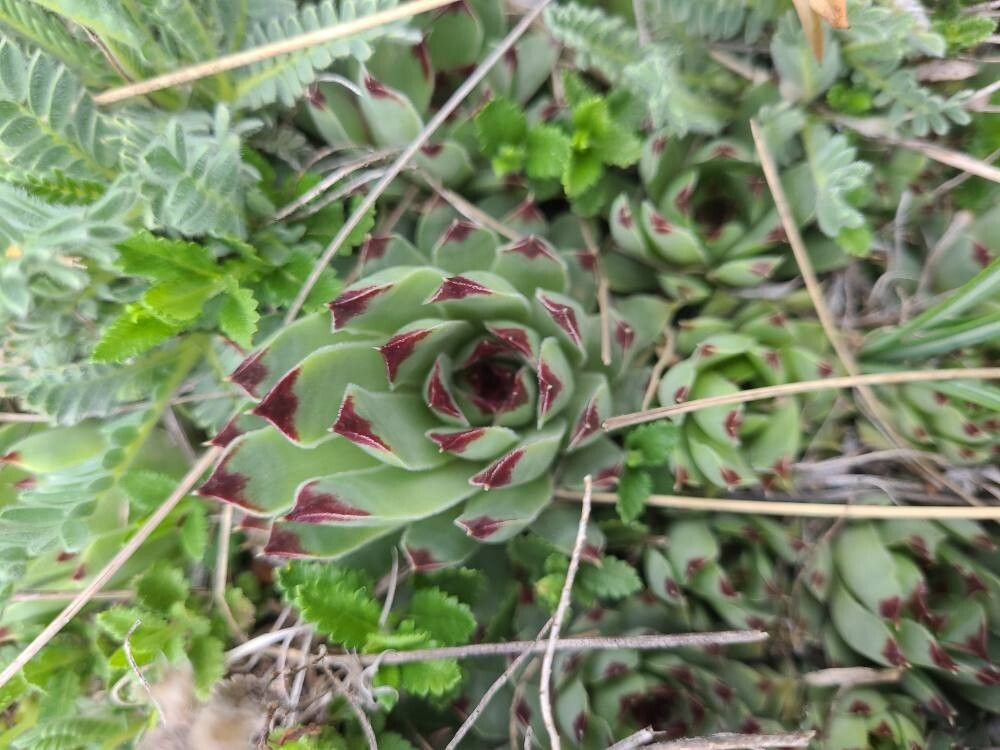
Sempervivum species and cultivars (houseleeks, hens-and-chicks) are evergreen succulent perennials in the stonecrop family (Crassulaceae) reaching 2–6 inches (5–15 cm) tall with spreads of 6–18 inches (15–45 cm). The habit is rosette-forming and colony-building on short stolons. Native to mountainous regions of Europe (Alps, Pyrenees, Carpathians, Balkans), the Caucasus, and western Asia, wild species grow on rocky outcrops, cliff faces, and alpine scree at 3,000–10,000 feet (900–3,000 m). Plants produce tight symmetrical rosettes of thick fleshy pointed leaves across a wide color range — green, grey-green, purple, red, bronze, pink, and bicolored combinations — with many cultivars shifting color through the seasons. Individual rosettes measure 1–6 inches (2.5–15 cm) across and produce offsets (the 'chicks') on short stolons, forming expanding mats. Flowering is monocarpic: each rosette produces one flower stalk 4–12 inches (10–30 cm) tall carrying star-shaped flowers in pink, red, purple, or yellow in summer, then dies, with surrounding offsets filling the gap. More than 4,000 named cultivars have been registered. Hardy to zone 3. Wet soils, shade, and rich growing conditions produce thin etiolated rosettes that lose color saturation and rot at the crown.
Native Range
Sempervivum species are native to mountainous regions of Europe (Alps, Pyrenees, Carpathians, Balkans), the Caucasus, and western Asia. Wild species grow on rocky outcrops, cliff faces, and alpine scree at elevations of 3,000–10,000 feet (900–3,000 m).Suggested Uses
Grown in rock gardens, alpine troughs, green roofs, wall crevices, stone-wall tops, and shallow containers with spacing based on cultivar size (typically 4–8 inches / 10–20 cm apart). The color range and rosette geometry suit collector plantings and single-genus beds. Green-roof and extensive-roof applications take advantage of the genus's tolerance for minimal substrate. Shade, wet soils, and rich amended conditions cause etiolation, color loss, and crown rot.How to Identify
Appearance
Size & Dimensions
Height2" - 6"
Width/Spread6" - 1'6"
Bloom Information
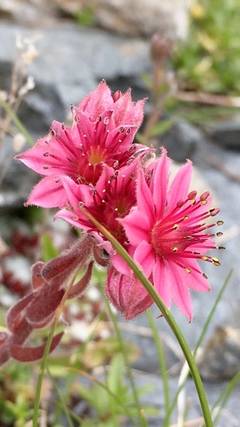
Star-shaped flowers 0.5–0.75 inch (1–2 cm) across in pink, red, purple, or yellow appear on thick stalks 4–12 inches (10–30 cm) tall from June through August. Bloom duration is 3–4 weeks per flowering rosette. After flowering, each rosette dies (monocarpic), and surrounding offsets close the gap. Foliage form and color are the main year-round features; flowering is a once-per-rosette event.
Detailed Descriptions
Flower Description
Pink, red, purple, or yellow; star-shaped 0.5-0.75 inch on thick stalks 4-12 inchesFoliage Description
Variable across species and cultivars: green, grey-green, purple, red, bronze, pink, bicolored; tight symmetrical rosettes with thick fleshy pointed leaves; many cultivars shift color seasonallyGrowing Conditions
Sun Requirements
Requires 6-12 hours of direct sunlight daily
• Full Sun: 6+ hours of direct sunlight
• Partial Shade: 3-6 hours of direct sunlight
• Full Shade: Less than 3 hours of direct sunlight
Care & Maintenance
Care Guide
Grows in full sun in sharply drained lean gritty soil at pH 6.0–8.0. Hardy to zone 3. Thrives in minimal substrate — rocks, crevices, green-roof mats, and hypertufa troughs. Supplemental watering is rarely needed after the first few weeks; rosettes survive on rainfall alone in most temperate climates. Wet soils and heavy clay cause crown rot. Full sun preserves the most saturated leaf color; shade causes rosettes to open and green out. Monocarpic rosettes that have flowered and died are lifted by hand to tidy the colony, and offsets fill the space.Pruning
Remove dead flowering rosettes after bloom by hand or with a small hand tool. Thin overcrowded offsets every 3–4 years in spring if the colony becomes packed. No other pruning is needed.Container Growing
Suitable for container growing
Minimum container size: 1 gallons