Scirpus, Genus, atrovirens, Species,
- Genus & species
dark green bulrush
Overview
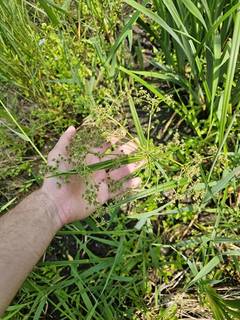
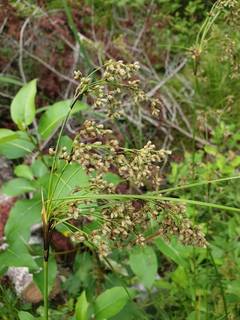
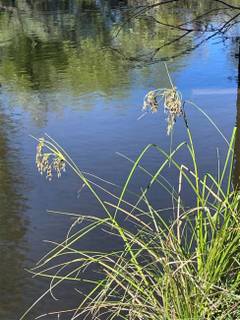
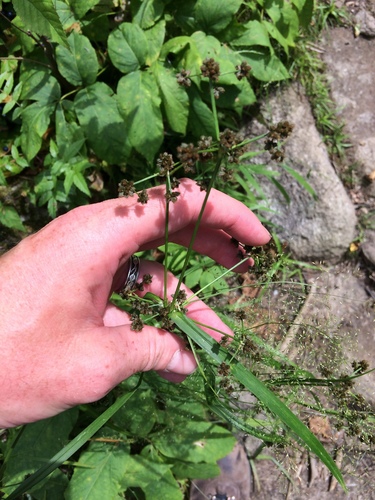
Scirpus atrovirens is a clump-forming perennial sedge in the family Cyperaceae, growing 2-5 feet (60-150 cm) tall from short rhizomes. It forms dense tufts of triangular, leafy stems topped in summer by branched clusters of small greenish to dark-brown spikelets. The leaves are flat, grass-like, and up to 0.5 inch (12 mm) wide, ranging from medium to dark green and giving the plant its common name. Each stem carries a terminal inflorescence with numerous tight, rounded spikelet heads that turn brown as the seeds ripen. It grows in consistently wet ground, including marshes, wet meadows, ditches, pond margins, and stream banks, and tolerates standing water a few inches deep. The fibrous roots and spreading rhizomes bind soil and help stabilize wet banks. Outside wet sites it declines, since it needs steady moisture and does not tolerate prolonged drought. The seed heads persist into autumn, and the foliage dies back to the crown over winter.
Native Range
Scirpus atrovirens is native to much of temperate North America, from eastern Canada south to Georgia and west to the Great Plains. It grows in wetlands, wet meadows, marshes, ditches, and along streams and ponds.Suggested Uses
Scirpus atrovirens is used in rain gardens, pond and stream margins, wetland restoration, and bioswales for erosion control and water filtration. Its dense roots stabilize wet banks, and its seed heads support birds and other wildlife. It combines with sedges, rushes, and moisture-loving wildflowers in naturalized wet plantings.How to Identify
Appearance
Size & Dimensions
Height2' - 5'
Width/Spread1' - 2'
Bloom Information
Flowering, in the form of wind-pollinated spikelet clusters, occurs from late spring into summer, roughly May to July. The greenish heads mature to brown by midsummer and shed numerous small seeds. There are no showy petals; the interest is in the textured seed heads. Seed heads remain into autumn and supply food for waterfowl and songbirds.
Detailed Descriptions
Foliage Description
medium to dark greenGrowing Conditions
Sun Requirements
Requires 4-8 hours of direct sunlight daily
• Full Sun: 6+ hours of direct sunlight
• Partial Shade: 3-6 hours of direct sunlight
• Full Shade: Less than 3 hours of direct sunlight
Care & Maintenance
Care Guide
Scirpus atrovirens grows in full sun to part shade in wet, mucky, or heavy soils that stay moist year-round. It tolerates seasonal flooding and standing water up to a few inches deep, which suits it to pond edges and rain gardens. Steady moisture is essential, and the plant declines in soils that dry out for long periods. It needs no fertilizer in fertile wetland soils and spreads slowly by rhizome to form colonies. Cutting the clump back in late winter clears old growth before spring shoots appear. Hardy in USDA zones 3 through 8, it dies back each winter and resprouts from the crown.Pruning
Old stems can be cut to the ground in late winter or early spring before new growth begins. Spent seed heads may be left through winter for wildlife and texture. Dividing crowded clumps in spring controls spread and renews vigor.Pruning Schedule
Prune: February–March
winterearly spring
Container Growing
Suitable for container growing
Minimum container size: 3 gallons