Schoenoplectus, Genus, californicus, Species,
- Genus & species
California bulrush
Western United States and the Americas
Overview
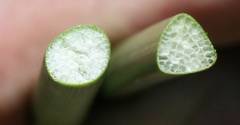
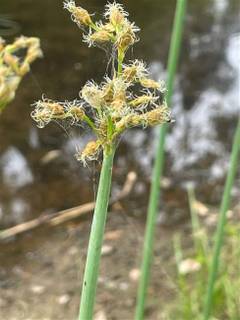
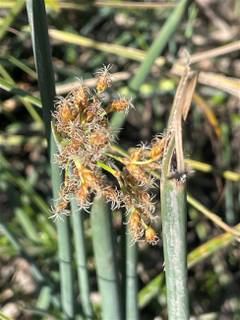
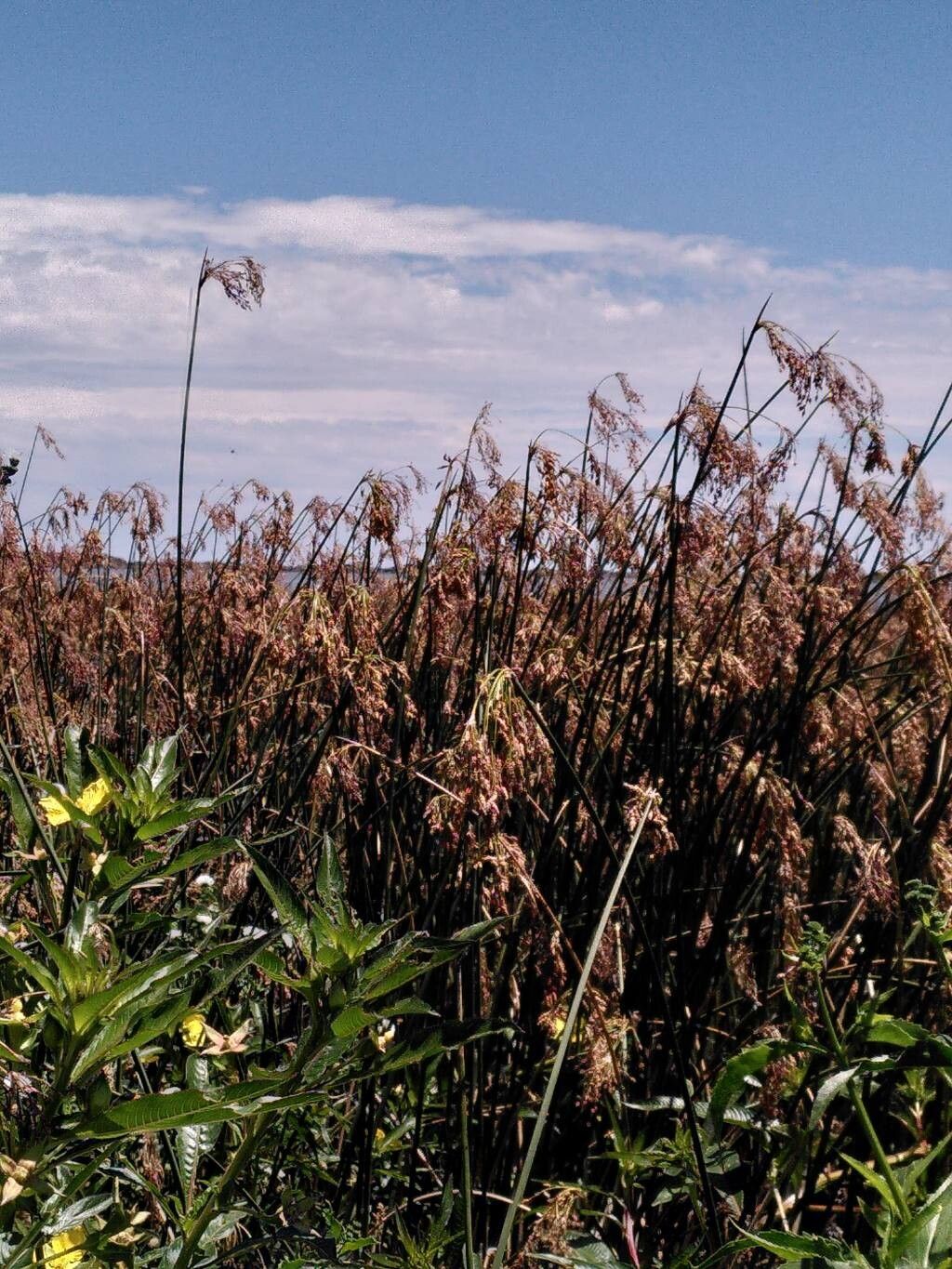
Schoenoplectus californicus is a large emergent perennial sedge, one of the plants known as tule, growing 6–15 feet (1.8–4.6 m) tall from thick, creeping rhizomes in shallow water. The stems are smooth, soft, and roughly triangular to rounded in cross-section, tapering to a point and largely leafless, with the leaves reduced to sheaths at the base. Near the stem tip, drooping clusters of reddish-brown to straw-colored spikelets form a one-sided, branched flower head 2–4 inches (5–10 cm) long. It spreads by stout rhizomes to form dense stands in freshwater and brackish marshes, pond and lake edges, and slow channels across the western United States and far into the Americas. The stems were widely used by Indigenous peoples for mats, baskets, and reed boats. It needs standing water or saturated soil and forms tall screens at the water's edge. It can spread aggressively and crowd open water where conditions suit it.
Native Range
Schoenoplectus californicus is native to the Americas, from the western and southern United States south through Mexico, Central America, and much of South America, in freshwater and brackish wetlands.Suggested Uses
It is used in wetland restoration, pond and lake margins, water gardens, and erosion control along shorelines. It grows as a tall screen and habitat plant at the water's edge.How to Identify
Appearance
Size & Dimensions
Height6' - 15'
Width/Spread2' - 4'
Bloom Information
Detailed Descriptions
Flower Description
reddish-brown to strawFoliage Description
green stems, leaves reducedGrowing Conditions
Sun Requirements
Requires 6-12 hours of direct sunlight daily
• Full Sun: 6+ hours of direct sunlight
• Partial Shade: 3-6 hours of direct sunlight
• Full Shade: Less than 3 hours of direct sunlight
Care & Maintenance
Care Guide
Schoenoplectus californicus grows in full sun in shallow standing water up to about 3 feet (90 cm) deep or in permanently saturated soil. It spreads quickly by rhizomes and forms dense colonies, so it is planted where its spread is wanted or contained by pond edges or planting baskets. It tolerates fresh and brackish water and fluctuating water levels. It does not survive in soils that dry out. Cutting stems below the waterline weakens the plant and helps limit unwanted spread.Pruning
Dead stems are cut back in late winter before new shoots rise. Cutting stems below the waterline during the growing season checks the colony's spread. Thinning crowded stands keeps them from filling open water.Pruning Schedule
Prune: January–February
winter
Container Growing
Suitable for container growing
Minimum container size: 5 gallons