Phlox, Genus, subulata, Species, 'Scarlet Flame', Cultivar,
- Genus & species
- Cultivar
scarlet flame carpet phlox
Overview
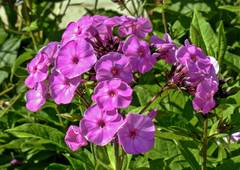
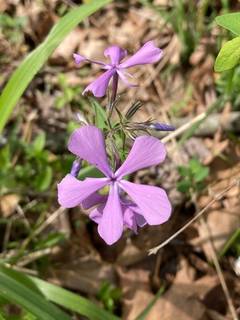
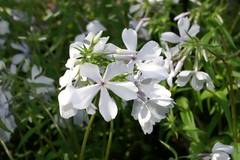
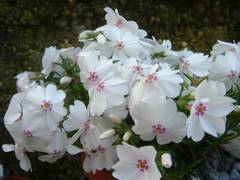
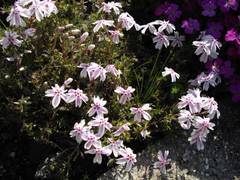
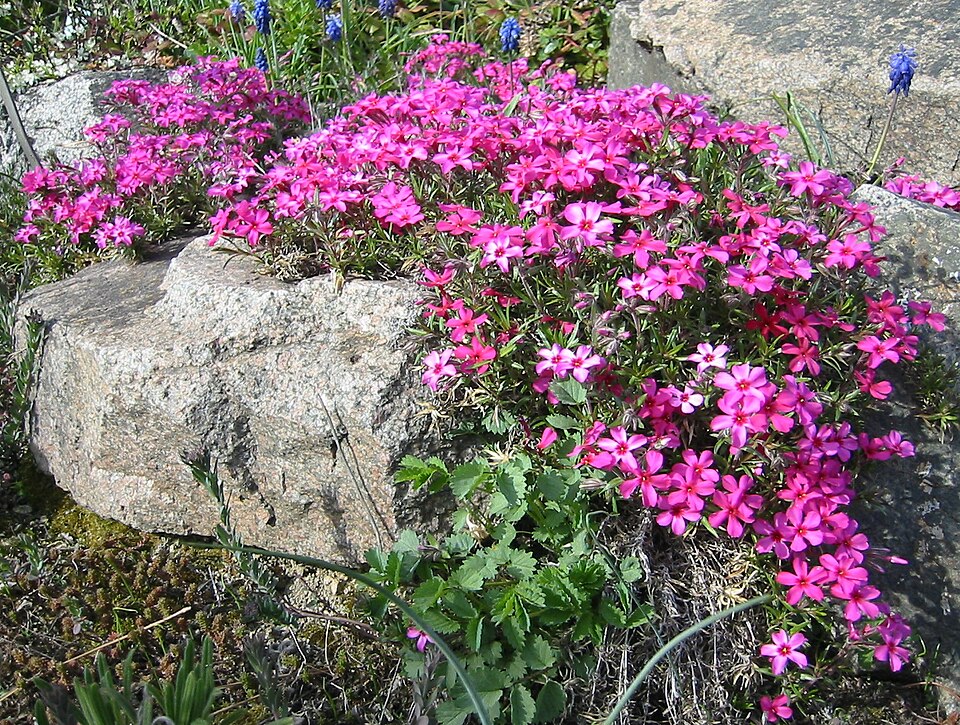
'Scarlet Flame' is a low-growing herbaceous perennial cultivar of Phlox subulata forming a dense evergreen mat 4-6 inches (10-15 cm) tall and spreading 18-24 inches (45-60 cm) wide. Foliage consists of small needle-like to awl-shaped leaves 0.5-0.75 inch (1.3-2 cm) long, dark green and persistent through winter, turning slightly bronze-purple after first frost. Flowers are 0.5-0.75 inches (1.3-2 cm) wide, five-petaled and notched at the petal tips, scarlet-pink to bright cerise with a small darker eye, completely covering the foliage at peak bloom. Bloom occurs from mid-April through late May in zones 4-7 and 2-3 weeks earlier in zones 8-9. Spread is by trailing stems that root where they touch the soil; mature plants form a dense weed-suppressing mat in 2-3 years. Plants tolerate drought, poor soils, and reflected heat from rocks or pavement. Spider mites can occur in hot dry weather; powdery mildew is uncommon on this species. Generally non-toxic to humans and pets. Crown rot develops in poorly drained or shaded sites.
Native Range
Phlox subulata is native to rocky woodlands, ledges, and shale slopes in central and eastern North America from southern Quebec and Ontario south to Tennessee and North Carolina at 100-3,500 feet (30-1,070 m) elevation. The species occurs in well-drained acidic soils on rocky outcrops and is often associated with dry oak-pine forests.Suggested Uses
Used as ground cover, in rock gardens, on slopes, between flagstones, and as a low edging at 12-18 inch (30-45 cm) spacing in zones 3-9. Suitable for spilling over walls, retaining wall tops, and in dry-stone wall plantings. Container culture works in shallow pots and trough gardens at least 4 inches (10 cm) deep with sandy soil and rapid drainage.How to Identify
Appearance
Size & Dimensions
Height4" - 6"
Width/Spread1'6" - 2'
Colors
Bloom Information
Bloom begins in mid- to late April in zones 5-7 and continues through late May; in zones 8-9 flowering begins in late March and finishes by early May. Total bloom duration is 4-6 weeks. Light shearing after bloom encourages a small second flush of 1-2 weeks in cool summers but is not reliable. Each individual flower lasts 5-7 days; the dense mat carries hundreds of flowers simultaneously at peak.
Detailed Descriptions
Flower Description
Scarlet-pink to cerise with darker eyeFoliage Description
Dark green; bronze-purple in winterGrowing Conditions
Sun Requirements
Requires 6-12 hours of direct sunlight daily
• Full Sun: 6+ hours of direct sunlight
• Partial Shade: 3-6 hours of direct sunlight
• Full Shade: Less than 3 hours of direct sunlight
Care & Maintenance
Care Guide
Plant in well-drained sandy, rocky, or gritty soil in full sun with neutral to slightly acidic pH; heavy clay soils require amendment with grit or planting on a slope. Water weekly during the first growing season; established plants tolerate 4-6 weeks of drought and decline with overwatering. No fertilizer is needed; rich soils produce floppy growth and reduced bloom. Spider mites occur in hot dry weather and produce yellowing on foliage; treatment with insecticidal soap or strong water spray controls light infestations. Crown rot develops in shaded sites or poorly drained soils. Plants typically remain in place for 5-8 years before centers thin out and renewal by division is required.Pruning
Shear plants back by one third immediately after bloom to maintain compact mat shape and trigger possible rebloom. Cut out any dead or thin sections in early spring before new growth emerges. Plants generally require no other pruning.Pruning Schedule
Prune: May–June
late spring
Container Growing
Suitable for container growing
Minimum container size: 1 gallons