Sanicula, Genus, europaea, Species,
- Genus & species
wood sanicle
Overview
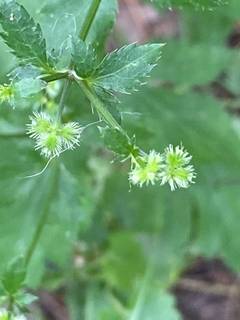
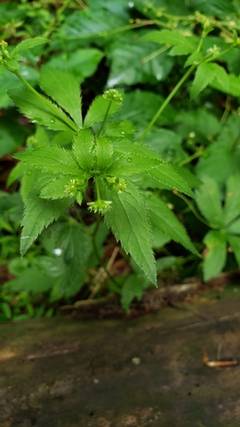
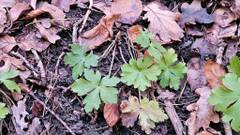
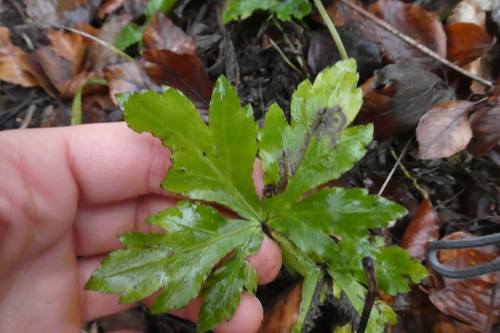
Sanicula europaea is a clump-forming herbaceous perennial of the carrot family, growing 20-60 cm (8-24 in) tall from a short rhizome. Its long-stalked basal leaves are glossy, palmately divided into three to five toothed lobes, 5-12 cm (2-4.7 in) across, and form a low rosette. From late spring it sends up slender, sparsely branched stems carrying small, tight clusters of white to pale pink flowers in compact rounded umbels. The flowers are followed by small egg-shaped fruits covered in hooked bristles that cling to fur for dispersal. It grows in the shade of deciduous and mixed woodland on moist, base-rich to neutral soils, often on calcareous ground. The species tolerates deep shade and competition from tree roots but spreads slowly and stays low, with sparse flowering in dense gloom. Its glossy, hand-shaped leaves give low ground cover that holds through much of the year beneath the canopy.
Native Range
Sanicula europaea is native across Europe, much of Asia, and parts of Africa, growing throughout the woodlands of its range. It favours shaded, humus-rich soils, often over chalk or limestone. It ranges from lowland forests to mountain woodland.Suggested Uses
Sanicula europaea is grown as ground cover in woodland gardens, shaded borders, and naturalistic plantings under trees and shrubs. Its glossy leaves hold form through much of the year in shade. It suits damp, shaded sites where flowering plants struggle.How to Identify
Appearance
Size & Dimensions
Height8" - 2'
Width/Spread8" - 1'
Bloom Information
Detailed Descriptions
Flower Description
white to pale pinkFoliage Description
glossy dark greenGrowing Conditions
Sun Requirements
Tolerates up to 4 hours of direct sunlight daily
• Full Sun: 6+ hours of direct sunlight
• Partial Shade: 3-6 hours of direct sunlight
• Full Shade: Less than 3 hours of direct sunlight
Care & Maintenance
Care Guide
Grow in partial to deep shade on moist, humus-rich, neutral to alkaline soil; woodland gardens and shaded borders suit it. It tolerates dry shade and root competition once established, though it grows fuller on steadily moist ground. The plant is hardy to hard frost across cool temperate zones. Full sun and dry, exposed sites cause the leaves to scorch and the plant to fade. Established clumps need little care beyond removing old foliage. It can be raised from fresh seed, which germinates slowly.Pruning
Tattered or old leaves can be removed in late winter before new growth appears. Spent flower stems are cut off after seeding where the clinging burs are unwanted. No regular pruning is otherwise needed.Container Growing
Suitable for container growing
Minimum container size: 1 gallons