Sanicula, Genus, crassicaulis, Species,
- Genus & species
Pacific sanicle
Western North America from British Columbia to Baja California
Overview
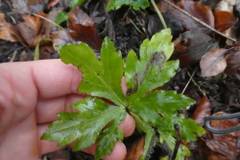
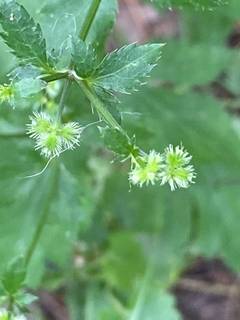
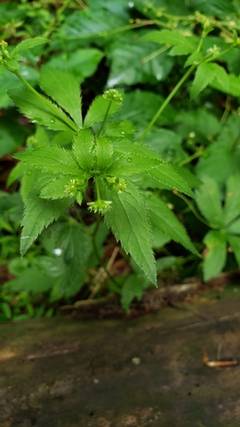
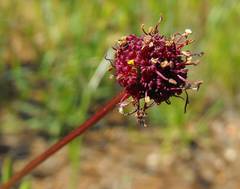
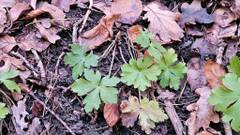
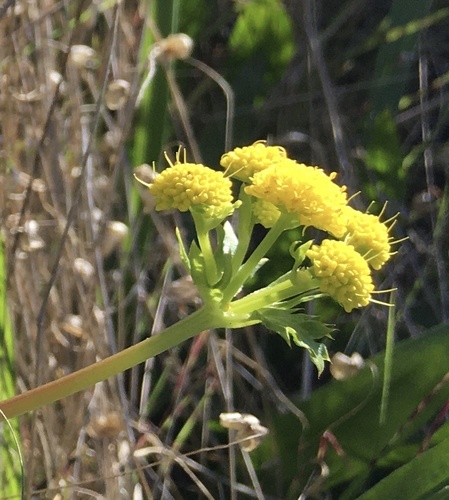
Sanicula crassicaulis is a herbaceous perennial growing from a stout taproot to 1-4 feet (30-120 cm) tall, with branching, ridged stems. Basal and lower stem leaves are palmately divided into 3-5 toothed lobes, 1.5-4 inches (4-10 cm) wide, on stalks 2-8 inches (5-20 cm) long; the leaves are firm and somewhat glossy. Small yellow to greenish-yellow flowers are crowded into round heads 0.2-0.4 inch (5-10 mm) across, grouped in open branched clusters from spring into summer. The flower heads develop into round dry fruits 0.1-0.2 inch (3-5 mm) long covered in hooked bristles that catch on fur and clothing. Plants die back to the root in summer drought and reappear with autumn and winter rain. Stems and foliage carry a faint resinous scent when crushed. The form is open and somewhat sprawling rather than dense.
Native Range
Native to western North America from British Columbia south through California to Baja California, with disjunct populations in parts of South America. It grows in open woodland, chaparral, grassland, and coastal scrub, mostly below 5,000 feet (1,500 m).Suggested Uses
Grown in native plant gardens, woodland edges, and habitat restoration plantings on the Pacific coast, spaced 12-18 inches (30-45 cm) apart. It supports small native pollinators and fills space in dry shade. The clinging fruits can be a nuisance near paths.How to Identify
Appearance
Size & Dimensions
Height1' - 4'
Width/Spread1' - 2'
Bloom Information
Detailed Descriptions
Flower Description
yellow to greenish-yellowFoliage Description
greenGrowing Conditions
Sun Requirements
Requires 3-8 hours of direct sunlight daily
• Full Sun: 6+ hours of direct sunlight
• Partial Shade: 3-6 hours of direct sunlight
• Full Shade: Less than 3 hours of direct sunlight
Care & Maintenance
Care Guide
Grows in full sun to part shade on well-drained soils, including rocky and clay types, and tolerates summer drought by dying back to the root. It needs no supplemental water in its native range, growing during the cool wet season. In gardens it self-sows where the bristly fruits drop. Few pests or diseases affect it. The plant is short-lived but persists in a planting through reseeding.Pruning
No routine pruning is needed. Cutting back the dried stems after the fruit ripens limits self-seeding. Foliage can be removed once it yellows in summer without harming the root.Pruning Schedule
Prune: June–July
summer
Container Growing
Suitable for container growing
Minimum container size: 2 gallons