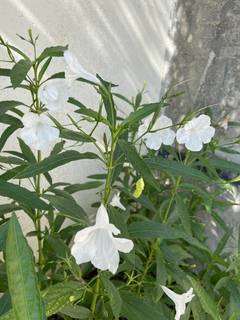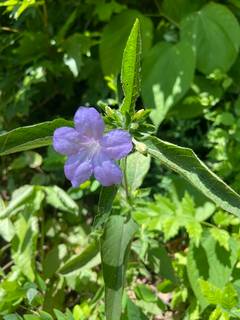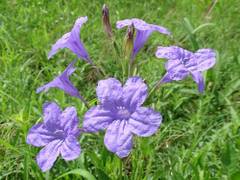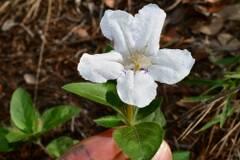
Ruellia, Genus, strepens, Species,
- Genus & species
smooth ruellia
Overview
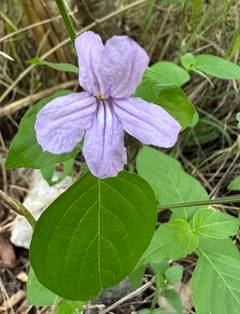
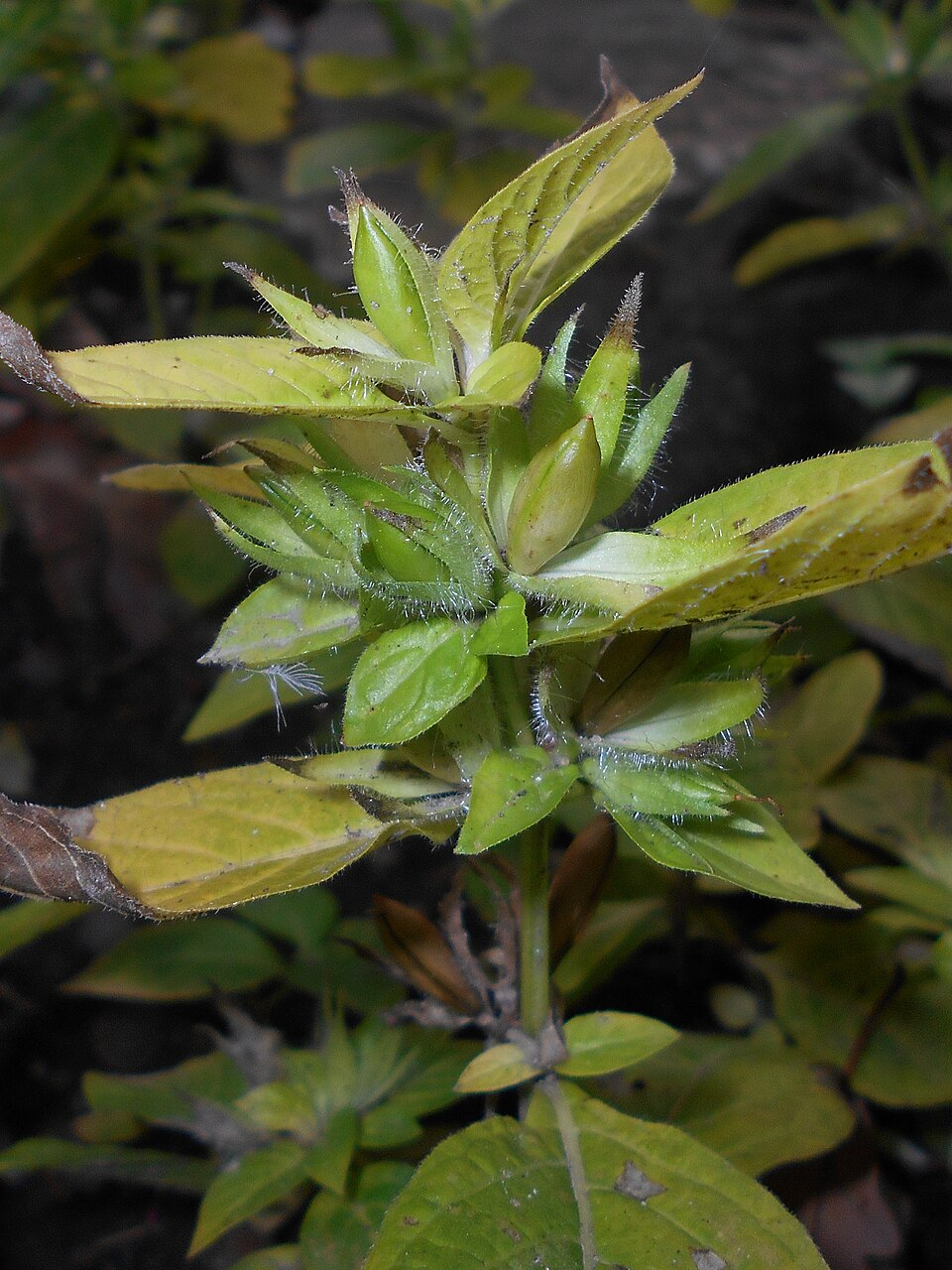
Ruellia strepens is an upright herbaceous perennial 1-3 feet (30-90 cm) tall, native to woodlands, prairies, and limestone glades of the central and eastern United States. Stems are mostly smooth, branching little, and carry paired oval to elliptic leaves 2-6 inches (5-15 cm) long with slightly wavy margins. From late spring through summer, lavender to blue-purple funnel-shaped flowers about 1.5-2 inches (4-5 cm) long open in the upper leaf axils, each lasting a single day before dropping. Alongside these open flowers the plant produces closed, self-pollinating (cleistogamous) flowers that never open yet set the bulk of the seed; ripe capsules split and expel seeds when wetted, the source of the name strepens, meaning rattling. Plants spread by seed and form loose colonies rather than dense clumps. The species tolerates a range of light and soil but flowers sparsely in deep shade and can self-sow widely enough to become weedy in beds. Foliage dies back to the ground each winter.
Native Range
Native to the central and eastern United States, where it grows in moist woodlands, stream terraces, prairies, and limestone glades, often on calcium-rich soils.Suggested Uses
Grown in woodland gardens, native plantings, and informal borders, and used in pollinator and prairie restoration. Combined with shade-tolerant wildflowers and grasses on limestone soils. Free self-seeding restricts its use in tidy, formal beds.How to Identify
Appearance
Size & Dimensions
Height1' - 3'
Width/Spread1' - 2'
Bloom Information
Open flowers appear from late spring through summer, generally May through August, each lasting only one day. Lavender to blue-purple funnels open in the morning and drop by evening. Closed, self-pollinating flowers form along the stems through the same period and produce most of the seed.
Detailed Descriptions
Flower Description
Lavender to blue-purpleFoliage Description
GreenGrowing Conditions
Sun Requirements
Requires 3-8 hours of direct sunlight daily
• Full Sun: 6+ hours of direct sunlight
• Partial Shade: 3-6 hours of direct sunlight
• Full Shade: Less than 3 hours of direct sunlight
Care & Maintenance
Care Guide
Part shade to full sun and average, well-drained soil suit this adaptable perennial. It tolerates a soil pH from about 6.0 to 7.8 and grows readily on the limestone-influenced soils of its native range. Moderate moisture supports fuller flowering, though established plants withstand short dry spells. Flowering thins markedly in deep shade, and self-sown seedlings appear around established plants. Cut stems and capsules scatter seed when handled wet. Leaf-spot and rust occasionally mark the foliage in humid weather.Pruning
Plants can be cut to the ground in late autumn or late winter after the foliage dies back. Shearing spent stems before capsules ripen reduces self-sowing. No other pruning is needed.Container Growing
Suitable for container growing
Minimum container size: 2 gallons