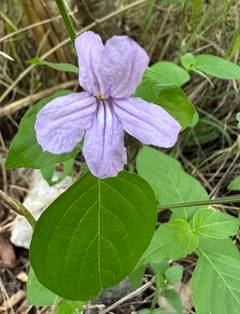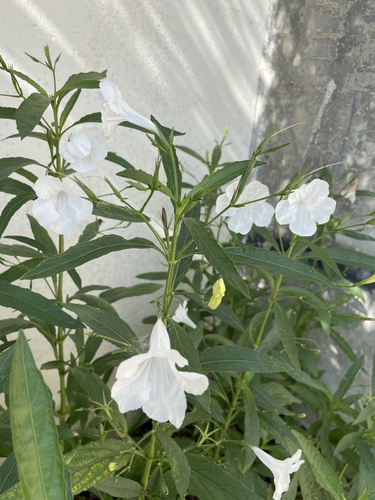
Ruellia, Genus, simplex, Species,
- Genus & species
Mexican petunia
Overview
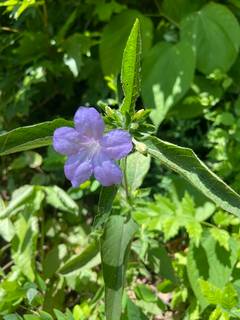
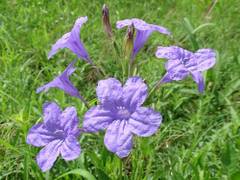
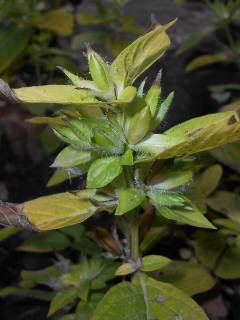
Ruellia simplex is an upright clumping perennial 24-48 inches (60-120 cm) tall and 18-30 inches (45-75 cm) wide. Stems are slender, dark purple-tinted, and lightly four-angled. Lance-shaped opposite leaves 4-7 inches (10-18 cm) long and 0.5-0.75 inch (1.3-2 cm) wide are dark green to purple-green, with prominent midribs. Funnel-shaped lavender-purple flowers 1.5-2 inches (4-5 cm) across emerge from upper leaf axils from May through November in zones 9-11 and from late June through October in zone 8. Each flower opens at sunrise and drops by sunset; new flowers develop daily. Plants self-seed prolifically and spread by underground rhizomes. R. simplex is regulated as a Category I invasive species in Florida, and sale or propagation is restricted in several southern states. Foliage dies back at 28°F (-2°C) and crowns are damaged below 15°F (-9°C). Spider mites occur in dry indoor air below 40% humidity, and powdery mildew develops on shaded foliage in humid late-summer conditions.
Native Range
Ruellia simplex is native to Mexico, where it grows in moist lowland habitats including wetland edges, ditches, and seasonally inundated grasslands at 0-3,000 feet (0-900 m) elevation. It has naturalized widely in the southeastern United States and is regulated as a Category I invasive species in Florida.Suggested Uses
Used in mass plantings and mixed borders at 18-24 inch (45-60 cm) spacing in zones 8-11. Suited to rain gardens, pond margins, and bioswales where seasonal flooding occurs. Sterile cultivars such as those in the 'Mayan' series replace the seeding species in regions where R. simplex is regulated.How to Identify
Appearance
Size & Dimensions
Height2' - 4'
Width/Spread1'6" - 2'6"
Colors
Bloom Information
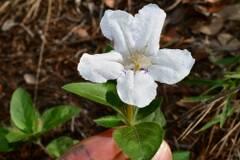
Lavender-purple flowers 1.5-2 inches (4-5 cm) across appear daily from May through November in zones 9-11 and from late June through October in zones 7-8. Each flower opens at sunrise and drops by sunset, with new flowers developing the following morning. Bloom slows during periods above 95°F (35°C) and resumes within a week as temperatures cool. Pink and white-flowered cultivars exist within the species.
Detailed Descriptions
Flower Description
Lavender to violet-purpleFoliage Description
Dark green with purple tintGrowing Conditions
Sun Requirements
Requires 6-10 hours of direct sunlight daily
• Full Sun: 6+ hours of direct sunlight
• Partial Shade: 3-6 hours of direct sunlight
• Full Shade: Less than 3 hours of direct sunlight
Care & Maintenance
Care Guide
Water deeply once weekly during the first growing season; established plants tolerate 2-3 weeks without rain in zones 8-11. Apply balanced fertilizer once in spring; additional fertilizer increases vegetative growth at the expense of flowering. Spider mites develop in dry indoor air below 40% humidity. Powdery mildew occurs on shaded foliage in humid conditions during late summer. The species spreads by self-seeding and rhizome extension; sterile or low-seed cultivars (such as those in the 'Mayan' series) reduce invasive risk in the southern United States. Plants regrow from rhizomes after winter dieback in zones 8-9.Pruning
Cut stems to 4-6 inches (10-15 cm) above ground in late winter or after winter dieback to remove dead foliage and encourage compact regrowth. Tip pinching at 6-12 inches (15-30 cm) tall encourages branching and increases flower production. Removal of seed capsules before they mature reduces self-seeding into adjacent plantings. Stem cuttings root in 7-14 days in moist soil at 70-80°F (21-27°C).Pruning Schedule
Prune: February–March
winterearly spring
Container Growing
Suitable for container growing
Minimum container size: 3 gallons