Ruellia, Genus, caroliniensis, Species,
- Genus & species
Carolina ruellia
Overview
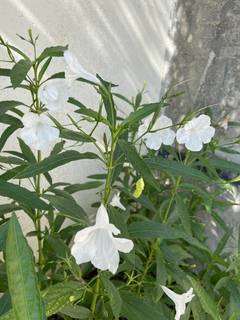
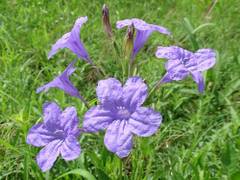
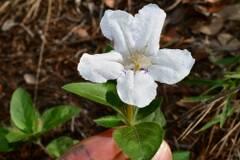
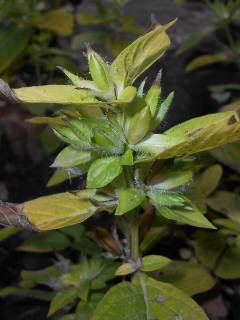
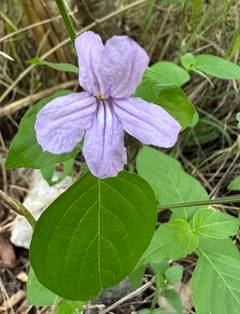
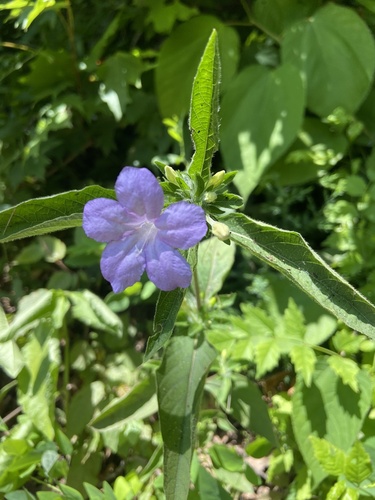
Ruellia caroliniensis is a herbaceous perennial in the acanthus family, growing 12-36 inches (30-90 cm) tall and 12-18 inches (30-45 cm) wide on slender, often hairy stems. The opposite leaves are lance-shaped to oval, 2-4 inches (5-10 cm) long, and softly hairy. Funnel-shaped flowers 1-2 inches (2.5-5 cm) across are lavender to purple-blue with five spreading lobes, opening from the leaf axils in succession through summer. Each flower lasts a single day and drops by afternoon, with new buds opening over many weeks. Ripe capsules split open and eject their seeds a short distance. The plant grows in dry to moist open woods, sandy fields, roadsides, and pinelands across the eastern and southeastern United States. It tolerates poor soils, heat, and short drought, and self-sows freely where the soil is open, which can make it weedy in beds. Its form varies from compact and upright in sun to lax and sprawling in shade. The flowers draw bees and serve as a larval host for the common buckeye butterfly.
Native Range
Native to the eastern and southeastern United States, from New Jersey and Indiana south to Florida and west to Texas. It grows in open woods, sandy fields, pinelands, and along roadsides.Suggested Uses
Grown in native, pollinator, and butterfly gardens, in sandy or dry borders, and in naturalized woodland edges. The flowers support bees and the foliage feeds common buckeye caterpillars.How to Identify
Appearance
Size & Dimensions
Height1' - 3'
Width/Spread1' - 1'6"
Bloom Information
Detailed Descriptions
Foliage Description
greenGrowing Conditions
Sun Requirements
Requires 4-10 hours of direct sunlight daily
• Full Sun: 6+ hours of direct sunlight
• Partial Shade: 3-6 hours of direct sunlight
• Full Shade: Less than 3 hours of direct sunlight
Care & Maintenance
Care Guide
Grows in full sun to part shade in well-drained sandy or loamy soil and tolerates poor ground, heat, and brief drought once established. Heaviest flowering and a compact habit develop in sun, while shade produces a looser, taller plant. It needs little water and no fertilizer in average soils. The plant self-sows freely, so removing spent capsules limits unwanted seedlings. It has no serious pests and spreads slowly into small colonies. Cutting back leggy stems in midsummer keeps growth dense.Pruning
Cutting back by about one-third in early to midsummer keeps the plant compact and can prompt fuller branching. Removing seed capsules before they ripen reduces self-sowing.Pruning Schedule
summer
Container Growing
Suitable for container growing
Minimum container size: 2 gallons