Ruellia, Genus, nudiflora, Species,
- Genus & species
violet ruellia
South-central United States and Mexico
Overview
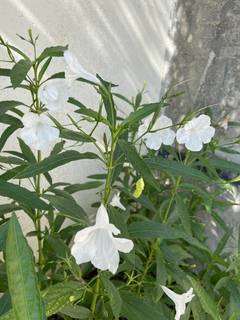
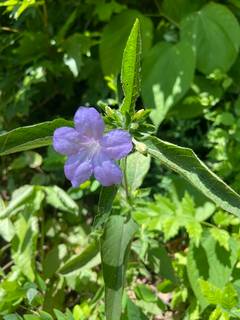
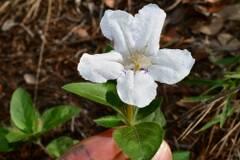
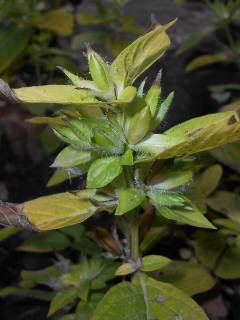
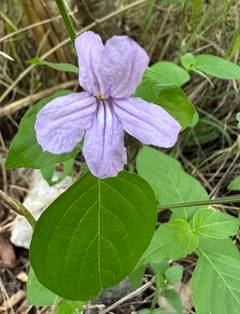
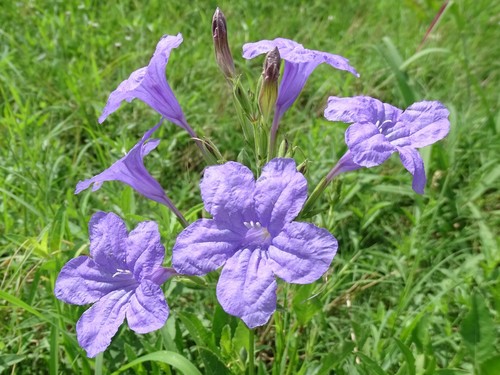
Ruellia nudiflora is a herbaceous perennial growing 1-3 feet (30-90 cm) tall and 1-2 feet (30-60 cm) wide, with upright to sprawling stems rising from a woody base. The lance-shaped to oval leaves are 2-4 inches (5-10 cm) long, dark green, and arranged in opposite pairs. From spring through fall it produces funnel-shaped violet to lavender flowers about 1-1.5 inches (2.5-4 cm) across, each lasting a single day and opening in succession over a long season. The flowers are followed by capsules that split under tension to scatter seed, and the plant reseeds freely enough to spread into nearby ground. It is native to Texas and Mexico, where it grows in open woods, roadsides, and disturbed ground on a range of soils, including dry limestone. Established plants tolerate heat and drought and bloom with little water. Top growth dies back after frost and returns from the base in spring within its hardiness range. The vigorous self-seeding can make it weedy in irrigated beds, and stems may flop without support or periodic cutting back.
Native Range
Native to the south-central United States and Mexico, centered on Texas and extending south into Central America. It grows in open woodlands, prairies, roadsides, and disturbed sites, often on calcareous soils.Suggested Uses
Used in native and pollinator gardens, naturalized meadows, and low-water borders across warm climates. It serves as a larval host and nectar source for several butterflies, including buckeyes and crescents. The long bloom and drought tolerance suit informal and xeric plantings rather than tidy formal beds.How to Identify
Appearance
Size & Dimensions
Height1' - 3'
Width/Spread1' - 2'
Bloom Information
Blooms from spring into fall, with peak flowering through the warm summer months. Each violet flower opens for a single day, but the plant produces a steady succession of new flowers over many weeks. Seed capsules form quickly and release seed under tension, scattering it a short distance from the parent plant.
Detailed Descriptions
Flower Description
violet to lavenderFoliage Description
dark greenGrowing Conditions
Sun Requirements
Requires 4-8 hours of direct sunlight daily
• Full Sun: 6+ hours of direct sunlight
• Partial Shade: 3-6 hours of direct sunlight
• Full Shade: Less than 3 hours of direct sunlight
Care & Maintenance
Care Guide
Grows in full sun to partial shade on well-drained loam, clay, sandy, or rocky soils, including alkaline ground up to about pH 8.0. Established plants are drought-tolerant and bloom with little supplemental water, though some moisture extends the flowering. It is hardy roughly in USDA zones 8-11, with top growth dying back after frost and resprouting from the base in spring. Stems cut back during the season stay denser and flop less. Self-sown seedlings appear readily and can be thinned or removed where spread is not wanted. It needs no fertilizer on average garden soils.Pruning
Stems cut back by about half in midseason limit flopping and encourage branching. Spent plants can be sheared to the ground after frost or in late winter before new growth begins. Removing developing seed capsules reduces unwanted self-seeding.Container Growing
Suitable for container growing
Minimum container size: 2 gallons