Rhododendron, Genus, groenlandicum, Species,
- Genus & species
labrador tea
Northern North America: Greenland to Pennsylvania, west to Cascades
Overview
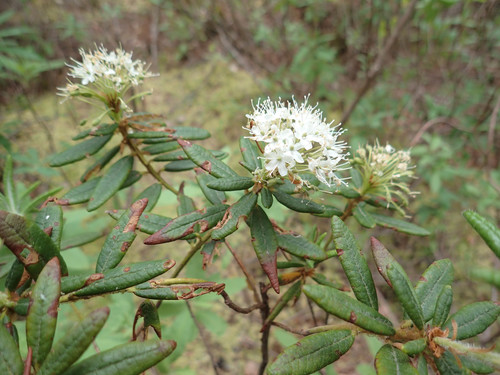
Rhododendron groenlandicum is a small evergreen shrub reaching 1-5 feet (30-150 cm) tall and 2-4 feet (60-120 cm) wide, forming low loose mounds in cold bogs and acidic forest understories. Leaves are alternate, leathery, and aromatic when crushed, 1-2 inches (2.5-5 cm) long with rolled-under margins; the upper surface is dark green and the lower surface bears a dense rust-orange to white woolly indumentum that turns rusty with age. Flowers are white to creamy white, 0.3-0.5 inches (8-13 mm) across, in flat-topped terminal clusters of 15-30, opening from May through July. Fruits are dry capsules 0.2-0.3 inches (5-8 mm) long that split open from the base in late summer, releasing minute wind-dispersed seeds. Stems are slender and woody, with younger growth covered in red-brown hairs that fade to grey on second-year wood. Plants grow slowly, adding 2-4 inches (5-10 cm) per year on bog substrates. Roots are shallow and depend on ericoid mycorrhizal partners; cultivation in standard garden soil without acid amendment usually fails within 1-2 years. All parts contain grayanotoxins; ingestion causes salivation, vomiting, and cardiac symptoms in livestock and pets.
Native Range
Native across northern North America from Greenland and the Canadian Arctic south to the northern Great Lakes states, New England, the northern Rockies, and the Cascades, with isolated populations in Pennsylvania and northern New Jersey. Grows in sphagnum bogs, muskeg, peat fens, wet coniferous forests, and tundra at 0-7,000 feet (0-2,100 m) elevation.Suggested Uses
Used in bog gardens, native plant collections, acid-soil borders, and ericaceous shrub plantings in zones 2-7. Spaced 3-4 feet (90-120 cm) apart in mass plantings on mounded peat. Not suited to alkaline-soil regions, hot interior valleys, or standard mixed perennial borders without significant soil amendment.How to Identify
Appearance
Size & Dimensions
Height1' - 5'
Width/Spread2' - 4'
Colors
Bloom Information
May through July across the range; begins late April in zone 7 coastal bogs and extends into early August above the Arctic Circle. Individual flowers last 5-7 days; total bloom period at the shrub level lasts 2-3 weeks. Bloom timing is closely tied to spring thaw and varies by 4-6 weeks across the latitudinal range.
Detailed Descriptions
Flower Description
White to creamy whiteFoliage Description
Dark green above, rust-orange to white woolly beneathGrowing Conditions
Sun Requirements
Requires 4-8 hours of direct sunlight daily
• Full Sun: 6+ hours of direct sunlight
• Partial Shade: 3-6 hours of direct sunlight
• Full Shade: Less than 3 hours of direct sunlight
Care & Maintenance
Care Guide
Establish in acidic, peat-rich, consistently moist soil at pH 4.0-5.5; standard garden loam at neutral pH causes chlorosis and decline within 1-2 years. Top-dress annually with sphagnum peat, pine needles, or composted oak leaves to maintain organic content and acidity. Plants tolerate seasonal flooding but die in compacted heavy clay or in alkaline irrigation water. Heat above 85 degrees F (29 C) for extended periods causes leaf scorch in zones 7-8; container-grown plants in those zones require afternoon shade. Few pests trouble the species in its native range, but root weevils notch leaf margins on cultivated plants in the Pacific Northwest. All parts contain grayanotoxins; ingestion of leaves or honey from R. groenlandicum pollen causes nausea, salivation, and cardiac arrhythmia in livestock, pets, and humans.Pruning
Cut tip-damaged or dead stems back to live wood in early spring before new growth begins. Light shaping is performed immediately after bloom; later pruning removes the following season's flower buds, which form on the previous season's wood. Mature plants in suitable sites need little pruning beyond removal of dead tips.Pruning Schedule
Prune: July–August
summer
Container Growing
Suitable for container growing
Minimum container size: 5 gallons