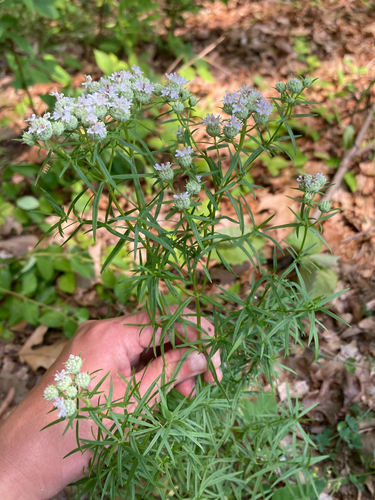
Pycnanthemum, Genus, spp., Multiple species,
- Genus
- Multiple species
mountain mints
Overview
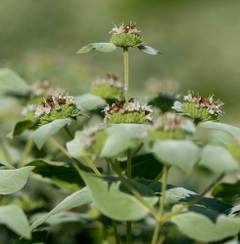
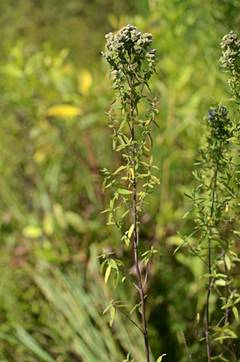
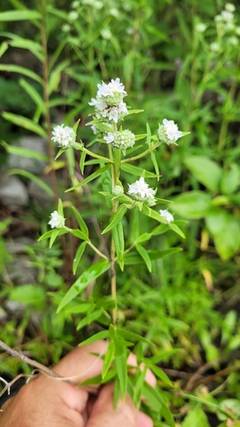
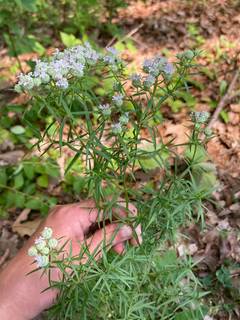
Pycnanthemum is a genus of about 20 species of aromatic perennial herbs in the mint family (Lamiaceae), called mountain mints, native almost entirely to North America. Most species grow in meadows, prairies, open woods, and moist thickets in the eastern and central United States. Plants form upright, branching clumps 18-48 inches (45-120 cm) tall on square stems, often spreading by rhizome into colonies. The narrow, opposite leaves release a strong minty or spearmint scent when crushed. The small flowers are densely packed in flat-topped or rounded clusters at the stem tips, white to pale lavender and dotted with purple, and in several species the leaves and bracts just below the flowers are dusted silvery-white. Bloom runs through mid- and late summer and draws large numbers of bees, wasps, butterflies, and other pollinating insects. The genus spreads at the root in moist, fertile soil and can form wide patches, so it is often confined or planted where a spreading habit is wanted. The aromatic foliage is avoided by deer and rabbits.
Native Range
The genus is native to North America, with nearly all species growing in the eastern and central United States and adjacent Canada. They occupy prairies, meadows, open woodland, streambanks, and moist clearings from the Great Plains to the Atlantic coast.Suggested Uses
Mountain mints are planted in pollinator and native plant gardens, meadows, prairie plantings, and the middle of mixed borders, spaced 18-24 inches (45-60 cm) apart. The silvery-bracted species are grown for foliage contrast and as cut and dried material. The aromatic foliage and long pollinator season suit naturalistic and wildlife plantings.How to Identify
Appearance
Size & Dimensions
Height1'6" - 4'
Width/Spread1'6" - 3'
Bloom Information
Flowering runs from mid-summer into early autumn, with the dense flower clusters opening over four to six weeks. The small flowers open a few at a time within each head, extending the bloom and the period of pollinator activity. The silvery bracts of some species hold their color from before bloom until after the flowers fade.
Detailed Descriptions
Flower Description
white to pale lavender, spotted purpleFoliage Description
green, with silvery-white bracts in some speciesGrowing Conditions
Sun Requirements
Requires 4-10 hours of direct sunlight daily
• Full Sun: 6+ hours of direct sunlight
• Partial Shade: 3-6 hours of direct sunlight
• Full Shade: Less than 3 hours of direct sunlight
Care & Maintenance
Care Guide
Pycnanthemum species grow in full sun to part shade in average to moist, well-drained soils with a pH of 5.5-7.0 and tolerate clay and seasonal dampness. They are hardy across USDA zones 4-8, dying back to the ground in winter and resprouting from the rhizome in spring. Established plants tolerate short dry spells, though growth and bloom are fuller with steady moisture. Rhizomatous species spread outward each year and can crowd slower neighbors, so they are often divided or grown in bounded beds. Few pests or diseases trouble the aromatic foliage, and deer and rabbits generally leave it alone. Powdery mildew can appear late in the season in dry, crowded sites.Pruning
Plants are cut to the ground in late autumn or late winter once the stems have died back. A cutback by about a third in late spring keeps clumps shorter and more branched where staking is to be avoided. Spreading colonies are divided in spring to renew growth and limit their width.Pruning Schedule
Prune: May & November
falllate spring
Container Growing
Suitable for container growing
Minimum container size: 3 gallons