Pycnanthemum, Genus, virginianum, Species,
- Genus & species
Virginia mountain mint
Eastern North America, from Quebec south to Georgia and west to Kansas
Overview
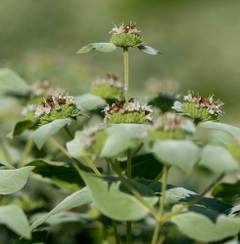
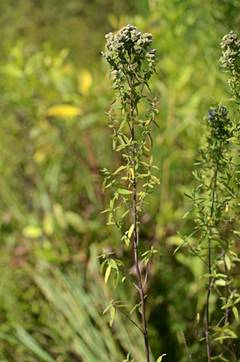
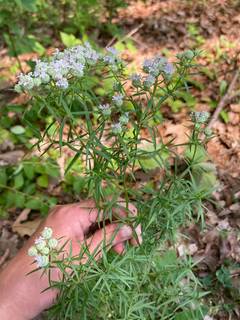
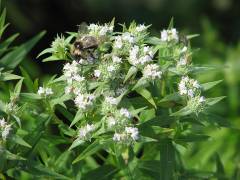
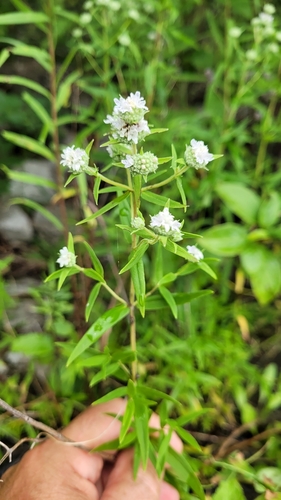
Pycnanthemum virginianum is a Virginia mountain mint that grows 24–36 inches (60–90 cm) tall and wide. Dense flat-topped terminal clusters of tiny white flowers appear from July through September. The very narrow, linear leaves — much narrower than the lance-shaped leaves of P. muticum and P. pilosum — give this species a thread-like, grassy texture. The strong mint fragrance is shared with all Pycnanthemum species. The species prefers moister conditions than P. pilosum, growing naturally in wet meadows, stream banks, and moist prairies — making this a top mountain mint choice for rain gardens and moist-to-wet sites. The rhizome spread can be more vigorous in moist, fertile soil than the other species — in favorable wet conditions, it may colonize aggressively. The flat-topped flower clusters draw a high diversity of pollinator species, with research from Penn State documenting more pollinator species per flower head than any other native plant tested. Square stems confirm the mint family. Deer avoid the strongly aromatic foliage. Stems can be left standing through winter.
Native Range
Pycnanthemum virginianum is native to eastern North America, from Quebec south to Georgia and west to Kansas. It grows in wet meadows, stream banks, and moist prairies.Suggested Uses
Used in rain gardens, wet meadow plantings, along streams, and in pollinator gardens with moist soil. A strong mountain mint choice for wet sites. The narrow-textured linear foliage adds a grassy quality. Container culture (7 gallons / 26 L) controls the potentially vigorous wet-site spread.How to Identify
Appearance
Size & Dimensions
Height2' - 3'
Width/Spread2' - 3'
Bloom Information
Detailed Descriptions
Flower Description
White, tiny, in dense flat-topped terminal clustersFoliage Description
Medium green, very narrow, linear, strongly mint-scentedGrowing Conditions
Sun Requirements
Requires 5-10 hours of direct sunlight daily
• Full Sun: 6+ hours of direct sunlight
• Partial Shade: 3-6 hours of direct sunlight
• Full Shade: Less than 3 hours of direct sunlight
Care & Maintenance
Care Guide
Plant in full sun to partial shade. Moist to wet soil — tolerates clay and seasonal flooding. The rhizome spread can be vigorous in moist conditions and may need containment. Stems can be left standing through winter. Cut to ground in early spring.Pruning
Cut all stems to ground in late February–March. Stems can be left standing through fall and winter. Rhizome spread can be managed in moist sites by removing outlying shoots.Pruning Schedule
Prune: March
early spring
Container Growing
Suitable for container growing
Minimum container size: 7 gallons