Potentilla, Genus, gelida, Species,
- Genus & species
silvery cinquefoil
Native to the Caucasus, central Asia (Kyrgyzstan, Kazakhstan, Tajikistan), Siberia, and northwestern China, growing in alpine meadows, rocky slopes, and snowmelt areas at 7,000-14,000 ft (2,100-4,300 m); the species name 'gelida' means 'icy' or 'frozen' (Latin), referencing the high-altitude native habitat near snowmelt; the dense silky-silver hair covering is an adaptation to high-UV alpine conditions
Overview
Potentilla gelida is an alpine perennial in the rose family (Rosaceae) forming tight low mats 2-4 inches (5-10 cm) tall and 6-12 inches (15-30 cm) wide. The species carries pinnate to palmate compound leaves with small toothed leaflets densely covered in silky silvery-white hairs, producing a white-felted appearance. Pale yellow to cream five-petaled flowers 0.5-0.75 inch (1.5-2 cm) across open on short stems above the silver mat in late spring to summer (May-July). The species name 'gelida' means 'icy' or 'frozen' (Latin), referencing the high-altitude habitat near snowmelt where the species grows natively. The dense silky-silver hair covering is an adaptation to high-UV alpine conditions — the reflective surface reduces tissue damage from the intense solar radiation at 7,000-14,000 ft (2,100-4,300 m) elevations. Native to alpine meadows, rocky slopes, and snowmelt areas in the Caucasus, central Asia (Kyrgyzstan, Kazakhstan, Tajikistan), Siberia, and northwestern China. A true alpine specialist requiring cold winters, sharp drainage, and cool summers; performance declines in lowland gardens where summer temperatures regularly exceed 80°F (27°C), and crown rot in wet winter soil is the primary cause of loss in less-suitable positions. Scree beds, alpine troughs, or alpine house cultivation support the highest success rate. Growth rate is very slow. Hardy to USDA zone 4. Non-toxic.
Native Range
Potentilla gelida is native to the Caucasus, central Asia (Kyrgyzstan, Kazakhstan, Tajikistan), Siberia, and northwestern China, growing in alpine meadows, rocky slopes, and snowmelt areas at 7,000-14,000 ft (2,100-4,300 m).Suggested Uses
Used in scree beds, alpine troughs, and alpine house collections in zones 4-7. A specialist plant for alpine gardeners where sharp drainage and cool summers can be provided. Containers of at least 2 gallons (8 L) filled with gritty mix support the plant on patios and in cold frames. General border planting falls outside the species' tolerance range — the alpine habitat and slow growth rate rule out mixed-perennial positions where faster neighbors would overrun the silver mat. Non-toxic and deer resistant, which suits the species to gardens with both wildlife pressure and children.How to Identify
Appearance
Size & Dimensions
Height2" - 4"
Width/Spread6" - 1'
Bloom Information
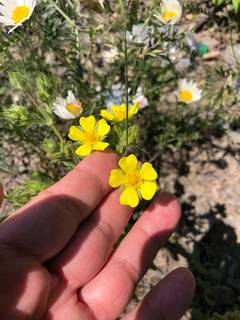
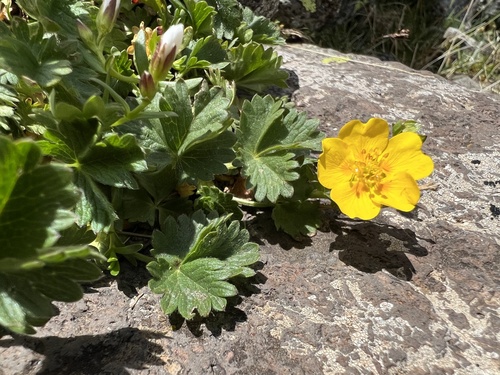
Pale yellow to cream five-petaled flowers 0.5-0.75 inch (1.5-2 cm) across on short stems above the foliage mat, May through July across a 4-6 week bloom window depending on elevation and latitude. The silvery-white felted foliage is the year-round feature; the flowers are a secondary seasonal element.
Detailed Descriptions
Flower Description
Pale yellow to cream five-petaled flowers 0.5-0.75 inch (1.5-2 cm) across carried on short stems just above the foliage matFoliage Description
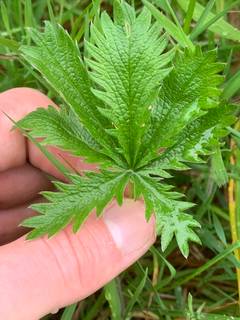
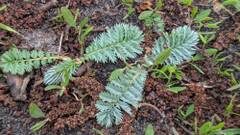
Silvery-white pinnate to palmate compound leaves with small toothed leaflets densely covered in silky hairs, producing a white-felted appearance; the silky coating is an adaptation to high-UV alpine conditions in the species' native rangeGrowing Conditions
Sun Requirements
Requires 6-10 hours of direct sunlight daily
• Full Sun: 6+ hours of direct sunlight
• Partial Shade: 3-6 hours of direct sunlight
• Full Shade: Less than 3 hours of direct sunlight
Care & Maintenance
Care Guide
Grows in full sun in very lean sharply drained gritty or rocky soil at pH 6.0-7.5. Crown rot in wet winter soil is the primary cause of loss — scree beds, alpine troughs, and alpine house cultivation all give the drainage profile the species needs. Performance declines in summer heat above 80°F (27°C), which rules out most lowland positions south of zone 7 or in hot-summer continental climates. Slug pressure is high on the silky foliage; beer traps, iron-phosphate pellets, or copper barriers around the planting hold the population in check. Non-toxic. Deer resistant. Hardy to USDA zone 4.Pruning
Remove spent flower stems at the mat surface after bloom (June). Trim dead mat sections in early spring (March) to clean up winter damage. Division is rarely needed since the plant grows very slowly; if dividing is required, separate rooted sections in early spring and replant immediately in gritty mix.Pruning Schedule
Prune: March & June
summerearly spring
Container Growing
Suitable for container growing
Minimum container size: 2 gallons