Potentilla, Genus, atrosanguinea, Species,
- Genus & species
red cinquefoil
Native to the Himalayas — Pakistan, India, Nepal, Tibet, and southwestern China — growing in alpine meadows and rocky slopes at 7,500-14,000 ft (2,300-4,300 m); the genus name {Potentilla} means 'little powerful one' (Latin {potentia}), referencing historic medicinal use; the species name 'atrosanguinea' means 'dark blood-red' (Latin {atro} + {sanguineus}); parent of many garden hybrid cinquefoils including 'Gibson's Scarlet', 'William Rollison', and 'Flammenspiel'
Overview
Potentilla atrosanguinea is a semi-evergreen perennial in the rose family (Rosaceae) reaching 12-18 inches (30-45 cm) tall with a spread of 18-24 inches (45-60 cm) and a low spreading habit. The species carries rich blood-red to dark crimson five-petaled flowers 1 inch (2.5 cm) across in open branching clusters from June through August across a 10-week bloom window. Most Potentilla species in cultivation carry yellow flowers, and the deep red color of this species places it among the minority red-flowered members of the genus — a distinguishing character that the species has passed to many of its garden hybrids. Dark green palmate compound leaves with 3-5 leaflets are densely silvery-white hairy on the undersides; the bicolored leaf shows when wind turns the foliage. The genus name Potentilla means 'little powerful one' (Latin potentia), referencing historic medicinal use; the species epithet 'atrosanguinea' means 'dark blood-red' (Latin atro + sanguineus). Growth rate is moderate. Hardy to USDA zone 5. Short-lived at 3-5 years; division every 3-4 years is required to maintain vigor. Parent of many garden hybrid cinquefoils including 'Gibson's Scarlet', 'William Rollison', and 'Flammenspiel'. Native to Himalayan alpine meadows and rocky slopes at 7,500-14,000 ft (2,300-4,300 m) in Pakistan, India, Nepal, Tibet, and southwestern China.
Native Range
Potentilla atrosanguinea is native to the Himalayas (Pakistan, India, Nepal, Tibet, southwestern China), growing in alpine meadows and rocky slopes at 7,500-14,000 ft (2,300-4,300 m).Suggested Uses
Used in rock gardens, dry borders, and alpine gardens in zones 5-8 at 18-24 inch (45-60 cm) spacing. The deep red flowers and silver-backed foliage give a summer color combination that pairs with other Himalayan-alpine plants and with low-growing blue-flowered perennials such as Campanula and Pulsatilla. The parent role for popular hybrid cinquefoils ('Gibson's Scarlet', 'William Rollison', 'Flammenspiel') gives the species a place in cultivar-history plantings and collections of hybrid parentage material. Lean soil and sharp drainage are the baseline requirements; rich moist positions fall outside the tolerance range.How to Identify
Appearance
Size & Dimensions
Height1' - 1'6"
Width/Spread1'6" - 2'
Bloom Information
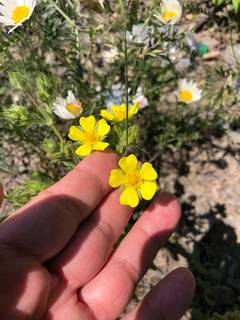
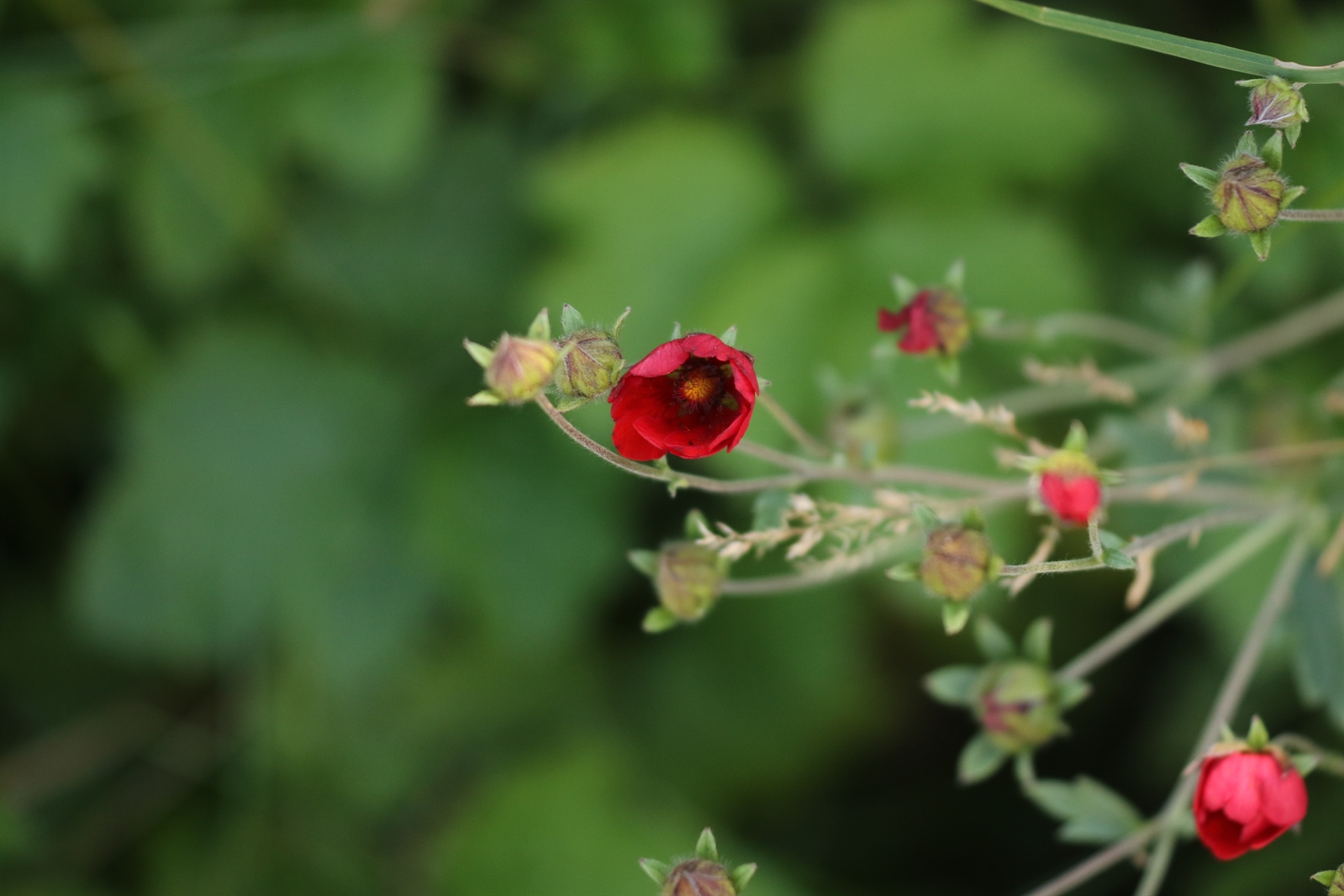
Rich blood-red to dark crimson five-petaled flowers 1 inch (2.5 cm) across carried in open branching clusters, June through August across a 10-week bloom window. Deadhead spent clusters to lateral buds through the season to extend bloom. Most other Potentilla species in cultivation carry yellow flowers across a similar bloom window, so the species fills a red-flowered gap in the genus's garden range.
Detailed Descriptions
Flower Description
Rich blood-red to dark crimson five-petaled flowers 1 inch (2.5 cm) across carried in open branching clusters — most Potentilla species in cultivation carry yellow flowers, and the deep red color places this species among the minority red-flowered members of the genusFoliage Description
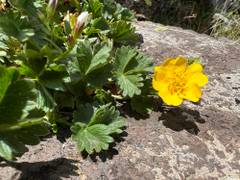
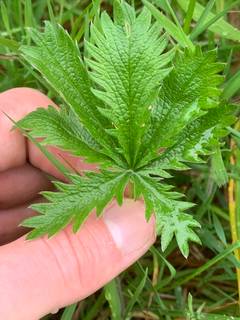
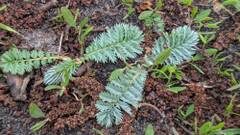
Dark green above, densely silvery-white hairy beneath; palmate compound leaves with 3-5 leaflets each 1-2 inches (2.5-5 cm); the bicolored leaf (green above, silver beneath) shows when wind turns the foliageGrowing Conditions
Sun Requirements
Requires 6-10 hours of direct sunlight daily
• Full Sun: 6+ hours of direct sunlight
• Partial Shade: 3-6 hours of direct sunlight
• Full Shade: Less than 3 hours of direct sunlight
Care & Maintenance
Care Guide
Grows in full sun in lean well-drained soil at pH 6.0-7.5. Rich moist soil causes floppy growth and reduces flowering — lean soil supports both form and bloom better. Short-lived at 3-5 years, so division every 3-4 years in early spring is required to maintain vigor and keep the clump from declining. Drought tolerant once established. Deer resistant. Non-toxic. Hardy to USDA zone 5. Water during establishment in the first growing season and reduce watering once the crown is established.Pruning
Deadhead spent flower clusters to lateral buds in summer (August) to extend bloom. Cut to the basal rosette in fall (October) or early spring (March). Divide every 3-4 years in spring to maintain vigor and replace aging plants — the short-lived habit means division is the primary mechanism for keeping the planting going indefinitely.Pruning Schedule
Prune: March, August & October
summerfallearly spring