Pimelea, Genus, octophylla, Species,
- Genus & species
woolly rice-flower
Overview
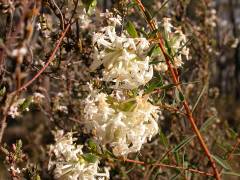
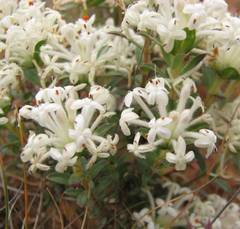
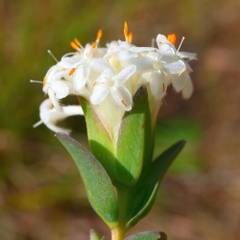
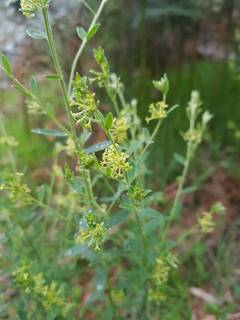
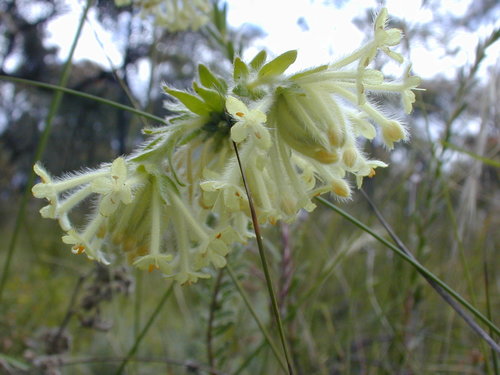
Pimelea octophylla is a small evergreen shrub 1-3 feet (30-90 cm) tall with slender, softly hairy stems and small opposite leaves 0.2-0.6 inch (5-15 mm) long. In spring it carries dense rounded heads of cream to pale yellow tubular flowers, the heads and flower bases clothed in soft white woolly hairs that give the plant its common name. Each flower head is 0.6-1.2 inches (1.5-3 cm) across and surrounded by leafy bracts. It is native to southeastern Australia, where it grows in heath, mallee, and open woodland on sandy and loamy soils. The plant is low and short-lived and is uncommon in cultivation, needing sharp drainage and an open, sunny position. Like other Pimelea, it contains compounds that are toxic to grazing cattle and can irritate skin. It tolerates dry conditions once established but is sensitive to wet, heavy soils.
Native Range
Pimelea octophylla is native to southeastern Australia, occurring in Victoria, South Australia, New South Wales, and Tasmania. It grows in heath, mallee scrub, and open woodland on sandy and loamy soils.Suggested Uses
Grown occasionally in native, heath, and rockery gardens on lean, free-draining soils, and in seed-grown wildflower plantings. It suits dry, sunny banks and low-water gardens rather than irrigated borders, and is kept away from grazing stock because of its toxicity.How to Identify
Appearance
Size & Dimensions
Height1' - 3'
Width/Spread1' - 3'
Bloom Information
Flowering occurs in spring, mainly August to November in its native range. The woolly cream flower heads open at the branch tips over several weeks. Small dry fruits follow, each enclosed by the persistent flower base.
Detailed Descriptions
Flower Description
cream to pale yellowFoliage Description
greenGrowing Conditions
Sun Requirements
Requires 6-10 hours of direct sunlight daily
• Full Sun: 6+ hours of direct sunlight
• Partial Shade: 3-6 hours of direct sunlight
• Full Shade: Less than 3 hours of direct sunlight
Care & Maintenance
Care Guide
Pimelea octophylla grows in full sun to light shade in sharply drained sandy or gravelly soil low in nutrients. It needs little water once established and is suited to dry, open ground rather than rich, moist beds. The plant is small and short-lived and can be slow and difficult to establish in gardens. Wet or heavy soil leads to root rot. It contains compounds toxic to cattle, so it is a concern in grazing land. Propagation is mainly from seed or semi-hardwood cuttings, both of which can be slow.Pruning
Light tip pruning after flowering keeps the plant compact and can prolong its short life. The slender stems resprout slowly, so cutting into bare old wood is avoided. Spent flower heads can be left to set seed.Container Growing
Suitable for container growing
Minimum container size: 3 gallons