Pimelea, Genus, humilis, Species,
- Genus & species
common rice-flower
Overview
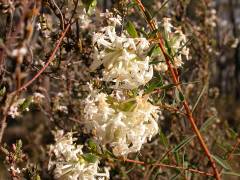
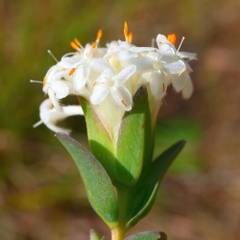
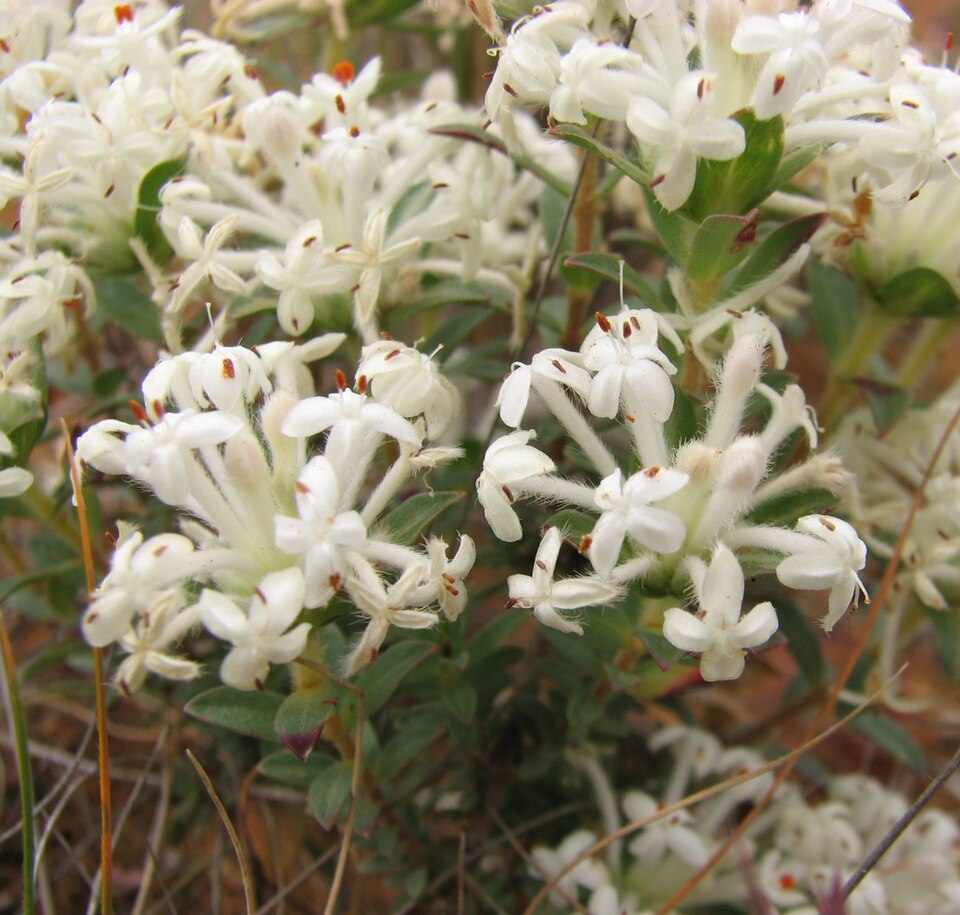
Pimelea humilis is a small, low shrub growing 10-50 cm (4-20 in) tall, with a spreading to erect habit and slender wiry stems. The opposite leaves are oval to elliptic, 0.5-2 cm (0.2-0.8 in) long, dull green and smooth-edged. In spring, dense terminal heads of small white to cream tubular flowers open, each flower with four spreading lobes and a slender tube, the cluster ringed by leafy bracts. The heads are 1-3 cm (0.4-1.2 in) across and lightly scented. Small dry one-seeded fruits follow. The species grows in grassland, heathy woodland, and open forest in well-drained sandy or gravelly soils, often spreading by underground stems to form small colonies. Limitation: the plant is low and easily overgrown by taller vegetation, and the stems are fibrous and tough, like other rice-flowers, which makes the bark hard to break.
Native Range
Southeastern Australia, including New South Wales, Victoria, Tasmania, and South Australia. It grows in grassland, heathy woodland, and open forest on well-drained sandy or gravelly soils.Suggested Uses
Grown in rockeries, native gardens, and grassland plantings as a low filler, and in revegetation of dry, sandy sites. It suits well-drained, sunny positions among low groundcovers.How to Identify
Appearance
Size & Dimensions
Height4" - 1'8"
Width/Spread8" - 2'
Bloom Information
White to cream flower heads open in spring, mainly September to December. Each head holds many small tubular flowers and lasts several weeks. Flowering follows the wet winter-spring period.
Detailed Descriptions
Flower Description
white to creamFoliage Description
dull greenGrowing Conditions
Sun Requirements
Requires 4-8 hours of direct sunlight daily
• Full Sun: 6+ hours of direct sunlight
• Partial Shade: 3-6 hours of direct sunlight
• Full Shade: Less than 3 hours of direct sunlight
Care & Maintenance
Care Guide
Grows in well-drained sandy or gravelly soils in full sun to part shade. It tolerates dry periods once established and withstands light to moderate frost. Water lightly through the first season, after which little water is needed, as the roots rot in wet soil. Low fertility suits it, and rich or phosphorus-heavy soils shorten its life. The species spreads slowly by underground stems. It is grown from seed or cuttings, both of which strike slowly.Pruning
A light trim after flowering keeps the plant compact and limits open growth. Plants tolerate cutting back by up to one third. Hard pruning into bare wood produces little regrowth.Container Growing
Suitable for container growing
Minimum container size: 2 gallons