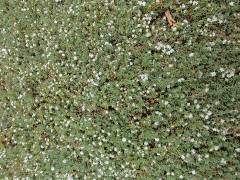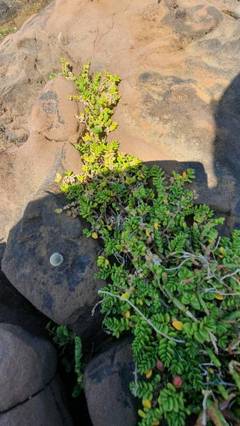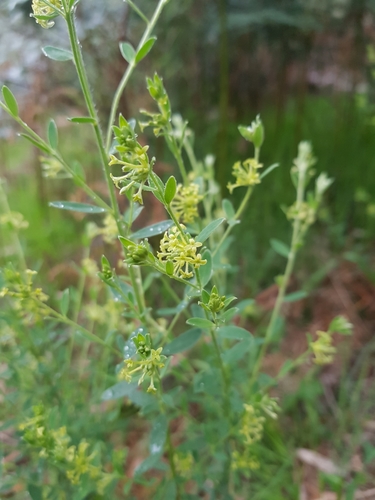
Pimelea, Genus, curviflora, Species,
- Genus & species
curved rice-flower
Overview
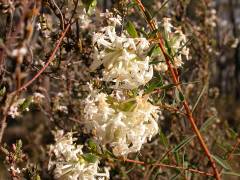
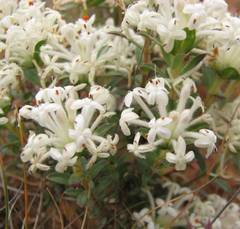
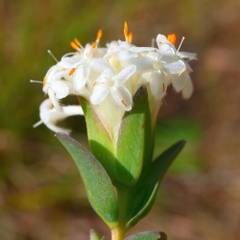
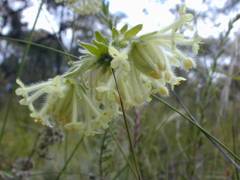
Pimelea curviflora is a small, erect to spreading shrub 8-36 inches (20-90 cm) tall with slender, wiry stems. The narrow leaves are 0.2-0.8 inch (5-20 mm) long, arranged in opposite pairs or alternately along the stems, and often carry soft hairs on the lower surface. Small tubular flowers are clustered at the stem tips, each flower 0.2-0.4 inch (5-10 mm) long and curved, ranging from cream and yellow-green to reddish or pinkish. The flower tube is hairy on the outside and gives the clustered heads a soft texture. Plants flower over an extended period and set small dry fruit. The species is variable across its range, with several recognized subspecies differing in hair cover and flower color. It grows on a range of soils in open forest and grassland. All parts contain diterpene esters, and ingestion by cattle and other livestock causes a wasting and oedema syndrome known as Pimelea poisoning. The plant is short-lived and can colonise disturbed ground.
Native Range
Pimelea curviflora is native to eastern and southeastern Australia, from Queensland through New South Wales and Victoria. It grows in open eucalypt forest, woodland, and grassland on sandy to clay soils.Suggested Uses
Used in native plant gardens, low informal borders, and revegetation of disturbed sandy sites. Suited to dry, sunny positions among grasses and small shrubs. Planted away from areas grazed by livestock owing to its toxicity.How to Identify
Appearance
Size & Dimensions
Height8" - 3'
Width/Spread8" - 2'
Bloom Information
Detailed Descriptions
Flower Description
cream, yellow-green to reddishFoliage Description
greenGrowing Conditions
Sun Requirements
Requires 6-10 hours of direct sunlight daily
• Full Sun: 6+ hours of direct sunlight
• Partial Shade: 3-6 hours of direct sunlight
• Full Shade: Less than 3 hours of direct sunlight
Care & Maintenance
Care Guide
Grows in full sun to part shade on free-draining sandy or gravelly soils. Tolerates dry conditions once established and needs little supplementary water. Low-phosphorus conditions suit this Australian native, while rich or wet soils shorten its already brief lifespan. The shrub is naturally short-lived, often persisting three to five years before being replaced by seedlings. All parts contain diterpene esters that are toxic to grazing livestock, and sap can irritate skin on contact. It is grown away from grazing pasture because the foliage is toxic to stock.Pruning
A light trim after the main flush keeps the form compact and encourages branching. Older plants become woody and sparse and are usually replaced rather than cut back hard. Sap released when stems are cut can irritate skin.Container Growing
Suitable for container growing
Minimum container size: 2 gallons