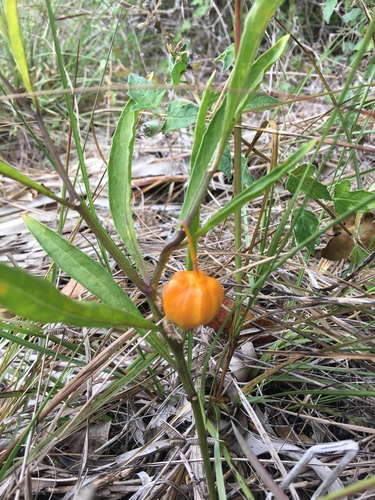
Physalis, Genus, ×, Hybrid, elliottii, Species,
- Genus & species
- Hybrid
Elliott's groundcherry
Overview
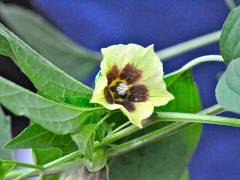
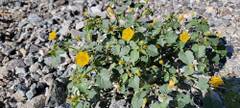
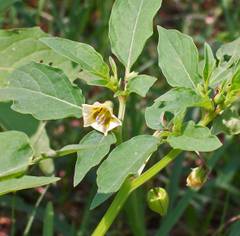
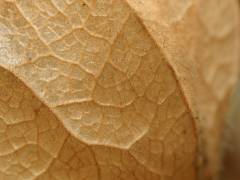
Physalis × elliottii is a herbaceous groundcherry in the nightshade family, of hybrid origin within Physalis, found in the southeastern United States. It grows as a low, branching plant 1–2 feet (30–60 cm) tall and 1–3 feet (30–90 cm) wide, with ovate to lance-shaped leaves 1.5–3 inches (4–8 cm) long on slender, spreading stems. From late spring through summer it bears nodding, bell-shaped yellow flowers about 0.5–0.75 inch (12–20 mm) across, often with darker centers. Each flower is followed by a small berry enclosed in a papery, lantern-like husk that turns tan as it ripens. The plant grows in full sun to part shade on sandy, well-drained soils in open woods, clearings, and disturbed ground, and tolerates heat and drought. As a hybrid, it is variable and intermediate between its parent species, which makes identification by husk and flower detail necessary. It spreads by seed and short rhizomes and can persist in disturbed sites. Unripe fruit and foliage contain solanine-type alkaloids and are toxic if eaten.
Native Range
Physalis × elliottii occurs in the southeastern United States, where its parent groundcherries overlap on sandy soils. It grows in pine woods, clearings, and disturbed open ground.Suggested Uses
Used in native and naturalized plantings, wildlife gardens, and restoration of sandy open ground in the Southeast. The flowers draw bees, and the fruit is eaten by birds and small mammals. Its self-seeding, spreading habit and toxic foliage make it better suited to naturalized areas than food or formal gardens.How to Identify
Appearance
Size & Dimensions
Height1' - 2'
Width/Spread1' - 3'
Bloom Information
Detailed Descriptions
Flower Description
yellow with darker centerFoliage Description
greenGrowing Conditions
Sun Requirements
Requires 5-10 hours of direct sunlight daily
• Full Sun: 6+ hours of direct sunlight
• Partial Shade: 3-6 hours of direct sunlight
• Full Shade: Less than 3 hours of direct sunlight
Care & Maintenance
Care Guide
The plant grows in full sun to part shade on light, sandy, well-drained soils, including poor and disturbed ground. Once established it tolerates heat and drought and needs little supplemental water. Rich, wet soils are unnecessary and can promote rank, floppy growth. No fertilizer is required on average ground. Because it self-seeds and spreads by short rhizomes, it can persist and spread in open sites. Top growth dies back after frost, with regrowth from the crown where winters are mild.Pruning
Little pruning is needed beyond cutting back dead top growth in late winter before new shoots appear. Removing ripe husks before they drop limits self-seeding where spread is unwanted. Plants can be cut back in summer if growth becomes lax.Pruning Schedule
Prune: February–March
winter