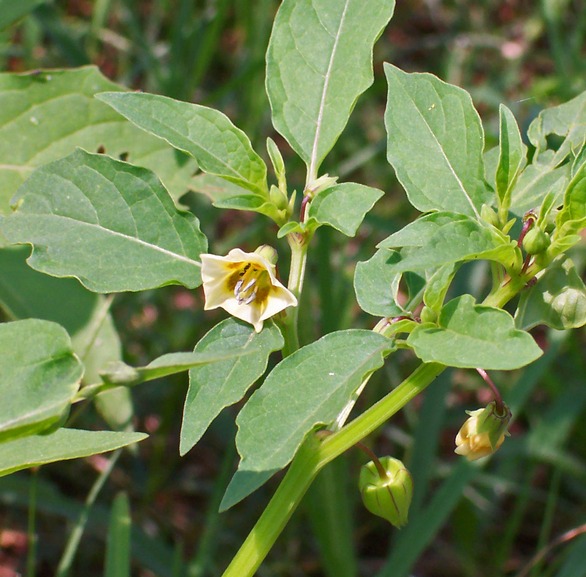
Physalis, Genus, spp., Multiple species,
- Genus
- Multiple species
groundcherries
the Americas, with some species in Eurasia
Overview
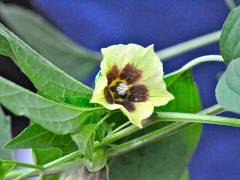
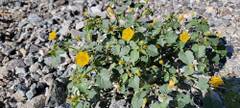
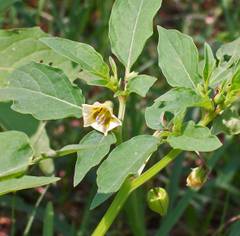
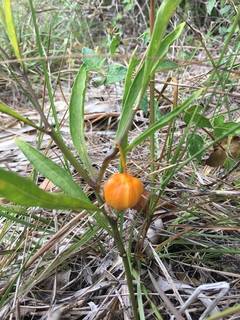
Physalis is a genus of roughly 75 to 90 species of annual and perennial herbs in the nightshade family (Solanaceae), found mainly in the Americas with a few species in Eurasia. Plants grow 12 to 36 inches (30 to 90 cm) tall and wide, with branching, sometimes sprawling stems and oval to heart-shaped leaves 2 to 4 inches (5 to 10 cm) long. The nodding flowers are bell-shaped and usually yellow, often marked with five brown or purple blotches at the throat, though some species bear white flowers. After flowering, the calyx enlarges into a papery, lantern-like husk that encloses a single round berry; this inflated husk is the genus most recognizable feature. The berry ripens from green to yellow, orange, or red. In edible species such as P. pruinosa and the tomatillo P. philadelphica, the ripe fruit is harvested for food, while the unripe fruit, foliage, and stems of most species contain solanine and related alkaloids and are toxic if eaten. Perennial species, including P. alkekengi, spread by rhizomes and can become invasive in beds and borders. Several species self-sow prolifically. Plants grow in full sun and tolerate poor soils but are damaged by frost.
Native Range
Physalis is centered in the Americas, ranging from Canada through the United States, Mexico, and into South America, with the greatest diversity in Mexico. A small number of species, such as P. alkekengi, are native to central and southern Eurasia.Suggested Uses
Physalis is grown in vegetable and kitchen gardens for its edible fruit, in mixed borders, and in cottage gardens, where P. alkekengi is also cut and dried for its orange husks. Compact species grow in containers. The aggressive spread of rhizomatous species limits their use in small mixed beds.How to Identify
Appearance
Size & Dimensions
Height1' - 3'
Width/Spread1' - 3'
Bloom Information
Physalis blooms from June through September, with small flowers produced over a long period along the stems. Flowering is followed by the steady enlargement of the husk around each developing fruit. In perennial species, plants flower from the second year onward.
Detailed Descriptions
Flower Description
yellow with brown or purple throat markings; some whiteFoliage Description
greenGrowing Conditions
Sun Requirements
Requires 6-12 hours of direct sunlight daily
• Full Sun: 6+ hours of direct sunlight
• Partial Shade: 3-6 hours of direct sunlight
• Full Shade: Less than 3 hours of direct sunlight
Water & Climate
Water Needs
Drought Tolerance
Drought tolerant when established
Care & Maintenance
Care Guide
Physalis grows in full sun in average, well-drained soil with moderate moisture. Plants tolerate poor and dry soils once established but set more fruit with steady summer water. Rhizomatous perennial species, such as P. alkekengi, spread aggressively and are often confined to containers or bottomless barrels to limit their roots. Annual species are grown fresh each year from seed and are killed by the first hard frost. Rich soil and excess nitrogen promote leafy growth at the expense of flowers and fruit. Plants are largely free of serious pests, though flea beetles and the three-lined potato beetle feed on the foliage.Pruning
Physalis needs little pruning. Sprawling stems can be trimmed to keep plants compact, and the spreading roots of perennial species can be cut back at the bed edge each spring to limit their spread. Top growth dies to the ground after frost on perennial species and is cleared in late fall or spring.Container Growing
Suitable for container growing