Phyllostachys, Genus, edulis, Species,
- Genus & species
Moso bamboo
Overview
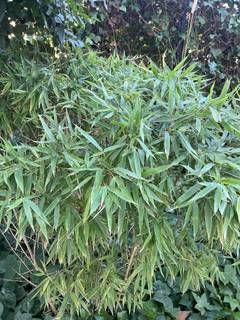
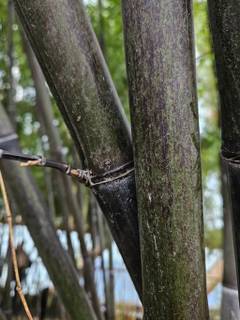
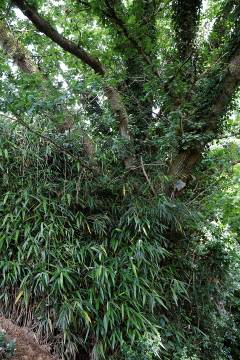
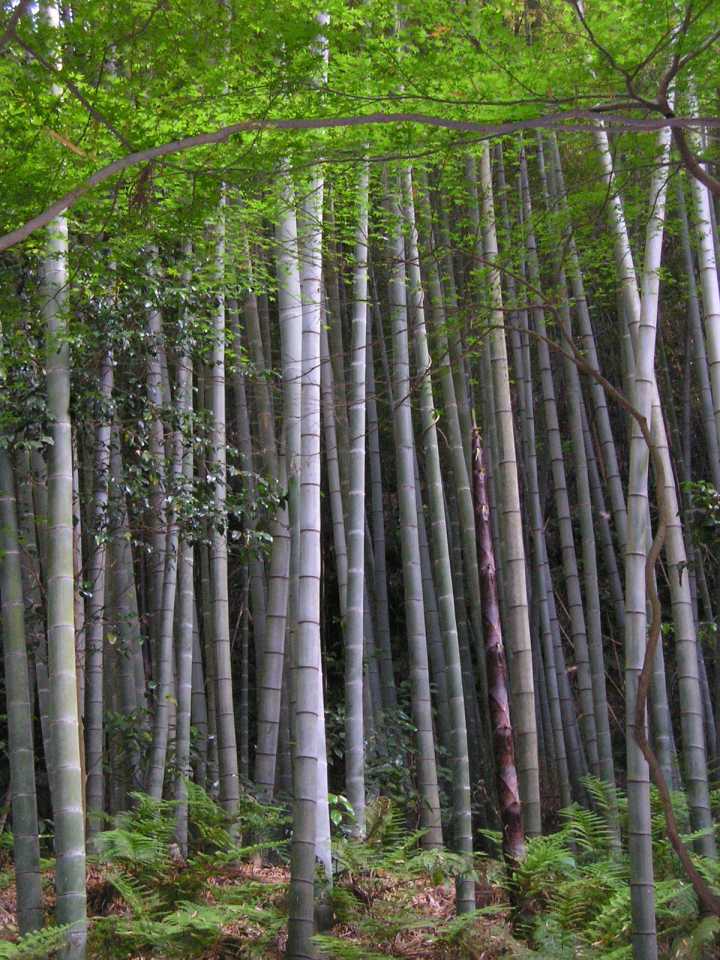
Phyllostachys edulis is a running bamboo with culms reaching 40-75 feet (12-23 m) tall and 3-7 inches (8-18 cm) in diameter, thicker than other temperate Phyllostachys species. New culms emerge from the ground at full diameter between March and May and extend to full height in 40-60 days, after which no further increase in height or girth occurs. First-season culms are dull green under a coating of soft white hairs and a waxy bloom, ageing to yellow-green and losing the hairs by the second year; individual culms live 7-10 years. Nodes carry a single ring, and lower internodes are compressed to 1-2 inches (2.5-5 cm). Leaves are 1.5-3.5 inches (4-9 cm) long and 0.4-0.6 inch (1-1.5 cm) wide, held in clusters of two to four on secondary branches, small in proportion to culm size. Leptomorph rhizomes travel 10-20 feet (3-6 m) per year in zones 8-10 and raise culms well outside the planted area. A grove takes 5-7 years to produce culms at full size, and culm diameter over the first three years reaches only 25-50% of mature dimensions.
Native Range
Phyllostachys edulis occurs across southern and eastern China, with extensive natural and managed stands in Fujian, Zhejiang, Jiangxi, and Hunan provinces at 650-3,300 feet (200-1,000 m) elevation. It has been cultivated in Japan and Taiwan for several centuries and is naturalised in both. Plantings in Alabama, Georgia, Louisiana, and other sites in the southeastern United States have escaped and formed self-sustaining groves along waterways.Suggested Uses
Planted in groves for timber and edible shoot production at 15-20 foot (4.6-6 m) spacing, with shoots harvested from March through May. Used as a tall screen or windbreak in zones 7-10 where a root barrier or annual rhizome severing contains spread; unconfined plantings extend 10-20 feet (3-6 m) per year and cross property boundaries. Culms are cut and cured for construction, flooring, and pulp. The species is not grown in containers, since rhizome congestion halts culm expansion within 2-3 years.How to Identify
Appearance
Size & Dimensions
Height40' - 75'
Bloom Information
Flowering occurs at intervals of roughly 60 to 70 years, when whole groves of clonal origin flower together across their range within a few seasons. Panicles form on leafless branches and shed caryopses over 2-4 months. Culms and rhizomes die after flowering, and a grove takes 5-10 years to regenerate from seed or fails to recover at all. Scattered partial flowering appears on individual culms in some years without triggering grove-wide death.
Detailed Descriptions
Foliage Description
mid greenGrowing Conditions
Sun Requirements
Requires 5-12 hours of direct sunlight daily
• Full Sun: 6+ hours of direct sunlight
• Partial Shade: 3-6 hours of direct sunlight
• Full Shade: Less than 3 hours of direct sunlight
Care & Maintenance
Care Guide
New plantings take 1-2 inches (25-50 mm) of water weekly through the first two growing seasons, and established groves tolerate 3-4 weeks without rain with leaf curling and partial leaf drop. Nitrogen at 4-8 ounces per square yard (135-270 g per square metre) applied in late winter and again in early summer supports shoot size, and groves managed for shoots receive 2-4 inches (5-10 cm) of organic mulch each autumn. Rhizomes travel 10-20 feet (3-6 m) per year, and containment relies on a high-density polyethylene barrier set 24-36 inches (60-90 cm) deep with 2 inches (5 cm) standing above soil level, or on severing rhizomes at the grove edge with a spade each summer. Culms show leaf burn at 5F (-15C) and are killed to the ground near -5F (-21C), regrowing from rhizomes where the soil does not freeze deeply. Bamboo mites cause stippled yellowing on leaf undersides in hot dry positions, and sooty mould follows scale infestations in humid conditions. Culms are cut for timber at 4-6 years, once wall thickness and silica content have stabilised.Pruning
Culms older than 6-7 years are cut at ground level in late spring or early summer, holding grove density near 2,000-3,000 culms per acre (5,000-7,500 per hectare). Thinning weak or crooked new shoots as they emerge from March through May directs growth into the remaining culms and raises average diameter over 3-4 seasons. Lower branches are stripped to 6-10 feet (1.8-3 m) in groves managed for timber. Culm stubs left standing above the first node collect water and rot, so cuts are made flush with the ground.Pruning Schedule
Prune: May–July
late springsummer