Petasites, Genus, albus, Species,
- Genus & species
white butterbur
Mountains of Europe and south-west Asia
Overview
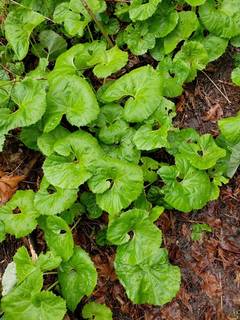
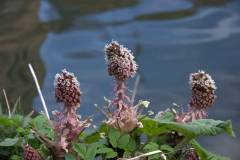
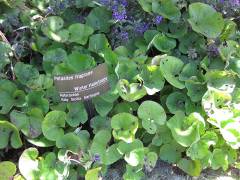
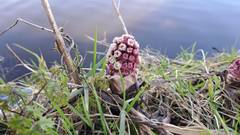
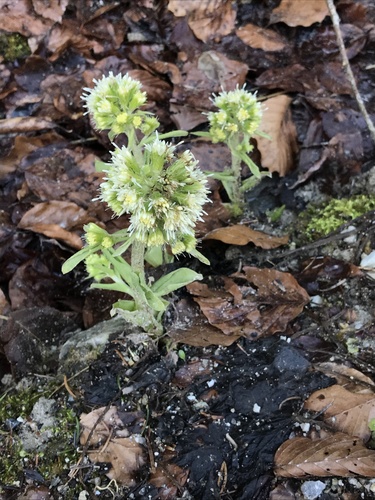
Petasites albus, white butterbur, is a vigorous, rhizomatous perennial in the daisy family (Asteraceae) that spreads by stout underground stems to form broad colonies. In early spring, before the leaves, thick stalks 4-12 inches (10-30 cm) tall rise carrying dense rounded heads of small whitish to cream flowers; plants are dioecious, with separate male and female clumps. After flowering the large basal leaves expand, rounded to heart-shaped and 8-16 inches (20-40 cm) across, green above and grey-felted beneath, on long stalks that can reach 24 inches (60 cm). It grows in damp, shaded ground along streams, ditches, and woodland edges on moist, fertile soil, where the spreading rhizomes can quickly cover large areas. All parts contain pyrrolizidine alkaloids, which are toxic to the liver if eaten. One limitation is its strongly invasive, colony-forming habit, which makes it difficult to remove once established. The bold foliage dies back to the rhizome each autumn and reappears the following spring.
Native Range
Petasites albus is native to the mountains and uplands of Europe and into south-west Asia, growing along streams, in damp woodland, and on shaded slopes. It has naturalised beyond its native range in parts of Britain and northern Europe.Suggested Uses
Used as bold groundcover in large, damp, shaded sites such as stream banks, pond margins, and wild woodland gardens where its spread can be tolerated. The early flowers give nectar to emerging insects and the broad leaves suppress weeds over wide areas.How to Identify
Appearance
Size & Dimensions
Height8" - 2'
Width/Spread2' - 4'
Colors
Bloom Information
Flowering occurs in early spring, March to April, before the foliage emerges. Dense club-shaped heads of small whitish to cream flowers open on thick stalks, with male and female flowers on separate plants, and draw early bees and other insects. Female heads lengthen as fluffy, wind-borne seed ripens, though much of the spread is by rhizome rather than seed.
Detailed Descriptions
Flower Description
whitish to creamFoliage Description
green above, grey-felted beneathGrowing Conditions
Sun Requirements
Tolerates up to 4 hours of direct sunlight daily
• Full Sun: 6+ hours of direct sunlight
• Partial Shade: 3-6 hours of direct sunlight
• Full Shade: Less than 3 hours of direct sunlight