Petasites, Genus, spp., Multiple species,
- Genus
- Multiple species
butterburs
Cool temperate Europe, Asia, and North America
Overview
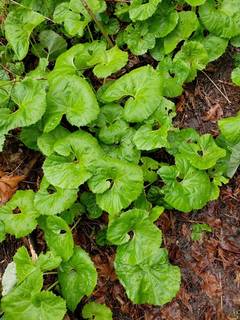
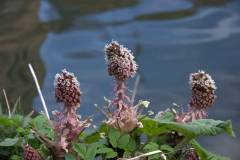
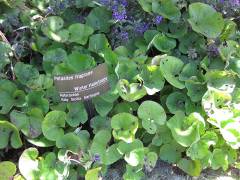
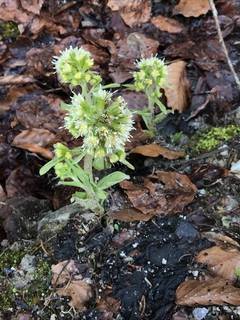
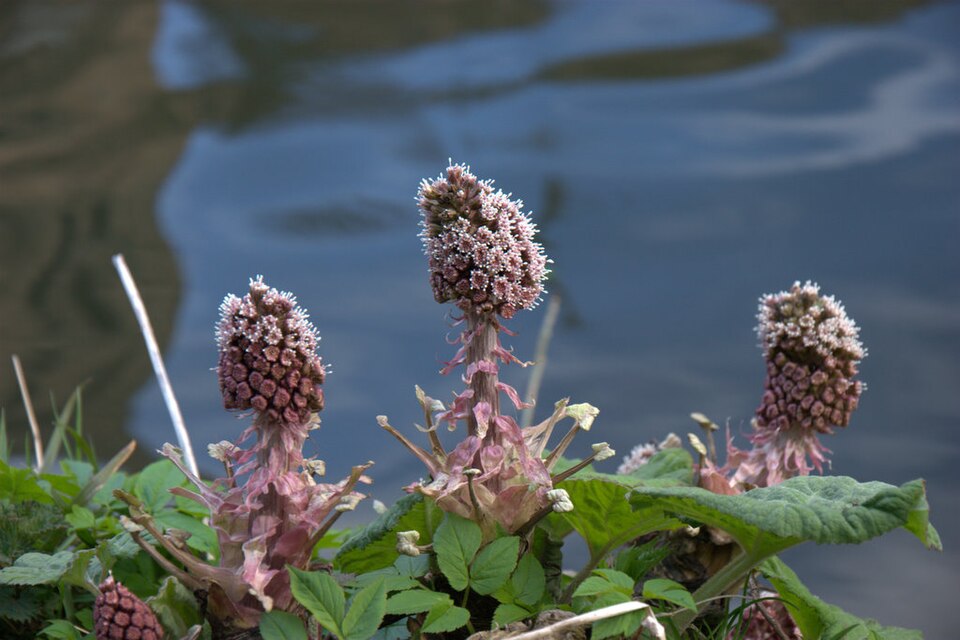
Petasites is a genus of about 15 rhizomatous perennials in the family Asteraceae, native to cool temperate wetlands of Europe, Asia, and North America. Plants spread by thick creeping rhizomes into broad colonies, sending up dense flower clusters in late winter or early spring before the leaves expand. The flower heads are small, pink, white, or pale lilac, packed into thick spikes 4-16 inches (10-40 cm) tall, and many species are functionally one-sexed, with separate male and female plants. After flowering, very large rounded to kidney-shaped leaves unfold, 8-36 inches (20-90 cm) across in the largest species such as P. japonicus, on stout stalks 1-5 ft (0.3-1.5 m) high. The bold foliage shades the ground and a colony can blanket a damp site through summer. Petasites grows in wet soil along streams and ditches and spreads aggressively once established, sending rhizomes well beyond the original planting. The same vigor that fills a difficult wet site makes the genus hard to confine or remove, and several species are treated as invasive outside their native range.
Native Range
Native to cool temperate and subarctic regions of Europe, northern and eastern Asia, and North America, typically in wet meadows, streamsides, and damp woodland. Several species have naturalized beyond their native range in similar moist habitats.Suggested Uses
Used as ground cover and erosion control on wet banks, pond edges, and damp problem areas where little else competes. The large leaves create dense summer cover and the early flowers feed emerging pollinators. Because of its spread, the genus is placed in bounded or naturally enclosed sites rather than mixed borders.How to Identify
Appearance
Size & Dimensions
Height1' - 5'
Width/Spread3' - 10'
Bloom Information
Flowering comes very early, from late winter to mid-spring (February-April), with the spikes pushing up before the foliage. The honey-scented heads draw early bees and other insects when few other plants are open. Male and female flowers often occur on separate plants, so seed set depends on both being present.
Detailed Descriptions
Flower Description
Pink to whiteFoliage Description
GreenGrowing Conditions
Sun Requirements
Requires 3-8 hours of direct sunlight daily
• Full Sun: 6+ hours of direct sunlight
• Partial Shade: 3-6 hours of direct sunlight
• Full Shade: Less than 3 hours of direct sunlight
Care & Maintenance
Care Guide
Grow in full sun to part shade in consistently moist to wet, fertile soil; pond margins, ditches, and boggy ground suit the genus. Once established the rhizomes run widely, so plants are often confined to bounded beds, large pots, or sites enclosed by water or paving. Dry soil checks growth and scorches the large leaves at their edges. Most species are hardy in USDA zones 4-8 and die back fully to the rhizome in winter. Cutting spent flower spikes before seed forms reduces self-sowing in addition to the spread by rhizome. Annual removal of stray rhizomes is usually needed to hold a colony in place.Pruning
Spent flower spikes are cut down after bloom to limit seeding, and tattered leaves are removed through summer to keep the colony tidy. The whole plant is cut to the ground as it dies back in autumn. Stray rhizomes are dug out at the colony edge each year to check spread.Container Growing
Suitable for container growing
Minimum container size: 10 gallons