Peperomia, Genus, argyreia, Species,
- Genus & species
watermelon peperomia
South America — Brazil, Bolivia, Ecuador, Venezuela
Overview
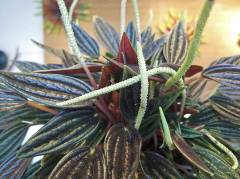
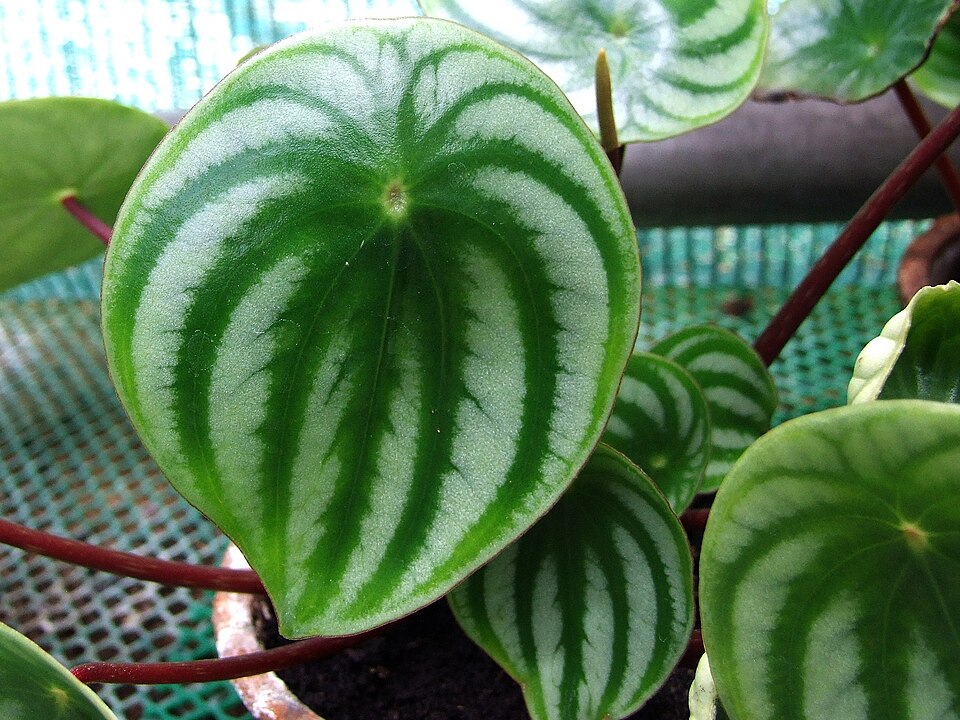
Peperomia argyreia is the watermelon Peperomia, growing 8–12 inches (20–30 cm) tall and wide. Round-to-oval fleshy leaves 3–4 inches (7–10 cm) long with silver-white curved stripes alternating with dark green — the banding pattern resembles a watermelon rind. Red-tinged petioles (leaf stalks) contrast with the silver-green leaves. The species name 'argyreia' means 'silvery.' In the pepper family (Piperaceae) — sometimes incorrectly called 'watermelon begonia,' but unrelated to Begonia. Semi-succulent leaves store water; the primary cause of death is overwatering (stem and petiole rot), not underwatering — allow soil to dry between waterings. Non-toxic to cats and dogs. Compact rosette form suited to desktops and small spaces. Propagates from leaf cuttings: a leaf cut in half horizontally and inserted cut-edge-down into moist soil produces new plantlets from the cut surface within 4–6 weeks. Bright indirect light; direct sun scorches the thin leaf tissue. Native to northern South America (Brazil, Bolivia, Ecuador). Produces thin, upright, rat-tail flower spikes that do not affect plant vigor. Sensitive to cold below 50°F (10°C).
Native Range
Peperomia argyreia is native to South America — Brazil, Bolivia, Ecuador, and Venezuela.Suggested Uses
Grown in containers of 0.5–1 gallon (2–4 liters) on desks, windowsills, and shelves in bright indirect light. The compact size suits small spaces. Non-toxic — safe for households with pets.How to Identify
Appearance
Size & Dimensions
Height8" - 1'
Width/Spread8" - 1'
Bloom Information
Thin upright rat-tail flower spikes produced sporadically. The watermelon-patterned foliage is the year-round display.
Detailed Descriptions
Flower Description
Green-white rat-tail spikes (insignificant)Foliage Description
Green with SILVER-WHITE CURVED STRIPES radiating from the center — precisely resembling a WATERMELON RIND pattern; on red-tinged petiolesGrowing Conditions
Sun Requirements
Needs bright indirect light. Keep it out of direct sun, which can scorch the leaves.
• Bright indirect light: a bright spot near a window, with no direct sun on the leaves
Care & Maintenance
Care Guide
Bright indirect light — no direct sun. Allow soil to dry between waterings; overwatering causes stem rot. Semi-succulent leaves store moisture. In the pepper family, not a begonia. Non-toxic to cats and dogs. Propagates from half-leaf cuttings.Pruning
Remove damaged or rotted leaves at the petiole base. Leaf cuttings (cut in half horizontally) root in moist soil within 4–6 weeks.Container Growing
Suitable for container growing
Minimum container size: 1 gallons