Paeonia, Genus, 'Madame Calot', Cultivar,
- Genus
- Cultivar
Madame Calot peony
Cultivar of garden origin; garden peonies derive from {Paeonia lactiflora}, native to China, Mongolia, and Siberia; {Paeonia 'Madame Calot'} was bred by Miellez in France in 1856 — nearly 170 years in continuous cultivation, among the older peonies still commercially available; the 1856 introduction places this cultivar in the first generation of French peony breeding
Overview
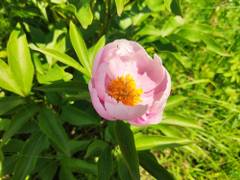
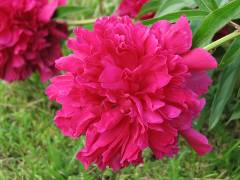
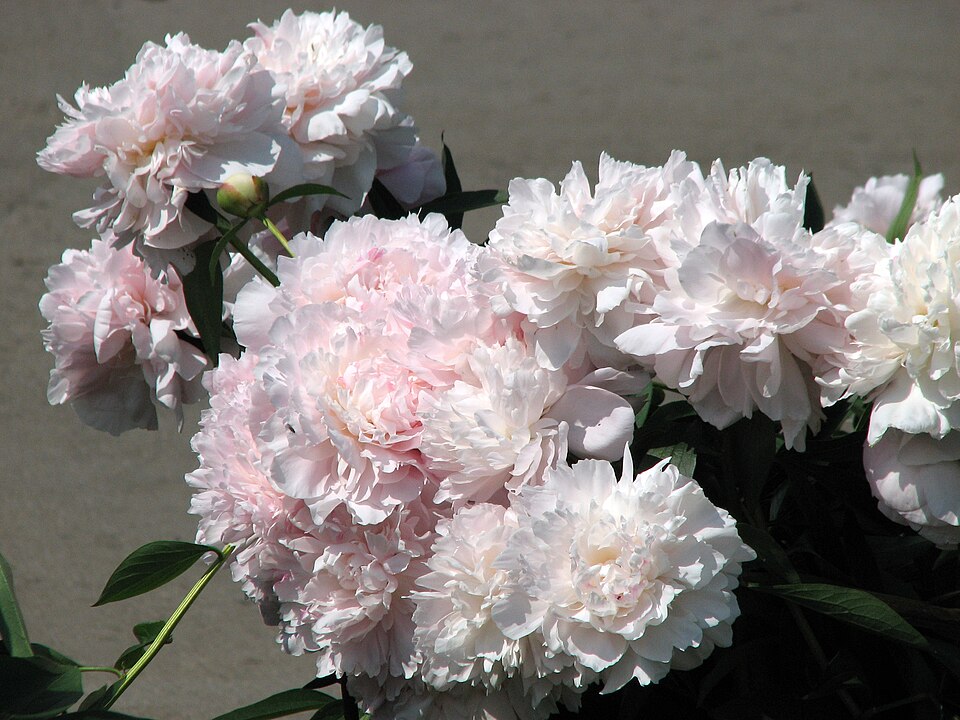
Paeonia 'Madame Calot' is a heritage French peony bred by Miellez in 1856 — nearly 170 years in continuous cultivation, among the older peonies still commercially available. Plants grow 30-36 inches (75-90 cm) tall and wide. Fully double flowers 5-6 inches (13-15 cm) across open palest blush-pink with rose undertones and fade to near ivory-white. The fragrance is the cultivar's defining feature: an exceptionally strong complex sweet scent that ranks consistently among the more powerful peony fragrances. The early bloom timing (among the first lactiflora peonies to flower) combined with the strong fragrance keeps this a valued garden plant despite competition from showier modern cultivars. The soft subtle color and powerful scent recall a French perfumery tradition — the scent serves as the ornament rather than the visual display. The 1856 introduction date places this cultivar in the first generation of French peony breeding, contemporary with the grands crus of Bordeaux wine. Plants from the original era may still be alive. Dark green glossy compound foliage. Same care as all herbaceous peonies. Mildly toxic.
Native Range
Garden peonies derive from Paeonia lactiflora. Paeonia 'Madame Calot' was bred by Miellez, France, 1856.Suggested Uses
Used in fragrance gardens, heritage gardens, and near seating areas where the powerful scent can be enjoyed. The strong fragrance is the primary reason to grow this cultivar. Plant alongside showier peonies to combine scent with visual impact.How to Identify
Appearance
Size & Dimensions
Height2'6" - 3'
Width/Spread2'6" - 3'
Bloom Information
Flowering in May to early June, approximately 2 weeks. Early bloom timing. The fragrance fills the garden and is detectable from a distance.
Detailed Descriptions
Flower Description
Fully double flowers 5-6 inches (13-15 cm) across that open palest blush-pink with rose undertones and fade to near ivory-white; an exceptionally strong complex sweet scent that ranks among the more powerful peony fragrances accompanies the bloomFoliage Description
Dark green deeply divided glossy compound foliage forms a substantial mound through summerGrowing Conditions
Sun Requirements
Requires 5-8 hours of direct sunlight daily
• Full Sun: 6+ hours of direct sunlight
• Partial Shade: 3-6 hours of direct sunlight
• Full Shade: Less than 3 hours of direct sunlight
Care & Maintenance
Care Guide
Plant in full sun to partial shade. Well-drained humus-rich soil. Eyes no more than 2 inches (5 cm) deep. Support with peony ring. Remove spent heads. Leave foliage until frost. Mildly toxic.Pruning
Remove spent flower heads. Cut all stems to ground level in late October-November.Pruning Schedule
Prune: October–November
fall