Paeonia, Genus, 'Kansas', Cultivar,
- Genus
- Cultivar
Kansas peony
Cultivar of garden origin; garden peonies derive from {Paeonia lactiflora}, native to China, Mongolia, and Siberia; {Paeonia 'Kansas'} was bred by Bigger in 1940 and received the American Peony Society Gold Medal — the highest honor in the peony world
Overview
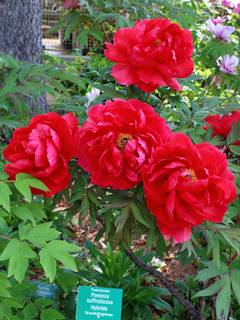
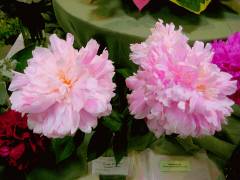
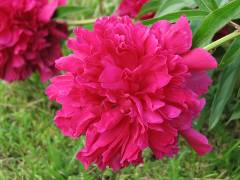
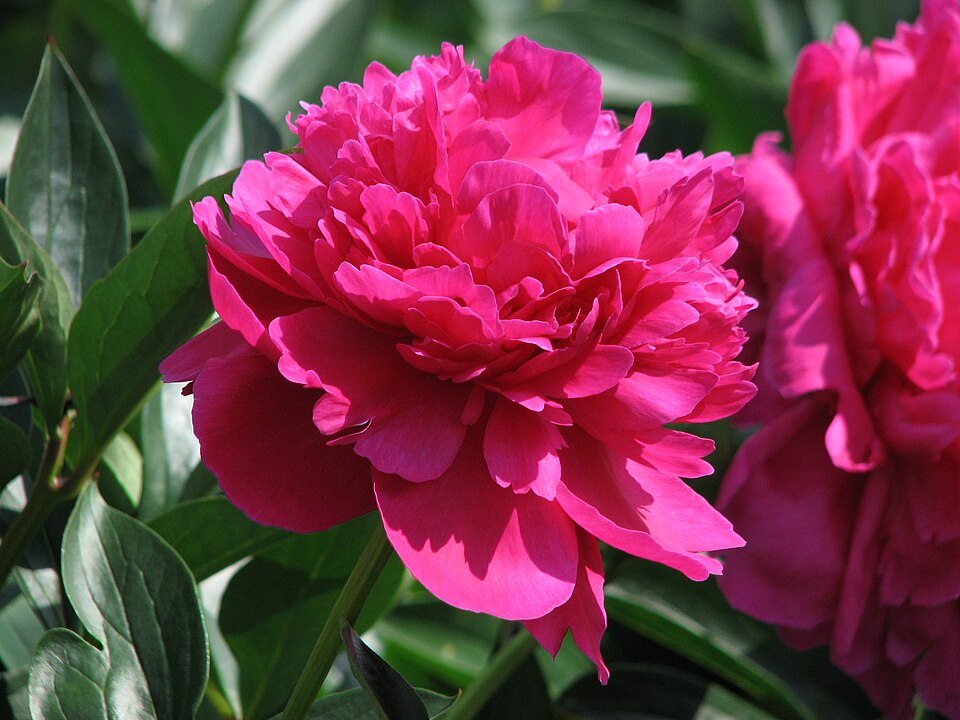
Paeonia 'Kansas' is a herbaceous garden peony with vivid watermelon-red to carmine-red fully double flowers, growing 30-36 inches (75-90 cm) tall and wide. The bright cheerful red — sometimes described as watermelon or cherry-red — is lighter and more vivid than the dark maroon-reds of cultivars like 'Big Ben' and 'Felix Crousse'. This brighter red reads well from a distance and photographs vividly. Fully double flowers 5-6 inches (13-15 cm) across with a moderate sweet fragrance appear in May and June. Bred by Bigger in 1940, Paeonia 'Kansas' received the American Peony Society Gold Medal — the highest honor in the peony world. The sturdy upright stems are among the strongest of any red double peony, making this among the more self-supporting red cultivars available — a practical advantage, as many red doubles have weak stems that flop after rain. Early to midseason bloom timing. The combination of bright color, strong stems, Gold Medal recognition, and long production history (80+ years) confirms lasting garden merit. Dark green glossy compound foliage. Same care as all herbaceous peonies. Can live 50+ years. Mildly toxic.
Native Range
Garden peonies derive from Paeonia lactiflora. Paeonia 'Kansas' was bred by Bigger, 1940. APS Gold Medal winner.Suggested Uses
Used in perennial borders, cutting gardens, and formal gardens. The bright red and strong stems make this among the more practical red peonies. APS Gold Medal winner — a proven performer for 80+ years. Works in patriotic red-white-and-blue plantings with white peonies and blue delphiniums.How to Identify
Appearance
Size & Dimensions
Height2'6" - 3'
Width/Spread2'6" - 3'
Colors
Bloom Information
Detailed Descriptions
Flower Description
Vivid watermelon-red to carmine-red fully double flowers 5-6 inches (13-15 cm) across with a moderate sweet fragrance; the bright cheerful red is lighter and more vivid than the dark maroon-reds of cultivars like 'Big Ben' and 'Felix Crousse'Foliage Description
Dark green deeply divided glossy compound foliage forms a substantial mound through summer; fall foliage takes on bronze-red tonesGrowing Conditions
Sun Requirements
Requires 5-8 hours of direct sunlight daily
• Full Sun: 6+ hours of direct sunlight
• Partial Shade: 3-6 hours of direct sunlight
• Full Shade: Less than 3 hours of direct sunlight
Care & Maintenance
Care Guide
Plant in full sun to partial shade. Well-drained humus-rich soil. Eyes no more than 2 inches (5 cm) deep. The sturdy stems may need less support than most double peonies, though a ring is still advisable in windy sites. Remove spent heads. Leave foliage until frost. Mildly toxic.Pruning
Remove spent flower heads. Cut all stems to ground level in late October-November.Pruning Schedule
Prune: October–November
fall