Paeonia, Genus, 'Bowl of Beauty', Cultivar,
- Genus
- Cultivar
bowl of beauty peony
Garden hybrid; bred by Hoogendoorn in the Netherlands in 1949. Garden peonies derive from Paeonia lactiflora, native to China, Mongolia, and Siberia.
Overview
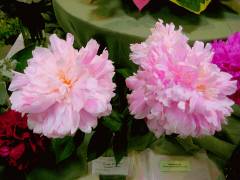
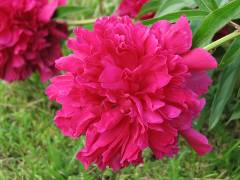
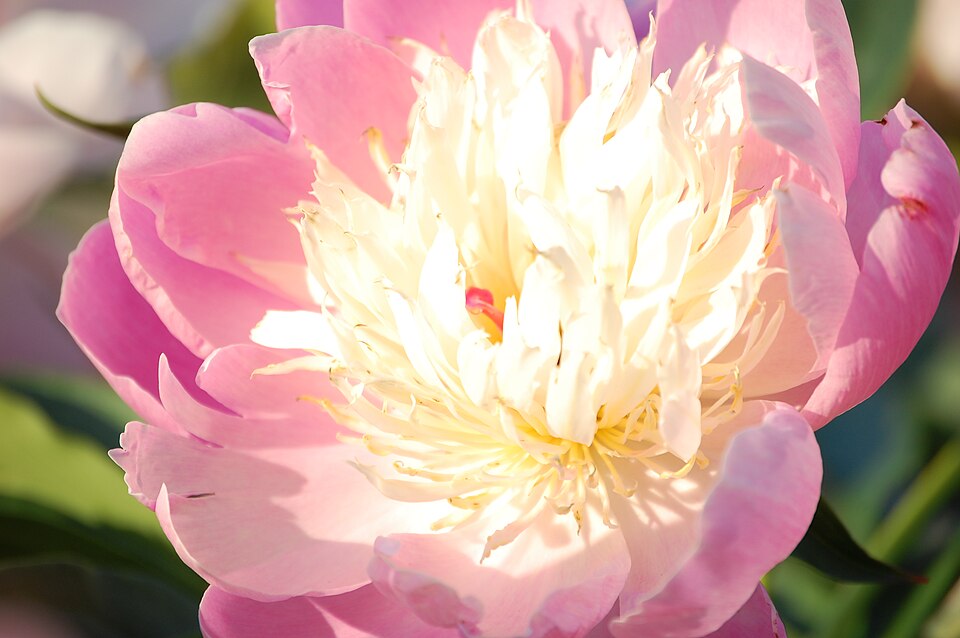
Paeonia Bowl of Beauty is the most recognized Japanese-form peony in commercial cultivation, growing 30-36 inches (75-90 cm) tall and wide. The Japanese flower form (also called the anemone form in peony classification) carries a single or double ring of broad outer guard petals surrounding a central mound of narrow petal-like staminodes (transformed stamens that have evolved away from pollen-bearing function and toward petal-like display), producing a bowl-shaped flower with a visible center mass rather than the densely packed petal layers of a true double form like Karl Rosenfield or the simple ring of petals around exposed yellow stamens of a single form like Krinkled White. In Bowl of Beauty, the guard petals are vivid fuchsia-pink while the central staminode mass is cream to pale yellow, and the bicolor pink-and-cream combination is the cultivar's signature. The contrast between the dark fuchsia bowl of guard petals and the light cream center filling creates a visual depth at flower-eye level that single-color double cultivars cannot achieve. Flowers reach 6-8 inches (15-20 cm) across, placing the cultivar at the larger end of the herbaceous garden peony size range. The Japanese form is lighter in flower-mass weight than full doubles because the central staminode tissue is less dense than the heavy petal layers of a double, and the lighter flowers are less likely to flop after rain than full doubles like Sarah Bernhardt or Felix Crousse — the Japanese form therefore suits windy or wet-weather garden positions where heavy-flowered doubles need extensive staking. A moderate sweet fragrance is present at flower level. Bowl of Beauty was bred by Hoogendoorn in the Netherlands in 1949 and has been in continuous commercial production for over 75 years, with the long market persistence indicating sustained garden merit across multiple gardening generations. Dark green glossy compound foliage forms a substantial shrub-like mound after bloom that functions as a low-hedge or border-structure plant through summer and fall, with fall foliage turning bronze before stem die-back at frost. Like all herbaceous garden peonies, the cultivar can persist for 50 or more years in the same location once established and resists transplanting after the root system matures. Planting depth is critical: the crown eyes are placed no more than 2 inches (5 cm) below the soil surface; deeper planting prevents flowering. All plant parts contain paeoniflorin and other monoterpene glycoside compounds that produce mild gastrointestinal upset if ingested by humans or pets, but the bitter taste discourages serious ingestion in any case. Deer generally avoid the foliage from the same compound class.
Native Range
Paeonia Bowl of Beauty is a garden hybrid bred by Hoogendoorn in the Netherlands in 1949, with the parent material derived from Paeonia lactiflora cultivars. The species Paeonia lactiflora is native to China, Mongolia, and Siberia, where it occurs in steppe grasslands and forest-meadow ecotones across the broad temperate Eurasian continental range. Centuries of breeding in Chinese, Japanese, European, and North American gardens have produced thousands of named herbaceous peony cultivars in single, semi-double, Japanese, anemone, and full-double flower forms; Bowl of Beauty is positioned within this breeding tradition as the reference Japanese-form cultivar in the bicolor color group.Suggested Uses
Used in perennial borders, cottage gardens, and dedicated cutting gardens, with the Japanese-form bicolor flowers being a recurring component of mixed peony plantings where the contrasting fuchsia-and-cream color reads differently from the surrounding single-color double cultivars. The lighter flower-mass weight suits the cultivar to windy or wet-weather garden positions where heavy-flowered doubles need extensive staking. The substantial dark green foliage mound functions as a low hedge or border-structure plant through summer after the bloom completes. The cultivar is a widely recognized peony name worldwide because of the 75-plus years of continuous commercial production from the 1949 Hoogendoorn introduction, and is paired with companion plants that bloom before the peony (early spring bulbs, hellebores) and after the peony (lilies, daylilies, asters) to fill the post-bloom flowering gap and maintain continuous garden interest across the seasons.How to Identify
Appearance
Size & Dimensions
Height2'6" - 3'
Width/Spread2'6" - 3'
Bloom Information
Large 6-8 inch (15-20 cm) bicolor fuchsia-and-cream Japanese-form flowers open in May and June across a 2-week active flowering window. Each flower lasts 7-10 days and the total display covers approximately 2 weeks of garden time. Moderate sweet fragrance at flower level. The lighter flower-mass weight of the Japanese form (relative to full doubles) makes the cultivar less prone to flopping after rain or wind, which extends the practical viewing window during typical late-spring weather conditions. Pollination is by bees and other insect pollinators that work the staminode-rich center where some pollen is still produced (Japanese-form staminodes retain partial reproductive function compared with the fully sterile petals of double forms).
Detailed Descriptions
Flower Description
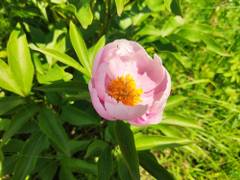
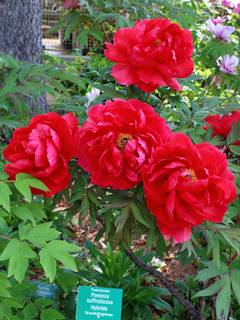
Vivid fuchsia-pink outer guard petals surrounding a central mound of cream to pale yellow narrow petal-like staminodes (transformed stamens) — the bicolor pink-and-cream combination is the cultivar's signature, and the Japanese (anemone) flower form gives the bloom its characteristic bowl shapeFoliage Description
Dark green; deeply divided glossy compound leaves on sturdy upright stems, with the leaf form being characteristic of the herbaceous garden peony group derived from Paeonia lactifloraGrowing Conditions
Sun Requirements
Requires 5-8 hours of direct sunlight daily
• Full Sun: 6+ hours of direct sunlight
• Partial Shade: 3-6 hours of direct sunlight
• Full Shade: Less than 3 hours of direct sunlight
Care & Maintenance
Care Guide
Plant in full sun to partial shade with 5-8 hours of direct light. Moist well-drained humus-rich soil at pH 6.0-7.0 supports the cultivar. Planting depth is critical: the crown eyes are placed no more than 2 inches (5 cm) below the soil surface, and deeper planting prevents flowering. The Japanese form is lighter than full doubles and less prone to flopping, but a peony ring (circular wire support) is still recommended in early spring before the stems reach full height for sites with frequent rain or wind exposure. Spent flower heads are removed after petals drop. Foliage is left standing through summer and fall until frost browns it, because the leaves photosynthesize the energy that supports next year's bloom. All stems are cut to ground level in late October through November after the foliage browns, and the cut foliage is removed from the planting area to reduce botrytis fungal-disease carryover into the following spring. Mulching over the crown eyes is omitted because the eyes need to remain at the published 2-inch depth to flower. Established plants resist transplanting and persist for 50 or more years in the same location.Pruning
Spent flower heads are removed after petals drop. Foliage is left standing through summer and fall until frost browns it. All stems are cut to ground level in late October through November after the foliage browns, and the cut foliage is removed from the planting area (rather than composted in place) to reduce botrytis fungal-disease carryover into the following spring.Pruning Schedule
Prune: October–November
fall