Packera, Genus, glabella, Species,
- Genus & species
butterweed
Southeastern and south-central United States
SunFull Sun – Part Shade
WaterHigh
Overview
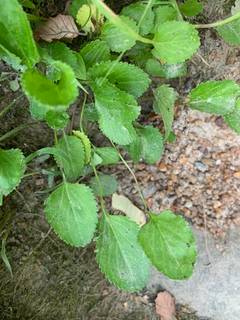
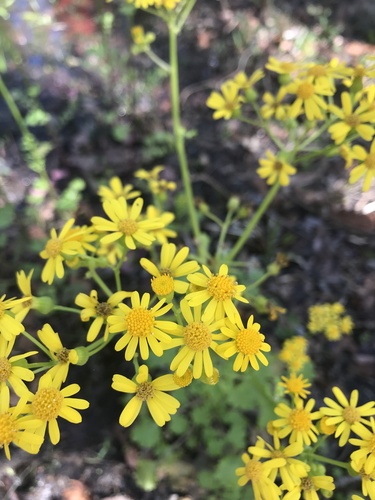
Packera glabella is a winter annual in the daisy family, reaching 12-39 inches (30-100 cm) tall on a hollow, ridged stem that is often flushed purple at the base. The deeply pinnately lobed leaves are smooth and somewhat fleshy, the lower ones forming a rosette before the stem elongates. In mid spring it produces a flat-topped cluster of many yellow flower heads, each about 0.5-0.75 inch (12-20 mm) across with 8-15 narrow ray florets around a yellow disk. The plant germinates in fall, overwinters as a rosette, blooms in spring, sets seed, and dies by early summer. Wind-borne seeds tipped with white bristles spread it quickly into wet ground. Packera glabella grows in floodplains, ditches, wet fields, and roadside swales, often forming sheets of yellow in spring, and it has expanded its range northward with cultivation. All parts contain pyrrolizidine alkaloids that damage the liver of cattle, horses, and other livestock if eaten in quantity. Its weedy spread in damp pastures and crop fields limits its garden use.
Native Range
Packera glabella is native to the southeastern and south-central United States, centered on the Mississippi valley and Gulf coastal plain. It grows in wet, open habitats such as floodplains, marsh edges, ditches, and damp fields, and has spread northward in recent decades.Suggested Uses
Rarely planted on purpose; it is mostly seen as a native colonizer of wet ground and a weed of damp pastures and fields. In naturalized wetland or rain-garden settings it gives an early spring nectar source for pollinators. Its alkaloids and heavy reseeding keep it out of most managed gardens.How to Identify
Appearance
Size & Dimensions
Height1' - 3'3"
Width/Spread8" - 1'4"
Bloom Information
Flowering peaks in mid spring, mainly April to May, with the flat-topped clusters opening over two to three weeks. The yellow heads draw early bees, flies, and small butterflies. After bloom the heads form fluffy seed clusters that scatter on the wind.
Detailed Descriptions
Foliage Description
greenGrowing Conditions
Sun Requirements
Requires 4-10 hours of direct sunlight daily
• Full Sun: 6+ hours of direct sunlight
• Partial Shade: 3-6 hours of direct sunlight
• Full Shade: Less than 3 hours of direct sunlight
Water & Climate
Water Needs
Care & Maintenance
Care Guide
Packera glabella grows in full sun to part shade in wet to moist soils, including heavy clay and periodically flooded ground, across a pH range of about 5.5-7.5. As a winter annual it germinates in fall, grows through winter as a rosette, and flowers in spring before dying in early summer. It needs no feeding and reseeds heavily where soil stays damp. Where it is unwanted, plants are removed before the seed heads ripen, since the seedbank builds fast. It is hardy as a cool-season grower in USDA zones 5-9. The alkaloid content makes it a concern in hay and pasture rather than a pest of ornamentals.Pruning
No pruning is practiced on this short-lived annual. Where control is wanted, the flowering stems are cut or pulled before the seed heads mature. Removing rosettes in fall or winter prevents spring flowering.Toxicity Warning
Toxic to pets and humansPlanting Guide
Planting Methods & Timing
Planting Method
direct sow
Direct Sow Timing
fall, for spring bloom
Days to Maturity
180–220 days
Plant Spacing
12 inches